

If you’re looking into water filters that remove fluoride, you’ve probably noticed how confusing the topic gets fast, especially when trying to figure out if there is a water filter that removes fluoride without reverse osmosis, or whether reverse osmosis is the only option that actually works. Some filters clearly say they reduce fluoride, others imply it, many just don’t mention it at all.
This guide is meant to clear things up!
Summary
If fluoride removal is your main goal, reverse osmosis systems like the Aquasana SmartFlow are the most reliable option. Pitcher and faucet filters can reduce fluoride slightly, but results vary and aren’t always clearly certified.
Live in an apartment? Skip whole-house systems and look at RO or gravity filters.
Can’t modify plumbing? Countertop RO or gravity systems make more sense here.
Only care about partial reduction? Understand carbon filter limitations.
Want minimal maintenance? Accept trade-offs in performance or cost.

If you’re trying to remove PFAS from your water, consider checking these posts:
Do Faucet Water Filters Remove PFAS?
Best Under Sink Water Filters That Remove PFAS (2026)
In this guide, we’ll go through:
- Best pitcher filter
- Best under-sink reverse osmosis
- Best faucet-mounted system
First, what is fluoride and water filters?
Fluoride is a naturally occurring mineral that shows up in groundwater, and in many cities it’s also added to tap water in small, controlled amounts, but not everyone is comfortable with having it in their drinking water.
Unfortunately, not all water filters are designed to deal with fluoride. In fact, most basic carbon filters focus on things like chlorine taste and odor, not dissolved ions.
According to the Water Quality Association (WQA), there are only a few treatment methods commonly used for fluoride reduction:
- Reverse osmosis: water is squeezed through a super-fine filter that fluoride can’t fit through.
- Strong base anion exchange: the filter swaps fluoride in the water for something else and sends it away.
- Activated alumina adsorption: a filter material that grabs fluoride and holds onto it as water flows by.
- Distillation: water is boiled and re-collected, leaving most dissolved stuff behind.
If a product doesn’t clearly state NSF/ANSI 58 or 53 (with data), assume fluoride reduction is minimal or unverified.
Now that we’ve covered the basics, let’s look at the best water filters that remove fluoride. Pitcher filters, under-sink systems, and faucet-mounted options all handle fluoride differently, and none of them are perfect for every situation.
Epic Pure Water Filter (pitcher)
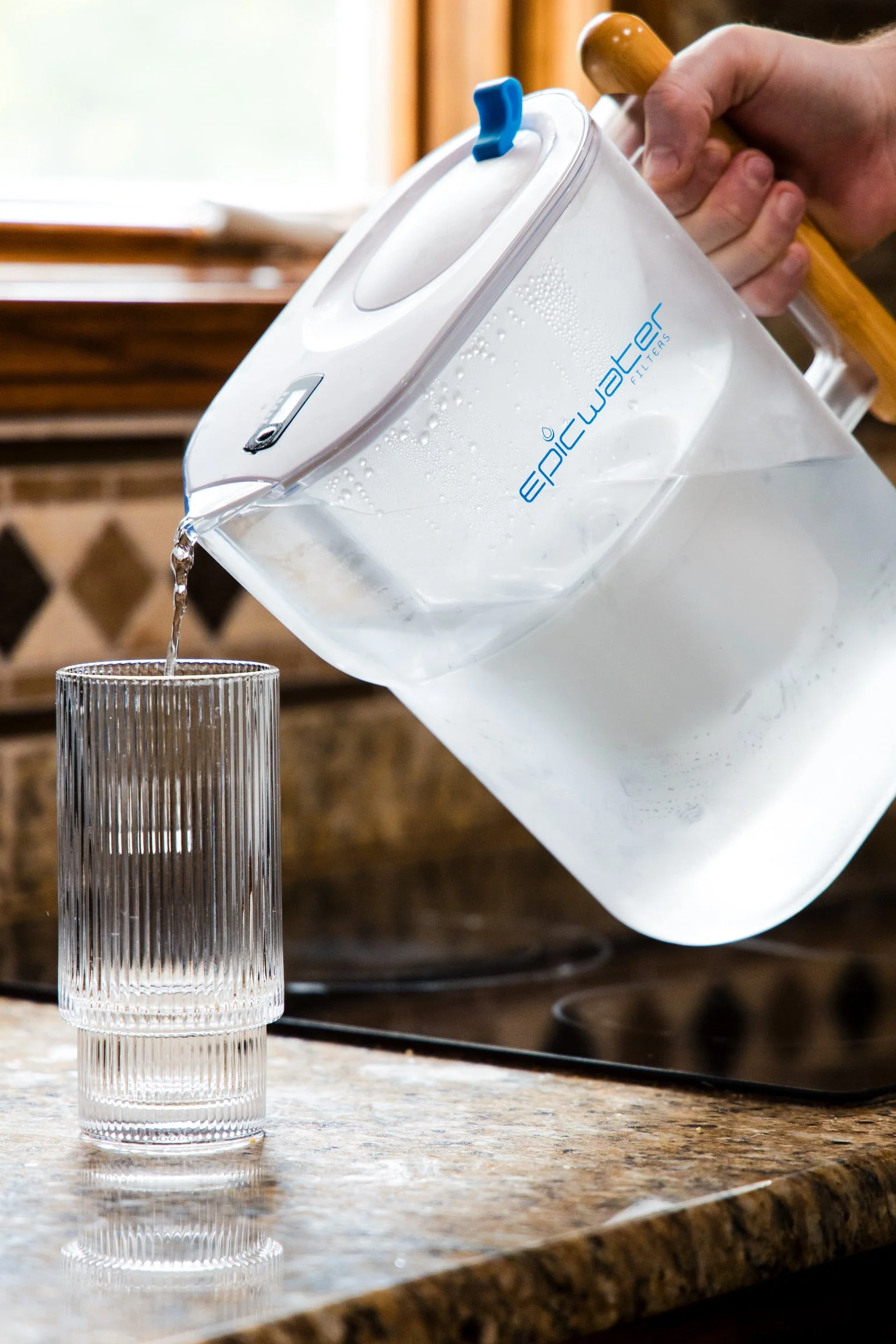
Pitcher filters can only reduce fluoride slightly, so they’re not a full solution if fluoride removal is your main goal.
However, if you like the idea of keeping things simple, a pitcher filter like the Epic Pure is about as low-commitment as it gets. You fill it, stick it in the fridge or on the counter, and that’s it! No tools, no installation, no changes to your sink.
I picked the Epic Pure because it uses a solid activated carbon block and is listed by the manufacturer as reducing fluoride, along with things like chlorine, lead, and PFAS. Epic also publishes testing data showing fluoride reduction under NSF/ANSI testing protocols, though the Pure filter itself isn’t NSF certified and isn’t designed for microbiological purification.
If you want a no-installation option that goes further on certified contaminant removal, the AquaTru vs Clearly Filtered comparison breaks down the two strongest renter-friendly upgrades from this category.
In everyday use, this kind of filter is easy to live with. The trade-off is that you’re relying on manufacturer-provided testing rather than third-party certification, and you’ll be refilling it often if you go through a lot of water. I recommend this as a convenient option for light use, not a heavy-duty solution.
✅ Good fit if:
- You want a no-installation, very affordable option.
- You’re renting or don’t want anything attached to your faucet.
- You use filtered water occasionally, not all day.
⚠️ What to know before choosing this
- Fluoride reduction is typically based on manufacturer testing, not NSF certification.
- You’ll be refilling it often if you drink a lot of water.
- Lightweight plastic designs may feel less sturdy than heavier pitchers.
A simple, portable pitcher filter
With its simple setup and portable design, the Epic Pure pitcher is a practical option for renters or anyone who wants filtered water without installation. However, it relies on manufacturer testing rather than third-party certification, and frequent refilling can be a downside for heavier use.
Aquasana SmartFlow Reverse Osmosis
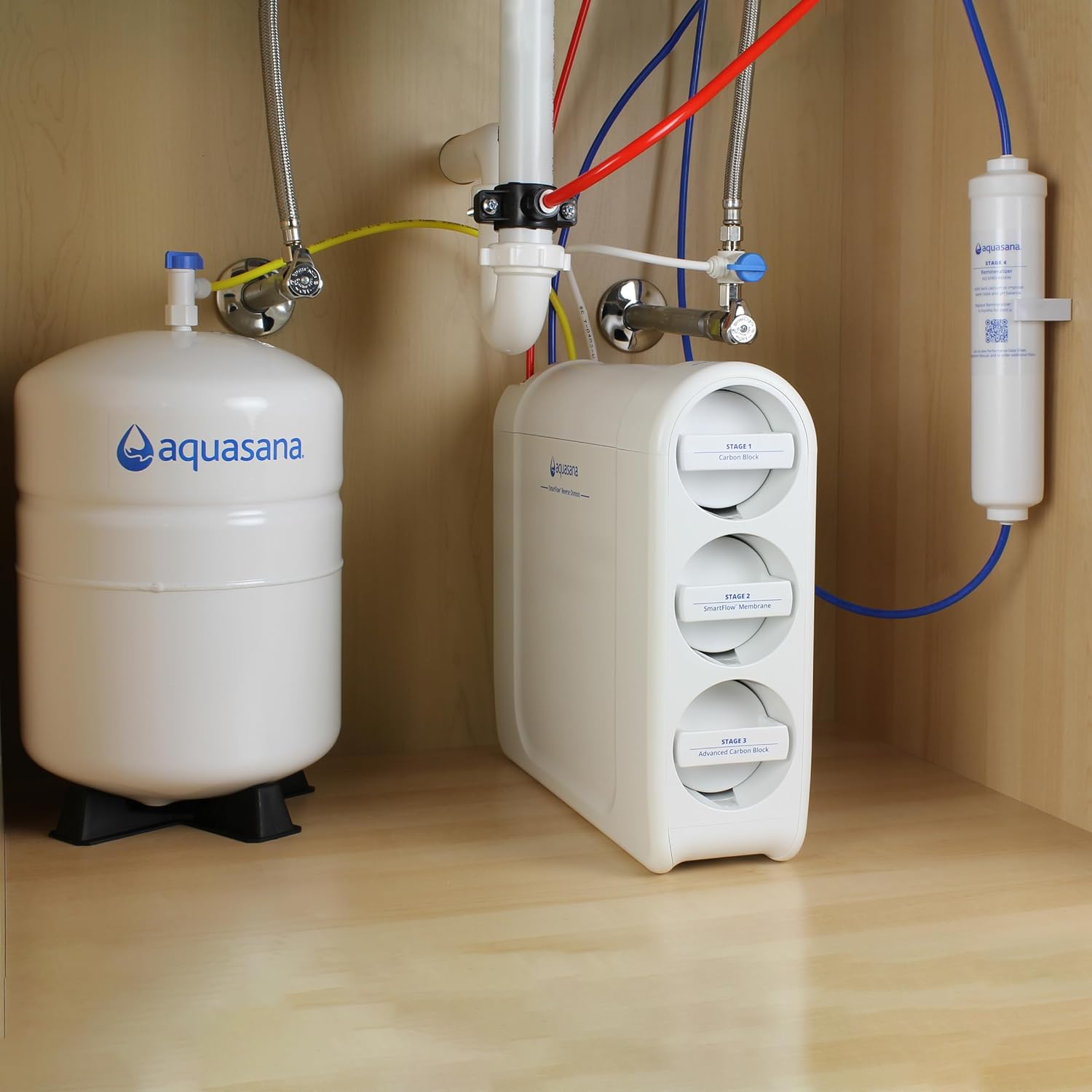
Under-sink reverse osmosis systems are a very different experience from pitchers. Once installed, they’re mostly out of sight and out of mind (which I personally prefer). You turn on the dedicated faucet and filtered water comes out.
Aquasana’s SmartFlow system combines reverse osmosis with additional filtration stages and is certified to multiple NSF/ANSI standards, including those commonly associated with fluoride reduction. According to the manufacturer, it’s designed to remove a broad range of contaminants and then add minerals back to the water afterward.
This kind of system is more of a commitment. Installation is more involved, there are filters to maintain, and it takes up space under the sink. But in return, you get one of the more thorough approaches to fluoride reduction that’s widely used in residential settings.
If you want something that runs quietly in the background and don’t mind the upfront setup, this is the category that tends to make the most sense.
✅ Good fit if:
- Fluoride reduction is your main goal, not just general filtration.
- You want a permanent, low-effort solution for daily drinking and cooking water.
- You’re comfortable with under-sink installation and possible ongoing maintenance.
⚠️ What to know before choosing this
- Installation is more complex than pitchers or faucet-mounted filters.
- Some customers report installation challenges and occasional leaks.
- Reverse osmosis systems waste some water during filtration
For committed fluoride removal
Once it’s installed, the Aquasana SmartFlow mostly disappears, you just use the small faucet when you want filtered water. It’s a solid option if fluoride reduction actually matters to you, but setup takes some effort and a few users mention install headaches or minor leaks if things aren’t tightened properly. Filter replacements are part of the deal.
Waterdrop stainless-steel faucet filtration system
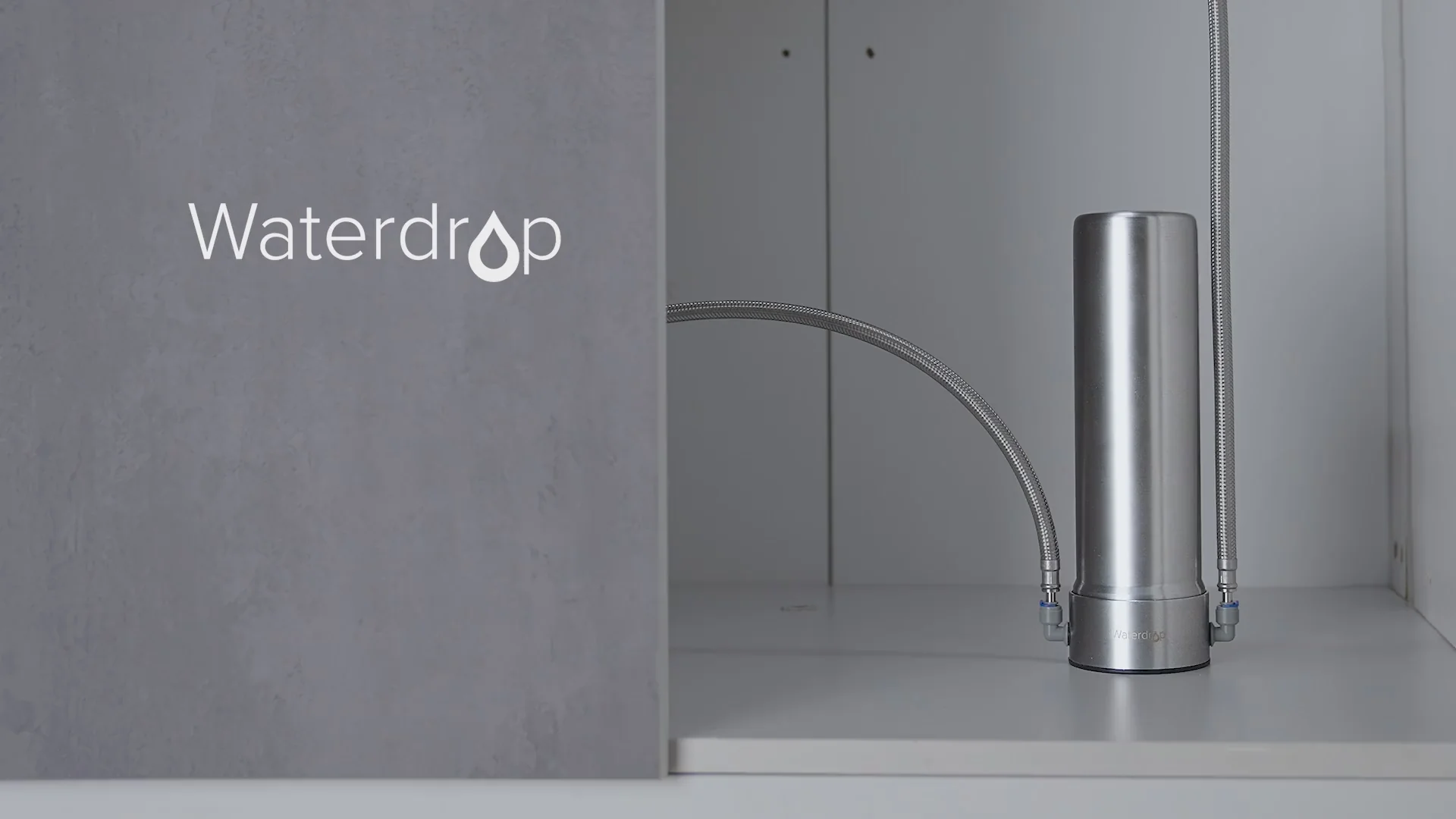
Faucet-mounted and countertop systems sit somewhere between pitchers and under-sink setups. They’re more permanent than a pitcher, but still relatively easy to install and remove.
The Waterdrop stainless-steel system uses a multi-stage activated carbon block filter and, according to the product manual, is designed to reduce substances such as chlorine, lead, and fluoride. It also has clearly stated operating limits for water pressure and temperature, along with a defined replacement schedule.
What’s less straightforward is how much fluoride reduction to expect. Fluoride is mentioned in the documentation, but there’s no quantified reduction data or third-party certification specifically for fluoride. In practice, this makes it feel like a middle-ground option: more structured than a pitcher, but with less clarity than a full reverse osmosis system.
It’s a reasonable choice if you want something that attaches directly to your faucet and don’t want to modify your plumbing, as long as you’re comfortable with those limitations.
✅ Good fit if:
- You want easy install and removal.
- You want a solid, stainless-steel faucet filter that feels sturdier than plastic.
- You want decent removal of chlorine, sediment, and common contaminants on a budget.
⚠️ What to know before choosing this
- Limited by faucet compatibility, pressure, and temperature.
- Fluoride reduction isn’t quantified or independently certified.
- Some customers report inconsistent flow rate and filter life tracking.
A no-plumbing faucet upgrade
The Waterdrop screws right onto your faucet and feels more solid than most plastic filters. It’s easy to live with and works well for better-tasting water day to day. Just don’t expect clear numbers on fluoride reduction, and be aware that some people run into fit or flow issues depending on their faucet. You’ll also need to stay on top of filter changes.
Which option makes sense for different situations?
- Pitcher filters can be a reasonable choice if you want something simple and portable and are comfortable relying on manufacturer-provided test data.
- Under-sink reverse osmosis systems are typically better suited for people who want a more comprehensive approach and are okay with installation and ongoing maintenance.
- Faucet-mounted or countertop systems sit somewhere in between, but it’s important to pay close attention to what is, and isn’t — clearly verified about fluoride reduction.
Which water filters actually remove fluoride?

No filter does everything.
Some systems reduce fluoride but aren’t certified. Others are certified but require more setup. Activated carbon alone is commonly used for taste and odor, but fluoride reduction depends on how that carbon is formulated and tested.
Wait, what about faucet filters? Faucet-mounted filters are where this confusion shows up most. They rely on activated carbon, which helps with taste and chlorine, but not fluoride.
We explain why (and what testing actually shows) in our post:
Do Faucet-Mounted Water Filters Actually Remove Fluoride?
Many filters don’t clearly state fluoride reduction because fluoride is harder to remove than chlorine or sediment, and testing requires different standards. When reduction data isn’t quantified or independently certified, results can vary widely.
Also, none of the systems discussed here are intended to treat unsafe or contaminated source water without proper disinfection.
Looking at filtration media, certifications, and documented test results can go a long way toward cutting through marketing noise. From there, the right choice usually comes down to how much complexity you’re comfortable with and how you plan to use the system day to day.