
Do water filters remove nitrates? The answer to this question depends almost entirely on which filter you have. Reverse osmosis, ion exchange, and distillation can remove nitrates. Activated carbon filters, the kind inside most pitchers, faucet attachments, and refrigerator filters, cannot. Not meaningfully. Not even close!
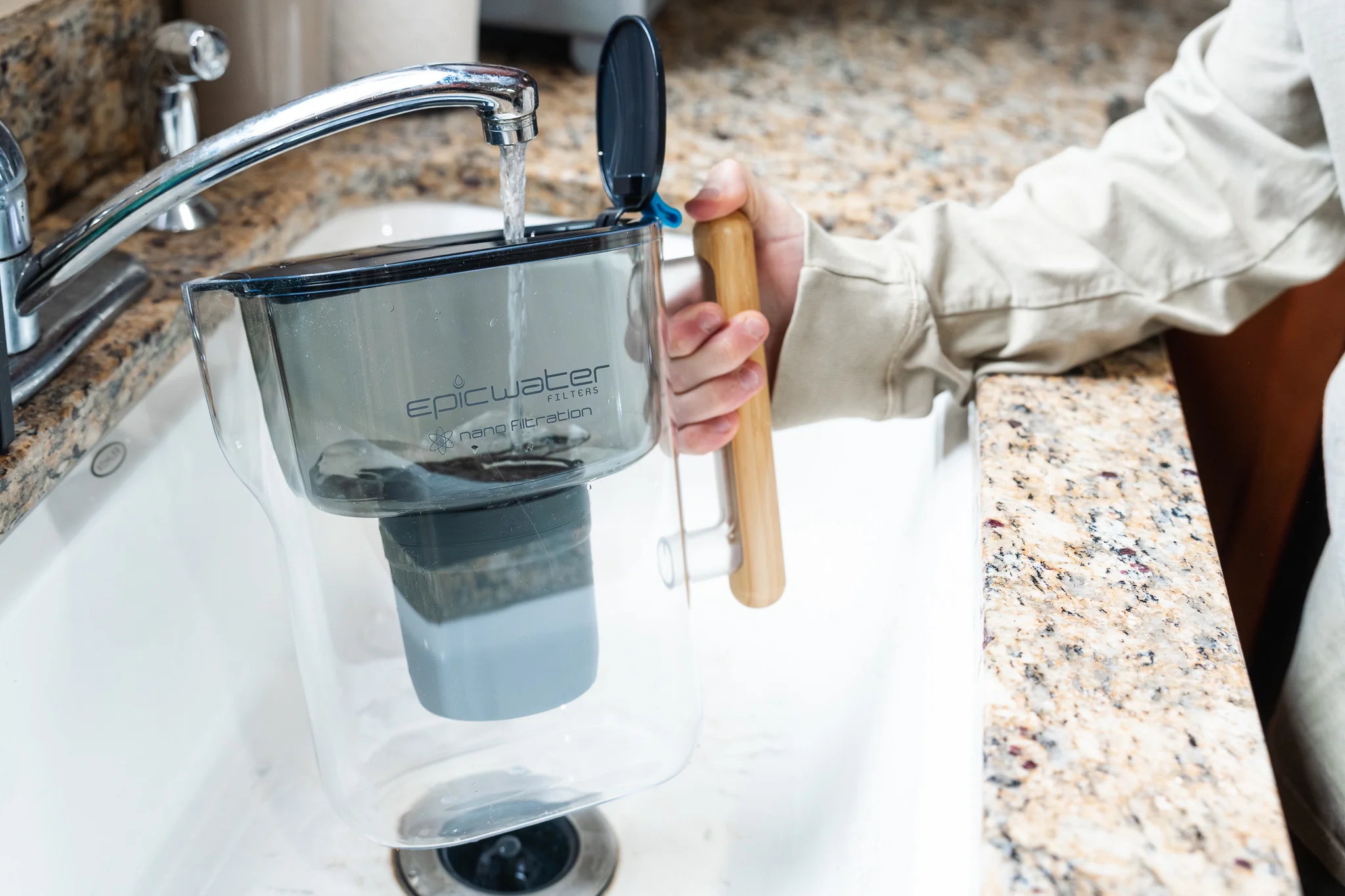
If you own a Brita, a PUR, or any standard carbon pitcher filter, your filter is doing nothing about the nitrates in your water. That includes the Brita Elite, which is one of the most certified consumer filters on the market. Neither Brita model removes nitrates, and this article will show you exactly why, with the data to back it up.
If you’re asking “does my water filter remove nitrates?” the honest answer for most households is no. Here’s everything you need to know to fix that.
Why Most Water Filters Don’t Remove Nitrates
To understand which water filter removes nitrates, you need to understand why the most popular ones fail at it. The core issue isn’t filter quality., it’s filter chemistry.
Nitrate (NO₃⁻) is a small, negatively charged inorganic ion. It dissolves completely in water and passes straight through most filtration media. Activated carbon, the core technology in Brita, PUR, ZeroWater Standard, refrigerator filters, and most faucet attachments, works by adsorbing organic compounds. Chlorine, pesticides, certain heavy metals, and volatile organic compounds all have molecular properties that make them stick to the carbon surface.
But guess what? Nitrate doesn’t. Its negative charge is actually repelled by carbon’s surface chemistry, and its small ionic size lets it slip through the pore structure entirely. The EPA addressed this directly in public guidance: activated carbon filters, including Brita pitchers specifically, do not remove nitrates.
This isn’t a knock on carbon filters. They’re excellent at what they’re designed to do, they’re just not designed for dissolved inorganic ions like nitrate, and that’s the gap most people don’t know exists.
Do Brita Filters Remove Nitrates?
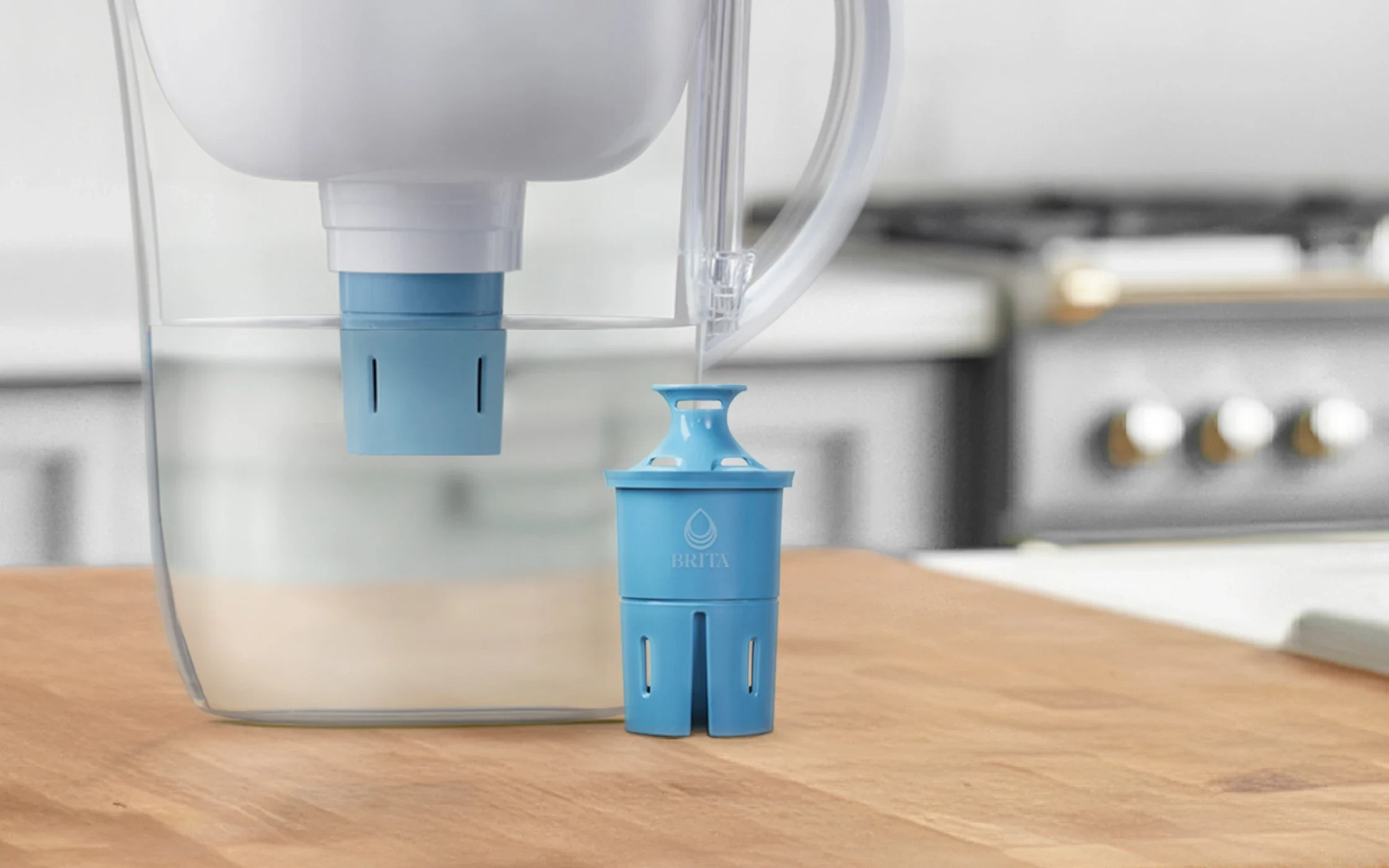
No. Neither the Brita Standard nor the Brita Elite removes nitrates in any meaningful way. This is one of the most common consumer misconceptions in the water filtration space, so it’s worth addressing directly.
Brita Standard filter uses granular activated carbon combined with a cation exchange resin. The cation resin is designed to capture positively charged metal ions like copper, zinc, and cadmium. Nitrate is an anion, meaning it carries a negative charge, so the resin can’t capture it. This filter holds NSF/ANSI 42 certification only, covering chlorine taste and odor reduction. Nitrate doesn’t appear anywhere in the performance data sheet.
Brita Elite filter is Brita’s premium offering, certified to NSF/ANSI 42, 53, and 401. It removes lead at 99.5%, PFOA/PFOS at 98.1%, microplastics at 99.6%, and more than 30 other contaminants. Independent lab testing by WaterFilterGuru found it reduced nitrate by approximately 5%, taking water from 3.5 PPM to 3.3 PPM. That’s functionally zero. Brita doesn’t claim nitrate removal for either filter because the technology simply can’t do it.
Tap Score, an independent water testing lab, puts it plainly: Brita pitcher filters cannot remove nitrate and are not certified to do so. If you’re asking whether your water filter removes nitrates and you own a Brita, the answer is no.
The same applies to PUR pitchers, PUR Plus faucet filters, most Clearly Filtered models, Epic pitchers, and refrigerator inline carbon filters. All carbon-based. None effective against nitrate. When asking whether water filters remove nitrates, the answer starts with knowing your filter’s media type, and carbon is not the answer.
If you’re evaluating pitcher filters more broadly, our breakdown of what pitcher filters actually remove covers PFAS and fluoride performance across the same brands.
What the Science Says About Nitrates in Drinking Water
Understanding whether water filters remove nitrates, and which ones, starts with understanding what nitrate does in the body and how it gets into your tap in the first place.
The EPA has set a Maximum Contaminant Level (MCL) for nitrate at 10 mg/L, measured as nitrogen. It’s classified as an acute contaminant, meaning a single exposure above the limit can cause harm, not just long-term cumulative exposure. The primary risk is to infants under six months old. When nitrates enter an infant’s digestive system, bacteria convert them to nitrite, which interferes with hemoglobin’s ability to carry oxygen. The resulting condition, methemoglobinemia, is known as blue baby syndrome and can be fatal if untreated.
Nitrate contamination is primarily a concern for people on private wells in agricultural areas, where fertilizer and animal waste runoff leaches nitrate into groundwater. Municipal water systems are required to test and report nitrate levels. If you’re on a well, you’re on your own.
Well water carries other risks worth knowing about too. Arsenic is one of the more common co-contaminants in agricultural groundwater, and like nitrate, it’s invisible without testing. Our guide on how to remove arsenic from water covers what certified filtration actually looks like for that one.
One thing most people get wrong: boiling water does not remove nitrates. It makes the problem worse.
A 2025 study published in Scientific Reports by Rajabi, Bairami, and Shahryari found that repeatedly boiling water with volume reduction produced up to an 8.2-fold increase in nitrate concentration. Because nitrate is non-volatile, it stays in the water while the water evaporates. The smaller the volume, the higher the concentration. The EPA, CDC, and Minnesota Department of Health all state this explicitly: boiling water with elevated nitrates is dangerous, not helpful.
Which Water Filters Remove Nitrates (And Which Don’t)
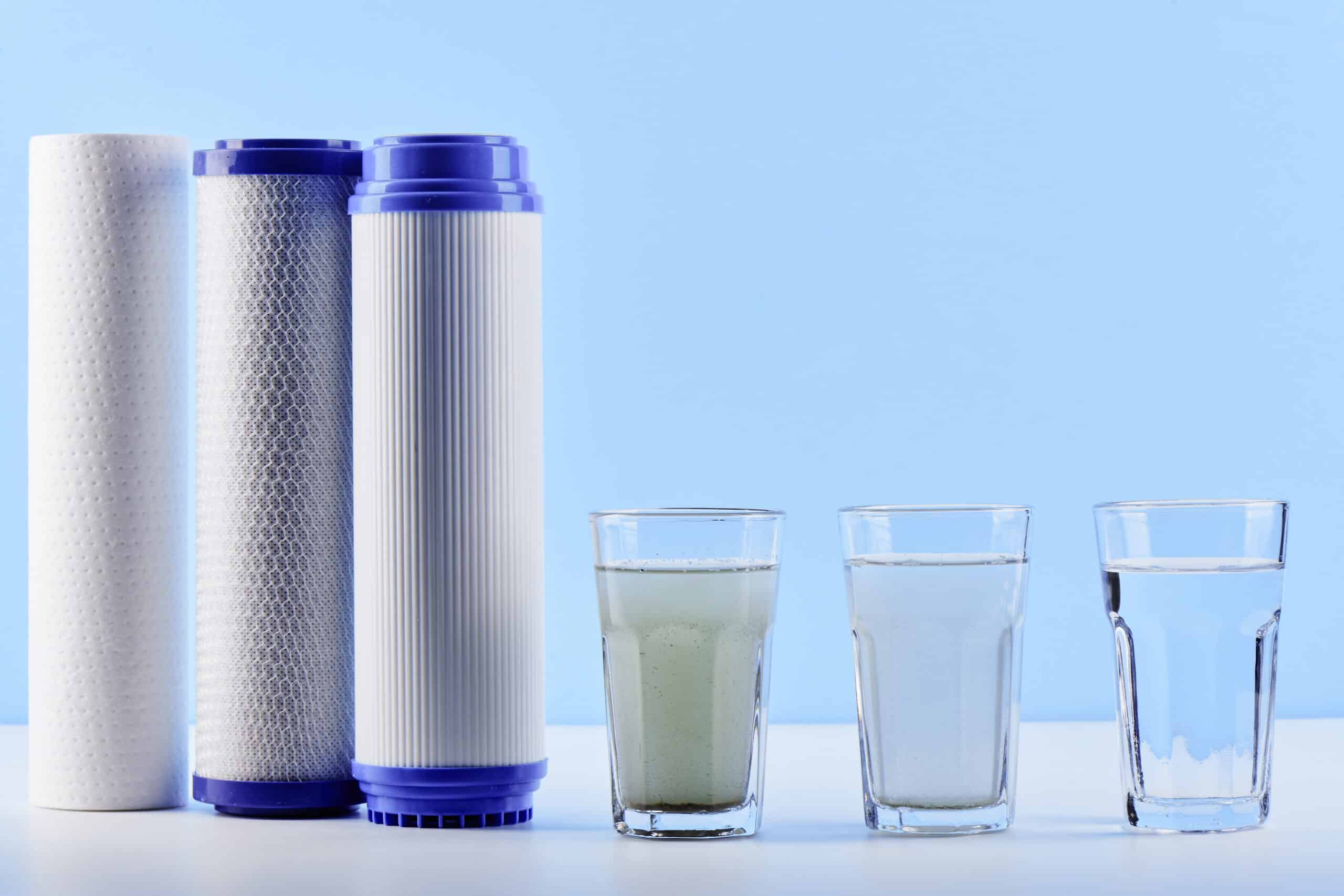
So do water filters remove nitrates, or is this a problem that needs a different solution entirely? The answer is that specific filter technologies work, and the ones most people already own don’t. Three technologies remove nitrates reliably: reverse osmosis, ion exchange, and distillation.
Reverse Osmosis
RO is the most practical residential answer to the question of whether water filters remove nitrates. It forces water through a semipermeable membrane with pores small enough to reject dissolved ions including nitrate. A 2024 systematic review of 61 studies published in Results in Engineering found a mean nitrate removal rate of 85% across all RO system types, with well-maintained residential systems routinely achieving 90 to 95%.
One critical caveat: not all RO systems are certified for nitrate removal. Nitrate is an optional contaminant claim under NSF/ANSI 58, the standard governing residential RO systems. A system can be NSF 58 certified and still not be certified specifically for nitrate. Always check the product’s individual Performance Data Sheet, not just the certification badge.
For renters or anyone who can’t drill under a sink, countertop RO systems are the practical option. Two worth knowing:
AquaTru Classic (around $449) is IAPMO-certified to NSF/ANSI 42, 53, 58, 401, and 372, and specifically certified for nitrate under NSF 58. Independent lab testing found 100% nitrate removal to below detection limits. Annual filter cost runs around $100 to $120. No plumbing connection required, it plugs into any standard outlet.
If AquaTru is on your shortlist, our comparison of AquaTru vs Clearly Filtered is worth reading first. Clearly Filtered’s pitcher runs on the same carbon-based filtration that can’t touch nitrate the way AquaTru’s reverse osmosis does.
Waterdrop A1 (around $600 to $700) is IAPMO-certified to NSF 58. Independent testing measured 92.3% nitrate reduction. It features hot and cold water dispensing and also requires no permanent installation.
For renters or anyone who can’t drill under a sink, countertop RO systems are the practical option. If you’re weighing that against a permanent under-sink install, our countertop vs under-sink comparison walks through the full trade-off.
Ion Exchange
Ion exchange using a strong-base anion (SBA) resin is the other effective residential option. The resin exchanges chloride ions for nitrate ions as water passes through, achieving removal rates above 90% in well-maintained systems. This is the same general principle as a water softener, but targeting anions rather than cations, which is why standard water softeners don’t touch nitrates.
One important caveat: standard SBA resins actually prefer sulfate over nitrate. In water with high sulfate levels, the resin can dump previously captured nitrate back into the water. Nitrate-selective resins, specifically triethylamine-based ones, eliminate this risk and are the right choice for well water with complex chemistry. Penn State Extension’s guide to nitrates in drinking water covers this trade-off in detail.
What About ZeroWater?
ZeroWater is the one pitcher filter that legitimately removes nitrates, using a 5-stage ion exchange system that strips virtually all dissolved solids. Both EWG’s 2024 independent testing and WaterFilterGuru’s lab results found 100% nitrate removal. It’s not certified under NSF 58 specifically for nitrate, but the performance data is consistent across independent sources.
The trade-off is real though. ZeroWater removes everything including beneficial minerals, and it lowers pH. Filter life drops sharply in high-TDS water, and replacement costs can run $600 or more per year in some areas. For most households, a countertop RO unit is more practical and cost-effective over time.
Check out our comparison between the old and the new ZeroWater filters if you’re considering buying a pitcher.
Distillation
Distillation removes nearly all nitrate, around 99% in controlled testing. Because nitrate is non-volatile, it stays in the boiling chamber while purified steam condenses elsewhere. The limitation is speed and energy. Most home distillers produce about 1 gallon every 4 to 6 hours and run continuously. It works fine as a backup or supplemental option, but it’s not practical as a primary drinking water solution for most households.
The Certification Question: NSF 53 vs. NSF 58
This is where most buyers get confused, and it’s worth a direct explanation.
NSF/ANSI 53 covers health-effects contaminants: lead, mercury, VOCs, asbestos, PFOA/PFOS, and cysts. It does not cover nitrate. A filter with NSF 53 certification, including the Brita Elite, can legitimately carry that badge while doing nothing for nitrate.
NSF/ANSI 58 covers reverse osmosis systems. Nitrate is an optional claim within this standard, which means even certified RO systems need to specifically list nitrate on their Performance Data Sheet for you to know it’s covered.
No pitcher filter holds NSF certification specifically for nitrate removal. That level of certification requires RO or distillation technology, neither of which exists in a standard pitcher format.
When shopping for a filter that actually addresses nitrates, the only thing worth checking is the product’s individual Performance Data Sheet, not the general certification logo.
TL;DR: Do Water Filters Remove Nitrates?
Most do not. A lot of people assume that any filter handles any contaminant, and that’s where the problem starts. Whether water filters remove nitrates comes down entirely to filter technology, not brand reputation or price point. The filters in most homes, whether that’s Brita, PUR, refrigerator filters, or standard under-sink carbon blocks, are not designed to handle dissolved inorganic ions like nitrate and won’t reduce your nitrate levels in any meaningful way.
The filters that do work are reverse osmosis systems confirmed by independent lab testing and NSF/ANSI 58 certification, ion exchange systems with anion resin achieving 90%+ removal in controlled conditions, and distillers at around 99% removal but slow.
If you’re on a well, pregnant, have an infant, or live near agricultural land, get your water tested first. The EPA’s Safe Drinking Water Hotline (1-800-426-4791) can point you to certified labs in your state. If testing confirms elevated nitrate, a countertop RO unit like the AquaTru is the most accessible solution that doesn’t require a plumber.
And whatever you do, don’t boil it!