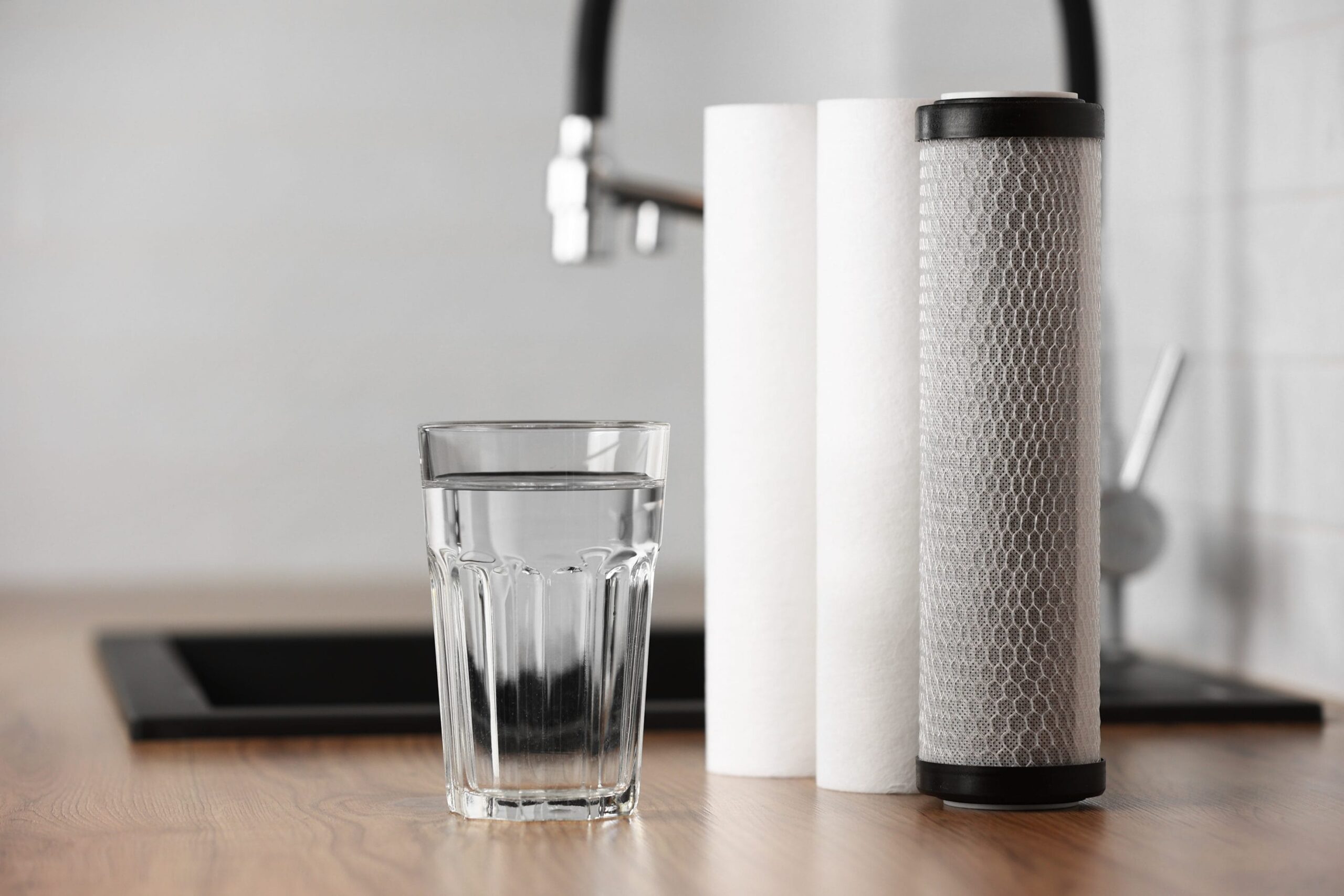
Choosing the best under-sink water filter for lead comes down to one thing most buying guides gloss over: whether the filter is actually certified to remove lead, or just marketed like it is. Those are two different things, and the gap between them is wider than you’d expect; one of the best-selling filters in this category removes just 3.8% of lead in independent lab testing, despite its listing claiming otherwise.
This guide covers how lead gets into drinking water, how to confirm it’s in yours, and which four under-sink filters have the verified certification and real-world performance to back up their lead removal claims.
What Lead in Drinking Water Actually Does
Lead is a neurotoxin with no safe exposure level. Even low concentrations cause irreversible cognitive and developmental damage in children. In adults, chronic exposure is linked to high blood pressure, kidney damage, and cardiovascular disease.
Drinking water accounts for more than 20% of total lead exposure for adults. For infants drinking formula made with tap water, that share rises to 40–60%. This is why a filter that claims to remove lead but doesn’t is a real health problem, not just a consumer gripe.
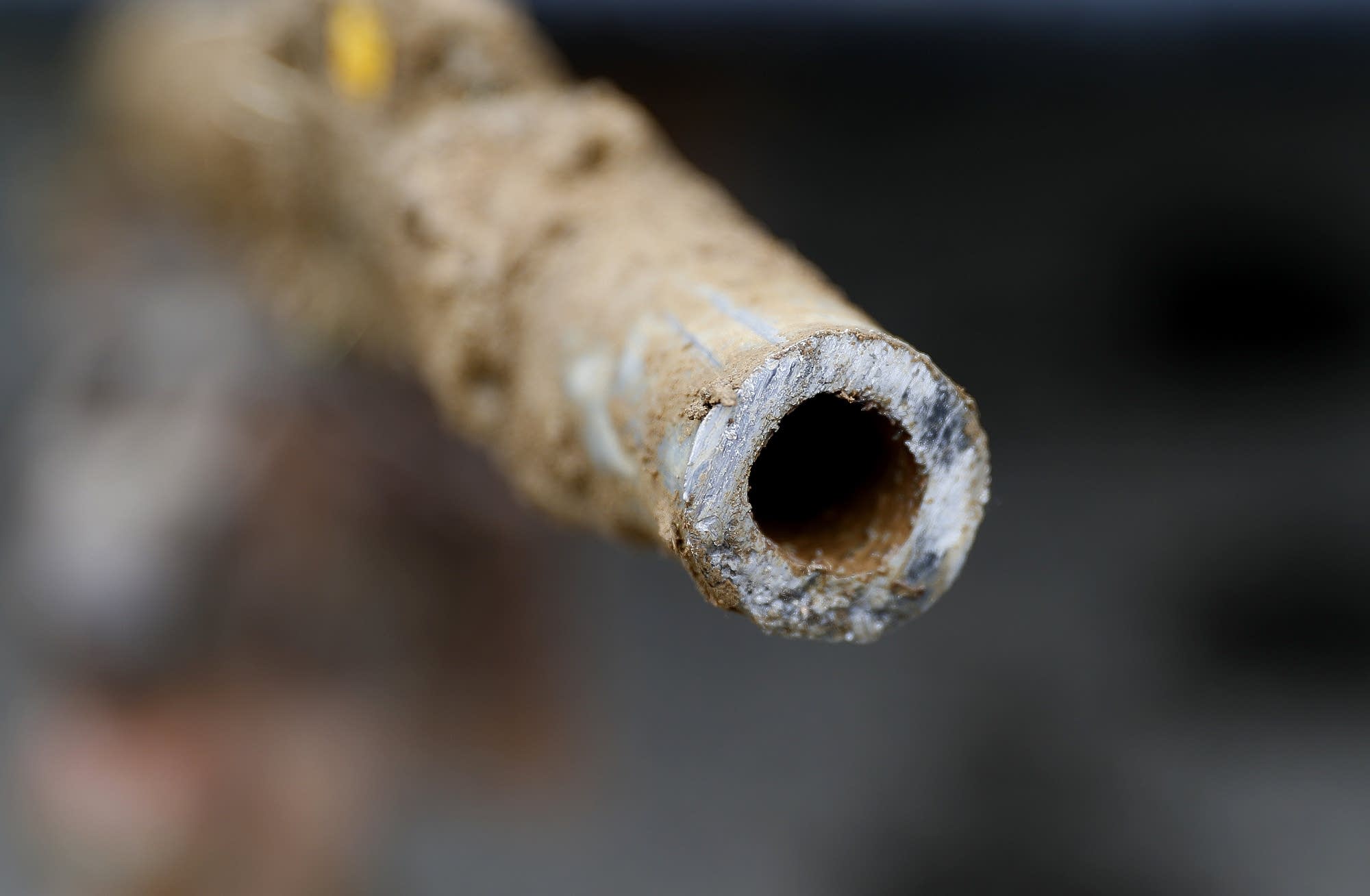
The source of lead in tap water is almost always the plumbing, not the treatment plant. Lead service lines, the pipes connecting the municipal main to individual buildings — were standard until the 1980s. Lead solder was used in household plumbing until it was federally banned in 1986. Brass faucet fixtures were permitted to contain up to 8% lead until 2014. Any home built before 1986 is a candidate for lead exposure, even if the municipal supply tests clean at the plant.
The EPA’s Lead and Copper Rule Improvements, finalized in October 2024, lowered the lead action level from 15 ppb to 10 ppb, effective November 2027, and mandated that utilities replace all lead service lines within 10 years. The EPA estimates approximately 4 million lead service lines remain in use nationwide. Until those pipes are gone, a certified filter at your kitchen tap is the most effective immediate protection available.
How to Find Out If You Have Lead in Your Water
You cannot taste, smell, or see lead. Testing is the only way to know.
The most reliable option is a certified home test kit. Tap Score by SimpleLab uses an ISO 17025-accredited laboratory; the same lab standard used by independent filter testers like WaterFilterGuru. You collect a sample at your tap and mail it in; results come back with exact concentrations, not just pass/fail readings.
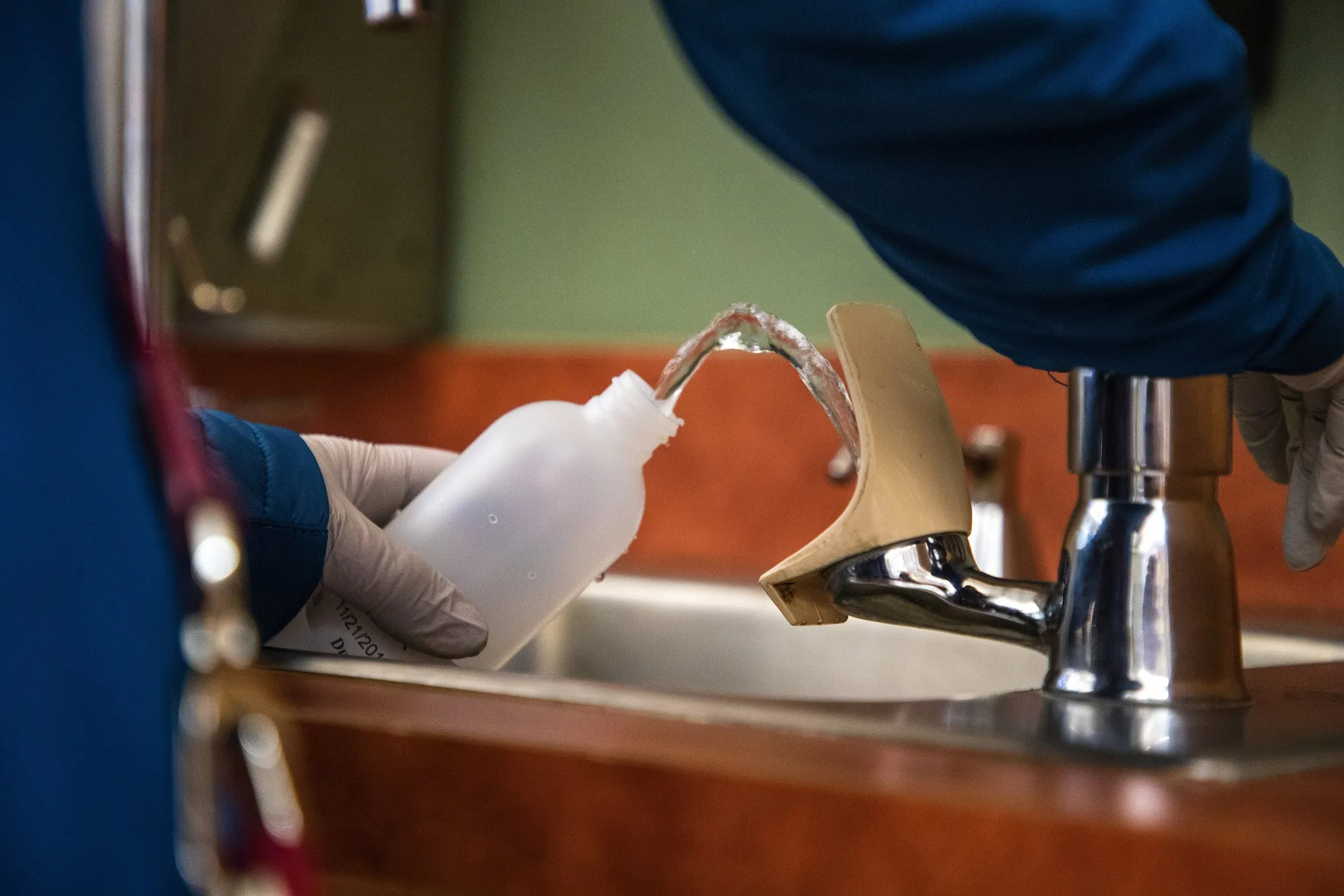
Your water utility publishes annual Consumer Confidence Reports showing contaminant levels at the treatment plant. The problem is that lead almost always enters water after it leaves the plant, through service lines and internal plumbing. So utility-level data can look clean even when your tap water isn’t.
The EWG Tap Water Database aggregates utility testing data by zip code and is a useful starting point. But it reflects system-wide averages, not your specific tap. If you’re in a pre-1986 apartment or house, run a home test regardless of what the utility data shows, building plumbing is your risk, not the main line.
Renters with confirmed building contamination: contact your water utility before buying an apartment water filter for lead. Under the Lead and Copper Rule Improvements, water systems with multiple lead exceedances are required to provide NSF 53-certified filters to affected residents while remediation is underway. You may be entitled to one at no cost.
How to Choose the Right Under-Sink Water Filter for Lead
The certification label is the first filter, before you look at price, brand, or flow rate. Here’s what matters:
NSF/ANSI 53 is the standard you need. It covers health-effect contaminants including lead. To earn it, a filter must reduce lead from a 150 ppb challenge concentration down to 5 ppb or less — at least 96.7% removal — at two pH levels, tested through 120% of its rated capacity.
NSF/ANSI 42 does not cover lead. It covers taste, odor, and chlorine only. A filter can carry NSF 42 and remove zero lead. Same goes for NSF 372, which certifies that filter materials are lead-free, not that the filter removes lead from your water.
“Tested to NSF 53 standards” is not the same as NSF 53 certified. Some brands run tests using NSF protocols at a third-party lab, then market those results as equivalent to certification. They’re not. Formal certification requires initial testing plus ongoing manufacturing audits and periodic recertification, a meaningfully higher bar.
For renters: installation type matters as much as certification. Most under-sink systems with a dedicated faucet require drilling a hole in your sink, a no-bueno in most apartments. Two of the four filters recommended below require no drilling at all, making them the practical choice for any water filter for lead in an apartment.
To verify any product’s certification status yourself, search the NSF database, or the equivalent WQA or IAPMO databases. If a product isn’t listed, it isn’t certified, regardless of what the packaging says. Every recommendation in this guide for the best under-sink water filter for lead clears that bar.
The 4 Best Under-Sink Water Filters for Lead
All four filters below are independently certified for lead removal by an ANSI-accredited body. They’re organized by situation; renter versus homeowner, carbon block versus RO, because your installation constraints matter as much as your water quality.
Epic Smart Shield
Best for Renters and Anyone Who Can’t Drill
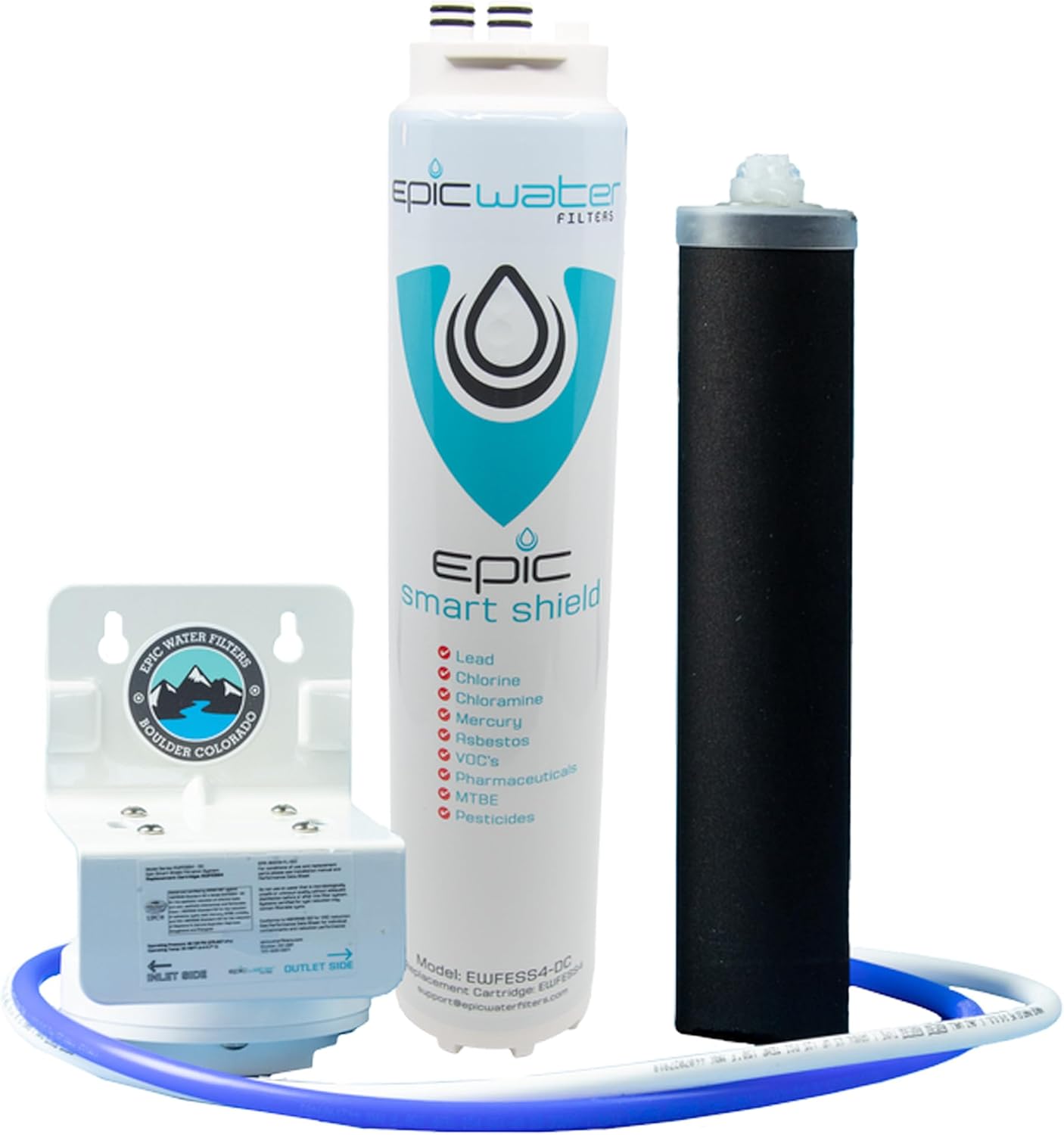
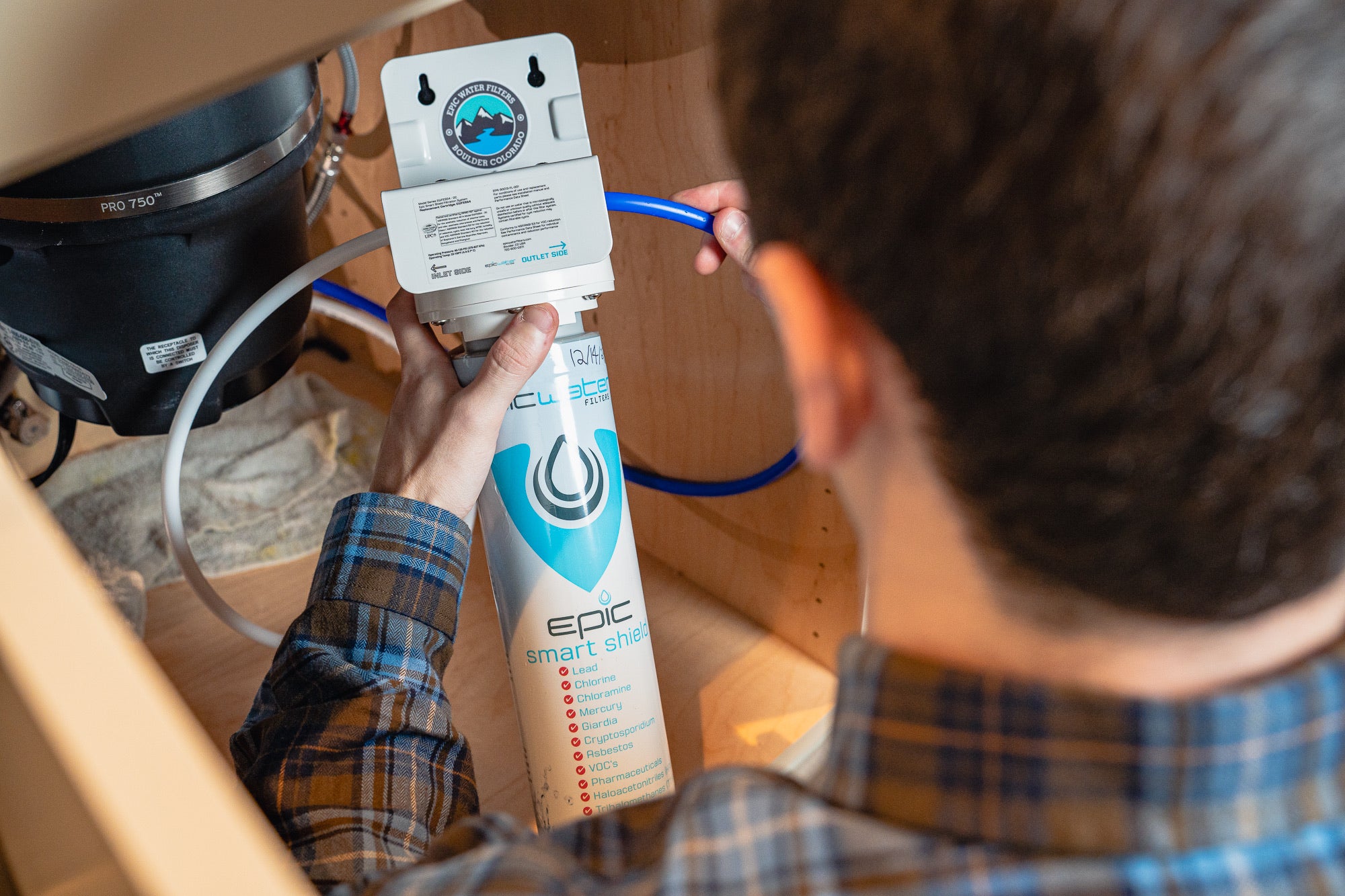
The Epic Smart Shield earns the top spot because it’s the only renter-compatible certified under-sink filter that combines IAPMO certification to NSF/ANSI 53 (lead explicitly covered), tool-free installation, and documented 99.3% lead removal.
It installs in about 15 minutes with no drilling. The system connects to your cold water supply line via push-to-connect fittings on a standard 3/8″ line and mounts under the sink with velcro, no screws, no holes. Filtered water comes out of your existing faucet. It’s fully reversible and portable.
Beyond lead, it’s certified under NSF/ANSI 42, 53, and 401; covering 70+ contaminants including PFAS, cysts, mercury, VOCs, pharmaceuticals, and microplastics. If PFAS is also a concern, see our comparison of under-sink PFAS water filters that are actually certified.
The limitation is capacity: 651 gallons per cartridge, which works out to roughly 9–16 months for most households. Replacement filters run approximately $100–115. It’s not the cheapest ongoing cost, but it’s the strongest combination of certification, renter compatibility, and documented performance available.
Our top pick
No drilling, no plumber. Verified 99.3% lead removal from your existing faucet in 15 mins. The renter’s choice!
Frizzlife SK99-NEW
The Frizzlife SK99-NEW is a 3-stage direct-connect system that also installs without drilling, connecting to your existing kitchen faucet’s cold water supply. It’s IAPMO-certified to NSF/ANSI 42, 53 (lead explicitly covered), and 372.
At roughly $80–110 upfront and $30–50 per year in replacement filters, it’s the most affordable certified option in this category. The three-stage design uses staggered replacement intervals, sediment stage every 3–6 months, carbon stages at 8–12 and 12–18 months — which keeps individual replacement costs low.
One critical note: the SK99 is the renter-friendly direct-connect model. The SP99 is a separate variant that requires a dedicated faucet and a drilled hole. Double-check the model before ordering.
The gap here is independent test data. The certification is verified, but no real-world lab performance data was found for this specific model during research. If you want test results on top of certification, the Epic Smart Shield is the better-documented choice. If certification alone is sufficient and cost is the priority, the SK99-NEW is solid. Not sure whether an under-sink system is even right for your situation? Our countertop vs under-sink water filter comparison breaks down which setup makes sense for renters, small kitchens, and tight budgets.
Best value for renters
The SK99 NEW connects to your existing faucet without any drilling. Verified 99%+ lead removal at the lowest price here.
Aquasana AQ-5200
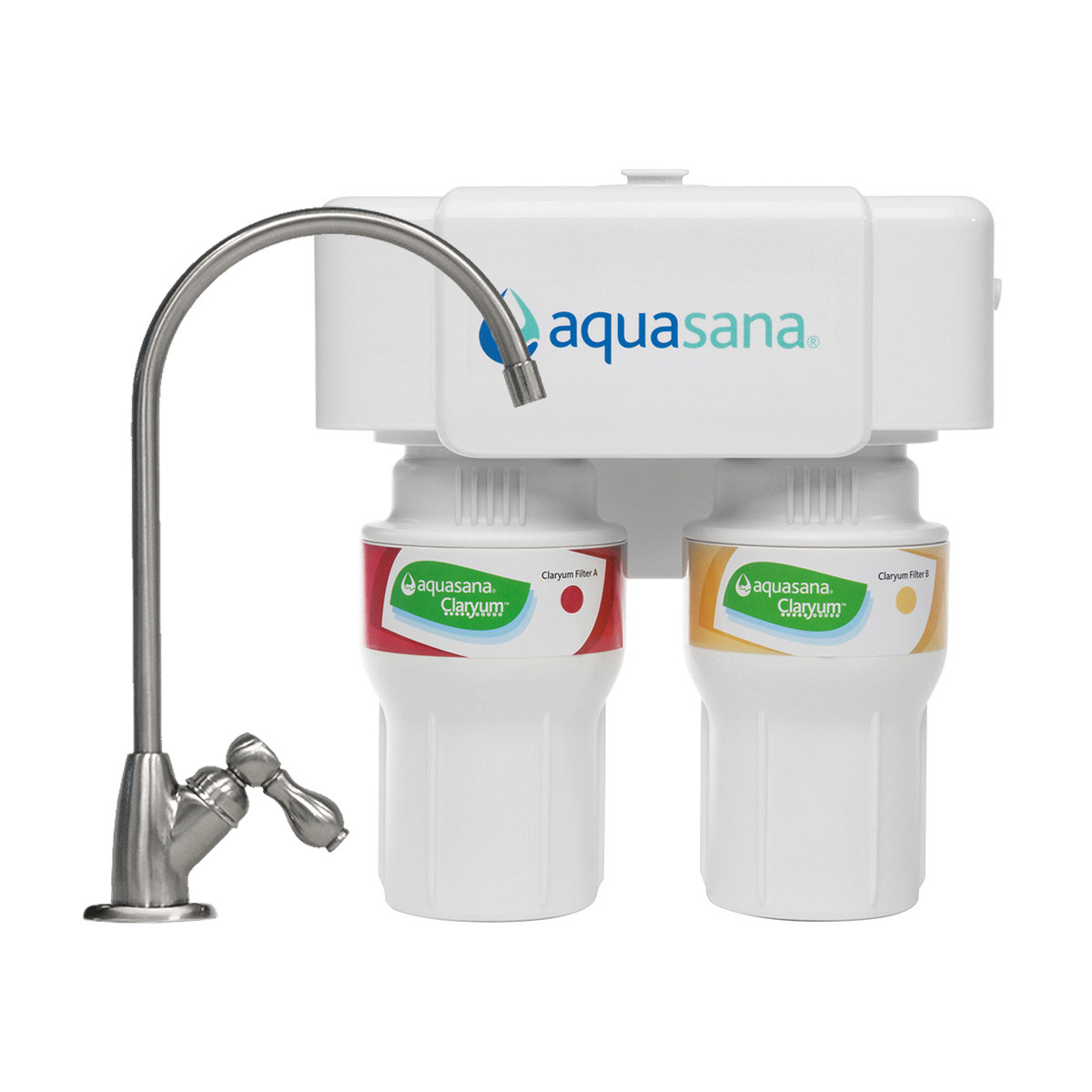
The Aquasana AQ-5200 Claryum 2-Stage is WQA-certified to NSF/ANSI 42, 53, and 401, covering 78 contaminants: 99.6% lead reduction, 99.7% PFAS reduction, chloramines, microplastics, cysts, mercury, asbestos, and pharmaceuticals. Full formal certification through an ANSI-accredited body.
The catch is installation. The AQ-5200 requires a dedicated faucet, installed through an existing unused sink hole or a newly drilled one. The manifold mounts to the cabinet wall with screws. It’s not reversible, which rules it out for most renters.
Filter replacement every 6 months or 500 gallons gives it the most frequent replacement schedule of the four, adding up to roughly $80–140 per year. That’s the highest annual filter cost of the carbon block options.
A note on ownership: A.O. Smith acquired Aquasana. The A.O. Smith AO-US-200 uses identical Claryum filtration technology, carries IAPMO certification to NSF/ANSI 42, 53, and 401, and costs approximately $139. Replacement filters are cross-compatible. Either works.
Best certified option for homeowners
99.6% lead removal plus 77 other contaminants, filtered automatically every time you turn on the tap.
APEC ROES-50
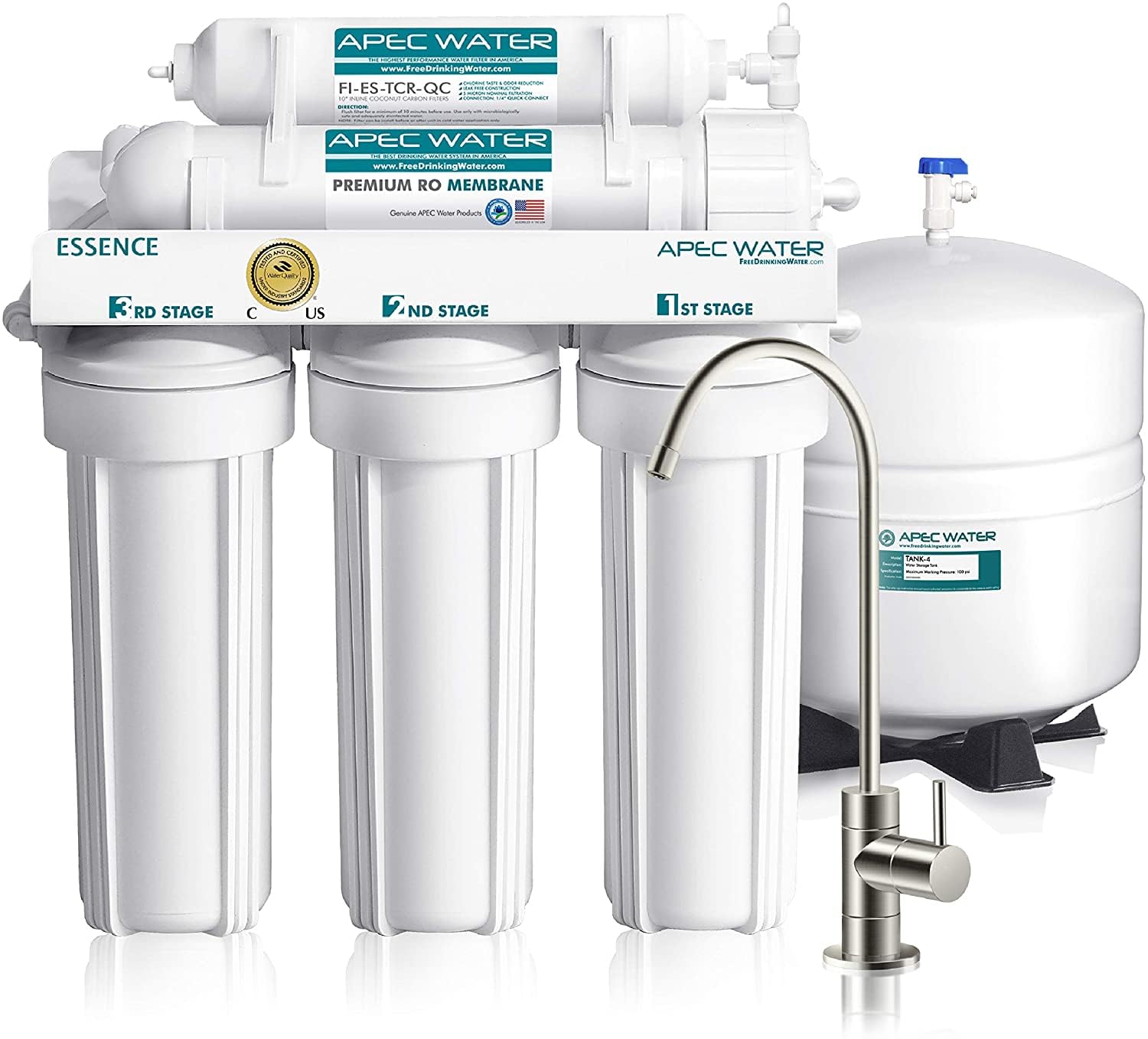
Reverse osmosis is the right tool for one specific scenario that carbon block filters can’t fully address: water systems that use orthophosphate as a corrosion inhibitor.
When utilities add orthophosphate, lead can form sub-100nm nanoparticles that behave differently from dissolved lead ions. Under-sink carbon block filters tested against these particles achieved only 44.6–65.1% removal, far below the 96.7% NSF 53 threshold. And critically, the NSF 53 protocol doesn’t test for this form of lead, so a fully certified carbon block filter can still miss a meaningful share of lead in orthophosphate-treated water.
RO membranes filter at approximately 0.0001 microns, small enough to block nanoparticles regardless of their chemical form. TechGearLab independently tested the APEC ROES-50 at Western Environmental Testing Laboratory (December 2025), starting from water contaminated at approximately 2,300 ppb lead. Result: lead reduced to undetectable levels.
The APEC ROES-50 carries WQA Gold Seal certification to NSF/ANSI 58 for TDS reduction. Lead-specific NSF 58 certification should be independently confirmed in current database records before publication.
For most households on standard municipal water without confirmed nanoparticle risk, the carbon block options above are simpler, cheaper, and don’t waste water. The ROES-50 is the call when lead levels are very high, when nanoparticle risk is confirmed, or when you also need to remove arsenic, nitrates, or fluoride, contaminants carbon block media doesn’t address effectively. If fluoride removal is part of the equation, our guide on water filters that actually remove fluoride covers which systems are certified for it and which just claim to be.
Installation requires a dedicated faucet with a drilled hole, a drain saddle connection, and enough under-cabinet space for a storage tank. Not renter-friendly. Budget $100–200 for a plumber if the connections aren’t something you’re comfortable with. Wastewater ratio is approximately 3:1.
Best for severe contamination
Zero detectable lead in independent lab testing. The highest level of protection when your family’s water quality isn’t negotiable.
Filter Comparison Table
All four options below represent the best under-sink water filter for lead across different budgets and installation scenarios.
Filter | Upfront Cost | Annual Filter Cost | Year 1 Total | Certification | Lead Removal | Renter-Friendly | Capacity |
|---|---|---|---|---|---|---|---|
~$135 | ~$65–78 | ~$194–207 | IAPMO NSF/ANSI 42, 53, 401 | 99.3% | ✅ No drilling | 651 gal | |
~$80–110 | ~$30–50 | ~$110–160 | IAPMO NSF/ANSI 42, 53, 372 | 99%+ | ✅ No drilling | Not published | |
~$130–170 | ~$100–140 | ~$230–310 | WQA NSF/ANSI 42, 53, 401 | 99.6% | ❌ Drilled faucet | 500 gal / 6 mo | |
~$230 | ~$45–60* | ~$245–260 | WQA NSF/ANSI 58 | Undetectable | ❌ Drilled faucet + tank | RO membrane 2–3 yr |
The Aquasana AQ-5200 and APEC ROES-50 may require professional installation, so add $100–200 for a plumber if needed. The APEC ROES-50 produces wastewater at approximately a 3:1 ratio.
Is The Waterdrop 10UA Good For Lead Removal?
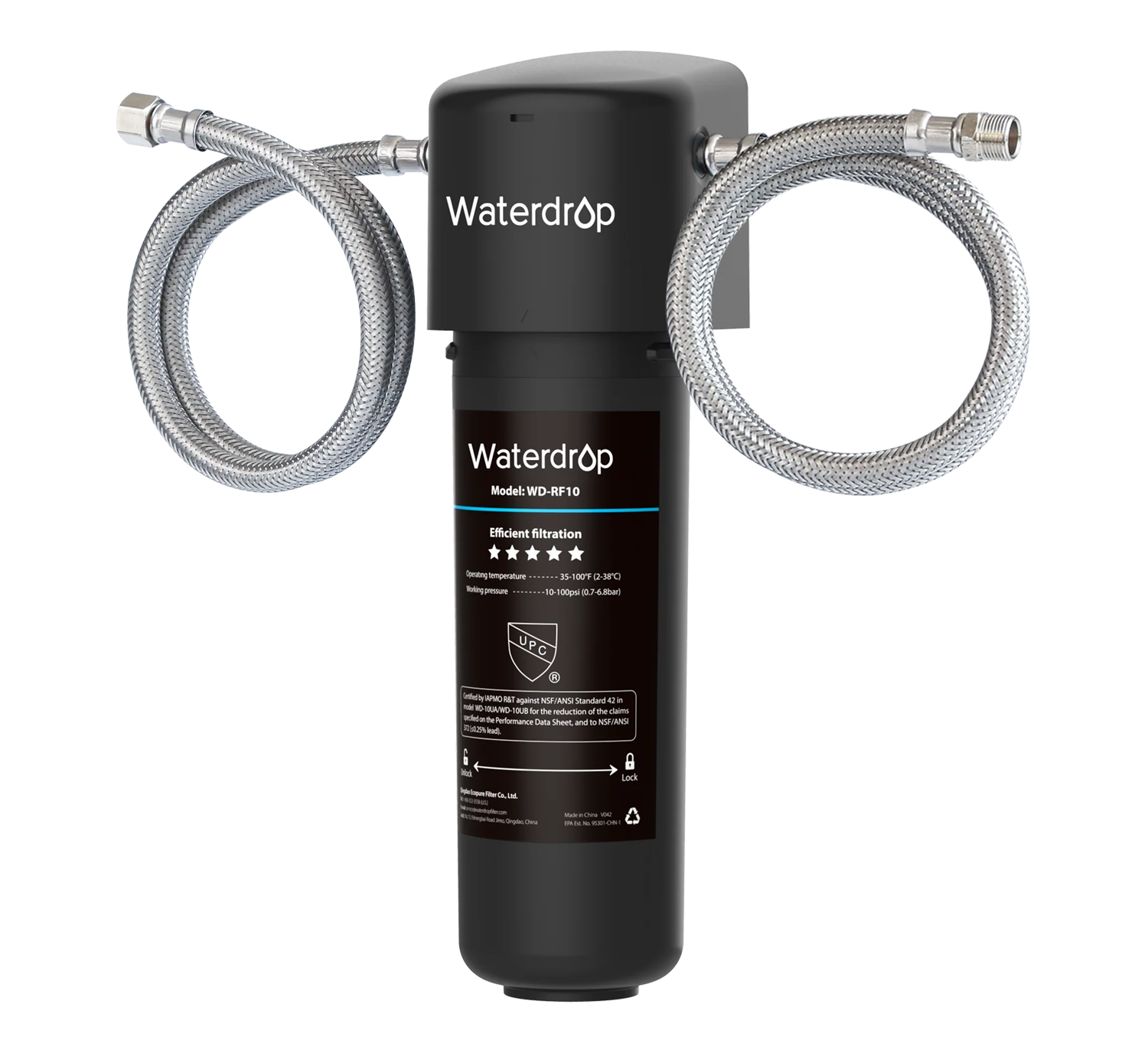
The Waterdrop 10UA is one of the best-selling under-sink filters on Amazon. Its listing states it “reduces lead” and notes it was “tested by a third-party laboratory against NSF/ANSI 53 standards.” It is not NSF/ANSI 53 certified, it holds NSF/ANSI 42 (taste and odor) and NSF 372 (lead-free materials only).
TechGearLab tested it at Western Environmental Testing Laboratory in December 2025. The Waterdrop 10UA removed 3.8% of lead. The reviewer’s assessment: “I would not get this if any health-related contaminants were a concern.”
Tested-to-standards and certified are not the same thing. The Waterdrop 10UA is a fine chlorine filter. It is not a lead filter. It appears in dozens of roundups recommending it as the best under-sink water filter for lead. Don’t rely on those roundups.
Common Questions
What is the best under-sink water filter for lead? For renters or anyone who can’t drill: the Epic Smart Shield, IAPMO-certified to NSF/ANSI 53, installs in 15 minutes without drilling and removes 99.3% of lead. For homeowners who can install a dedicated faucet: the Aquasana AQ-5200 (WQA-certified, 99.6% lead removal, 78 contaminants covered). For severe contamination or confirmed nanoparticle risk: the APEC ROES-50 RO system, which reduced lead to undetectable levels in independent lab testing.
Does NSF 42 cover lead removal? No. NSF/ANSI 42 covers aesthetic contaminants only, taste, odor, and chlorine. For lead, you need NSF/ANSI 53 (carbon block filters) or NSF/ANSI 58 (reverse osmosis systems). NSF 372 certifies that filter materials are lead-free, which has no bearing on how much lead a filter removes from your water.
Can renters use an under-sink water filter for lead in an apartment? Yes. The Epic Smart Shield and Frizzlife SK99-NEW are both designed to work as an apartment water filter for lead, they install without drilling, connect to your existing cold water supply line, use your existing faucet, and are fully reversible. Neither requires landlord permission for a standard installation.
How do I know if my tap water contains lead? Testing is the only way to confirm it. Tap Score by SimpleLab offers a certified home lead test using an ISO 17025-accredited lab. Your water utility’s annual Consumer Confidence Report shows system-level data, but lead typically enters water through household plumbing after it leaves the plant, a clean utility report doesn’t guarantee clean water at your tap.
Do carbon block filters release accumulated lead when they expire? No. Research has shown that certified carbon block filters pushed to 200% of their rated capacity still removed more than 71% of lead with no detectable release of stored lead back into the water. Removal efficiency drops past rated capacity, so replacement on schedule matters — but an expired cartridge doesn’t become a lead source.
When should I choose reverse osmosis over a carbon block filter for lead? For most households on municipal water, a certified carbon block filter is sufficient, field studies show 99%+ lead removal in real-world conditions. Choose RO if: your lead levels are very high (above 150 ppb); your utility uses orthophosphate corrosion treatment, which can generate lead nanoparticles that carbon block filters may not fully capture; or you need to remove arsenic, nitrates, or fluoride alongside lead.