Do ZeroWater filters remove PFAS and fluoride? Yes, both, and often near-completely. But whether your specific filter is certified to do so is a separate question, and the answer depends almost entirely on which version you’re buying. The brand went through a significant overhaul in 2025, and the gap between the old product and the new one matters more than most reviews let on.
We dug into the certification databases, peer-reviewed lab testing, independent home tests, and the fine print on ZeroWater’s own FAQ pages to give you a straight answer. Here’s what we found.
Related post:
The short version
If you have the new Culligan ZeroWater (launched May 2025), you own the most comprehensively certified pitcher filter on the market, formally verified by IAPMO (the equivalent of NSF certified) for total PFAS forever chemicals, fluoride, lead, mercury, and 25+ other contaminants. Rest assured that every claim they make has a certification behind it.
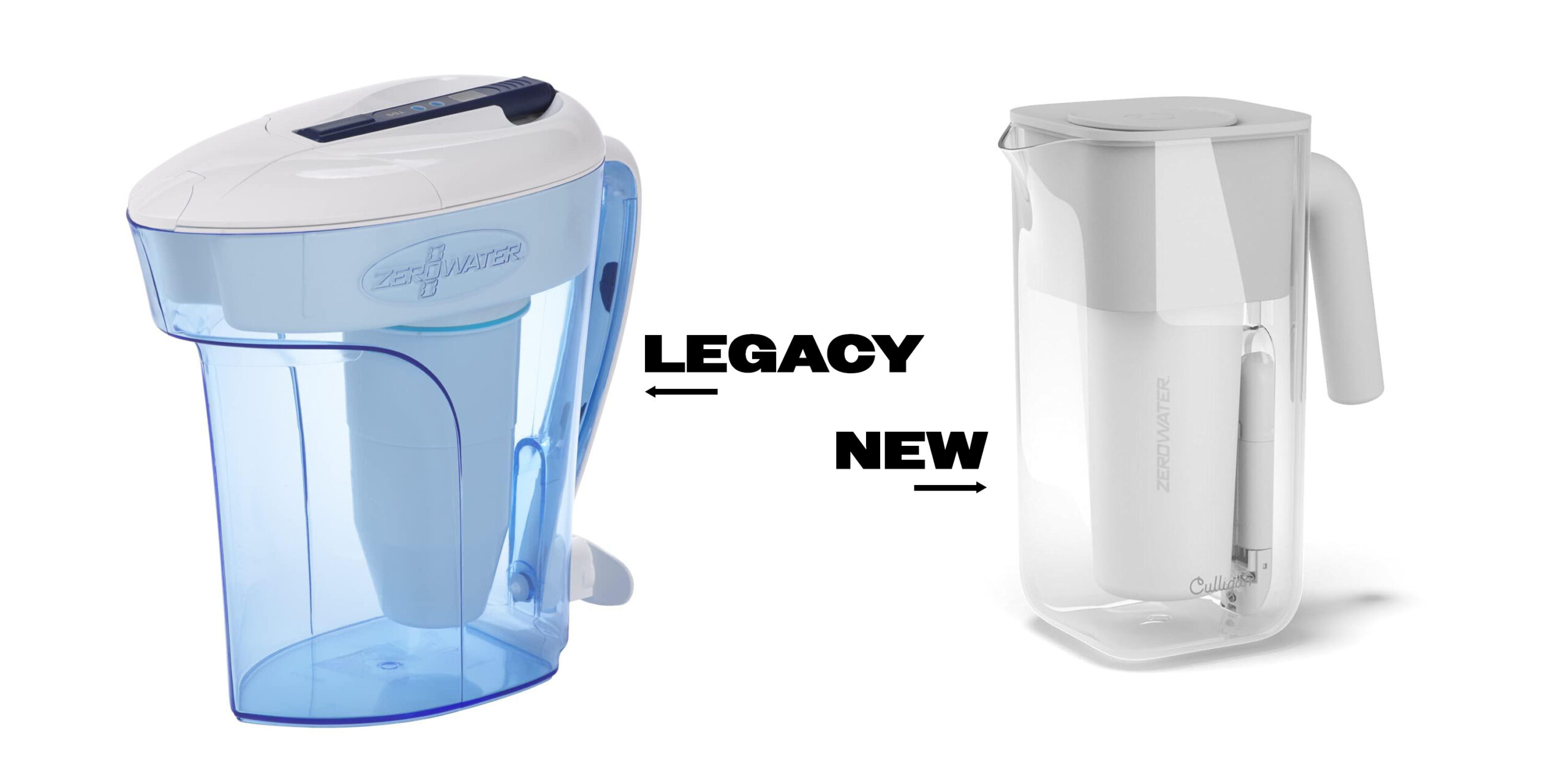
If you have the legacy ZeroWater (still sold today in many stores), your filter almost certainly removes fluoride at close to 99%, but that claim rests on manufacturer-run lab testing, not a third-party certification. For PFAS, you’re covered for PFOA and PFOS specifically, but not the broader class of forever chemicals the new version addresses.
Both filters work. The question is how much of that you can verify independently.
How the five-stage filter actually works
ZeroWater isn’t an activated carbon filter with a fancier name. It uses mixed-bed deionization, the same technology found in laboratory water purification systems, inside a pitcher you keep in your fridge.
The five stages run water through a coarse screen, a foam distributor, a multi-layer activated carbon bed, a dual-component ion exchange resin, and a final ultra-fine membrane. That ion exchange resin is where most of the action happens. Cation resins swap out contaminant cations, lead, mercury, calcium, for hydrogen ions. Anion resins swap out contaminant anions, fluoride, PFAS compounds, nitrate, chromium, for hydroxide ions. The hydrogen and hydroxide combine into water, and TDS reads near zero.
This is why ZeroWater removes fluoride while a standard Brita does not. Fluoride is a negatively charged ion; carbon filters adsorb organic compounds but can’t grab ions. Ion exchange can.
The same mechanism is also why ZeroWater has a shorter filter life than most competitors, and why the included TDS meter has a significant blind spot we’ll get to later.
Legacy ZeroWater vs. New Culligan ZeroWater: What Changed for PFAS and Fluoride Removal
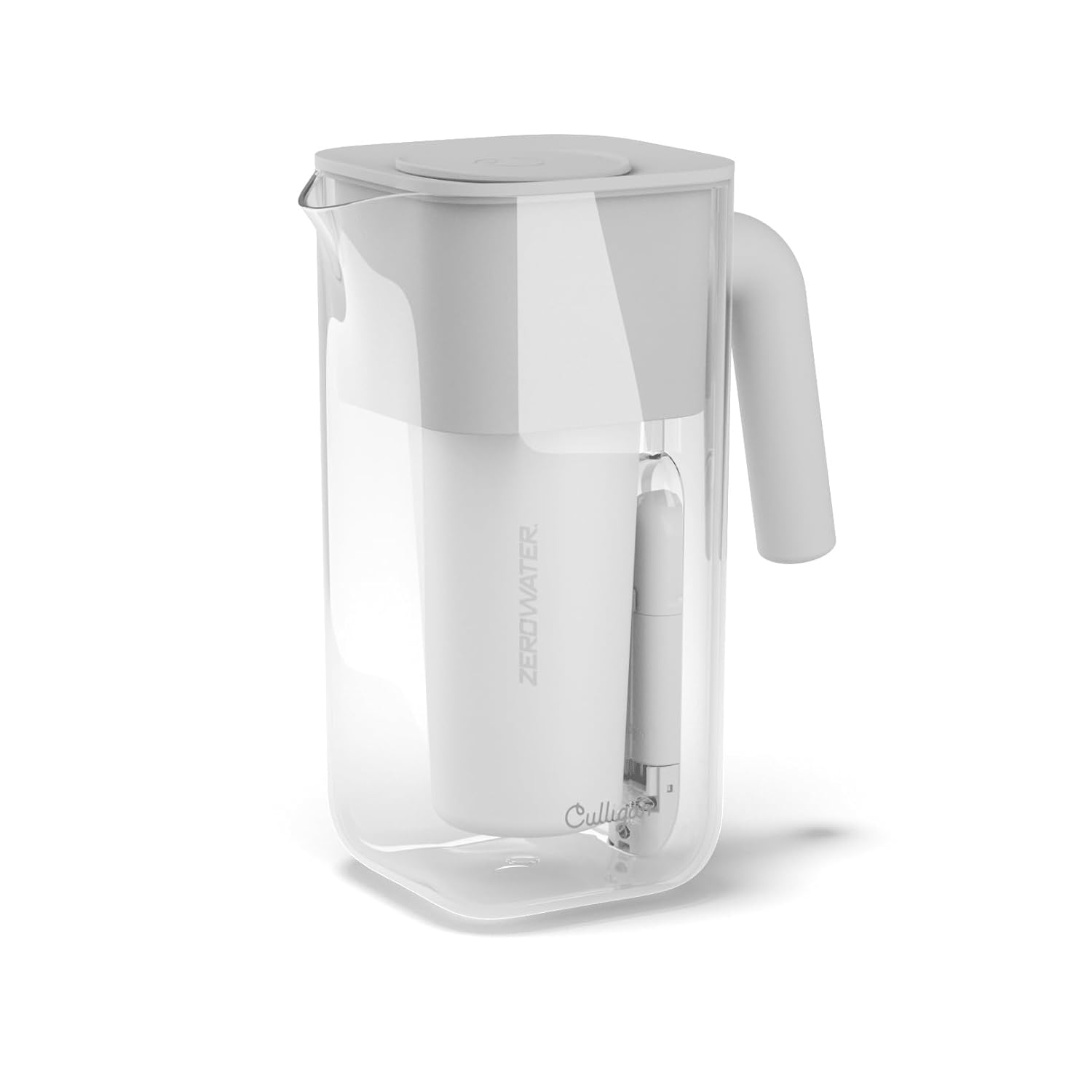
Culligan acquired ZeroWater in 2020 and sold the original product under updated branding for about five years. In May 2025, they launched a redesigned filter, “Culligan with ZeroWater Technology”, with a new top-down drop-in design that is not backward-compatible with legacy pitchers.
The certification upgrade is substantial!
The legacy filter is IAPMO-certified to NSF/ANSI 42 and 53, covering 6 contaminants: chlorine taste and odor, lead, hexavalent chromium, PFOA, PFOS, and mercury. The capacity rating for those certifications is 15 gallons.
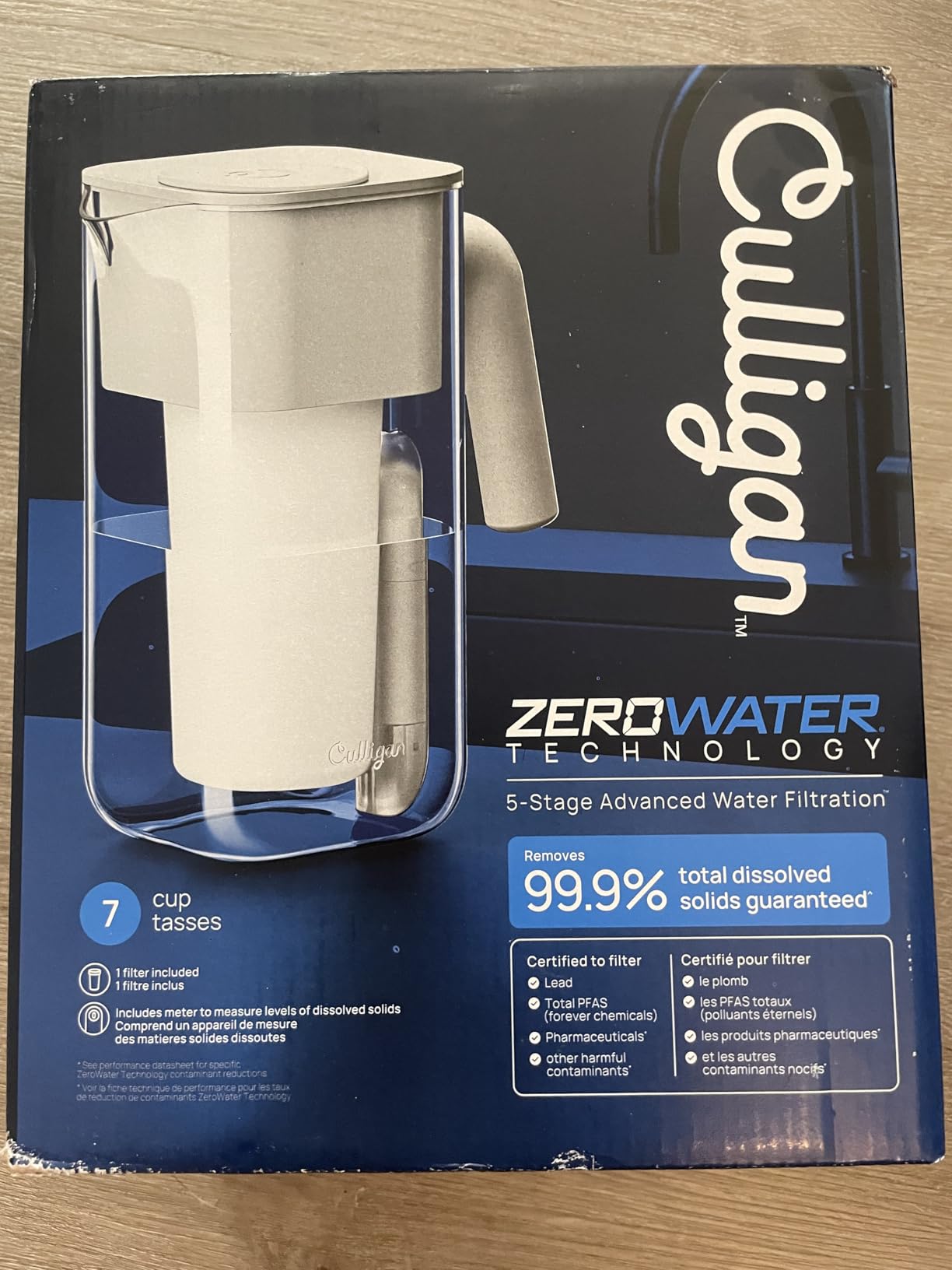
The new Culligan filter is IAPMO-certified to NSF/ANSI 42, 53, and 401, covering 25+ contaminants: the original six, plus fluoride, cadmium, copper, total PFAS (the full class, not just PFOA/PFOS), 12 pharmaceuticals, pesticides, BPA, and zinc. WaterFilterGuru, which tested the new version with SimpleLab’s Tap Score water testing panel, gave it a 10/10 certification score, noting it’s the only pitcher filter they’ve reviewed that is certified for 100% of its claimed contaminant reductions. The capacity rating increased to 20 gallons.
Both products are still being sold simultaneously. If you’re buying at a major retailer and you’re not specifically looking for the “Culligan with ZeroWater Technology” labeling, there’s a reasonable chance you’ll end up with the legacy version, with meaningfully weaker Culligan ZeroWater fluoride removal certification and no coverage for the full PFAS class.
Does ZeroWater Remove PFAS?
This is ZeroWater’s strongest card, and the peer-reviewed evidence here is more compelling than anything the company’s own marketing materials cite. Across every credible independent test we found, the filter delivers near-total elimination of PFAS, the forever chemicals, not the partial reductions you see from most activated carbon filters.
The most rigorous evidence comes from a 2024 peer-reviewed study published in Frontiers in Environmental Chemistry. Researchers tested five pitcher filters against 75 PFAS compounds over 160 liters of filtration. ZeroWater achieved 99% volume-weighted average PFAS removal in high-contamination water and approximately 100% in lower-contamination water, the highest performance of any filter in the study.
The Environmental Working Group’s independent testing also found ZeroWater reduced all 25 PFAS compounds tested to non-detectable levels. Earlier academic work by Anumol et al. documented 96.7% lifetime PFOS removal and 97.5% lifetime PFOA removal.
For context, the same Frontiers study found Brita Elite, often praised for its PFOA/PFOS certification, achieved only 20–48% removal when tested across the broader PFAS class. Brita’s certification covers PFOA and PFOS under controlled conditions; real-world performance on the wider family of forever chemicals is significantly weaker.
One caveat worth noting: TechGearLab’s testing found ZeroWater performed below average specifically on PFNA, a shorter-chain PFAS compound. Duke University research has also documented that ion exchange filters, like all pitcher filters, perform less consistently on short-chain variants than long-chain ones. This is not a ZeroWater-specific problem, it affects the whole category, but it’s worth knowing if your local water supply has been flagged for short-chain contamination.
The 2024 Frontiers study also found something reassuring about filter saturation: even after the filter began showing degradation on other metrics at 80 liters, PFAS removal held at 99% through 160 liters. PFAS appear to have higher binding affinity for the ion exchange resin than common anions like chloride, meaning the filter keeps catching forever chemicals even as other performance characteristics decline.
For a look at what’s coming next in PFAS filtration technology, we covered the breakthrough LDH research from Rice University.
ZeroWater PFAS and fluoride removal, what’s certified vs. what’s tested:
- Legacy ZeroWater: ZeroWater filter PFAS certification covers PFOA and PFOS only (IAPMO/NSF 53), not the full class of forever chemicals
- New Culligan ZeroWater: IAPMO-certified (NSF 53) for Total PFAS, the most comprehensive ZeroWater PFAS certification available
- Both versions: independently tested at ~99–100% across broader PFAS panel
Does ZeroWater Remove Fluoride?
This is where the ZeroWater story gets more complicated, and where most reviews fail to make the important distinction.
The original ZeroWater FAQ was candid about it: “ZeroWater filters are NOT certified for the reduction of fluoride however fluoride is an inorganic compound. The TDS meter is designed to detect inorganic compounds.” Honest disclosure. The filter probably removes fluoride, but Culligan hadn’t bothered to certify it.
You might find these interesting:
Water Filters That Remove Fluoride: What Actually Works (2026)
Is There a Water Filter That Removes Fluoride Without Reverse Osmosis?
After 2021, that language quietly disappeared from the FAQ. The current legacy product FAQ reads: “Our 5-stage filters have been independently tested by an EPA certified lab for the reduction of fluoride with an overall reduction percentage of 99%.” The word “certified” now appears, but it refers to the lab, not the product. An “EPA certified lab” is a laboratory with accredited analytical equipment. It means the testing facility is credentialed, not that the filter has been verified to perform through its full rated life under standardized conditions.
Tap Score (SimpleLab) flagged this distinction directly: “While the ZeroWater filtration technology used in the 5-stage filter system should theoretically reduce fluoride levels in drinking water, ZeroWater has not been certified for the reduction of fluoride.”
The meaningful difference between “EPA certified lab tested” and “IAPMO/NSF certified” is this: formal certification tests performance across the filter’s entire rated lifespan, from the first gallon to the last, and requires annual retesting with factory audits. A single lab snapshot doesn’t. ConsumerLab specifically warned that ZeroWater “can lose this ability fairly quickly,” referring to fluoride removal as the filter ages.
What do independent tests actually show? Every one of them confirms near-complete fluoride removal on a fresh filter:
- WaterFilterGuru/Tap Score testing: 100% fluoride removal (1.4 PPM → 0 PPM).
- Truthaboutfluoride.com home meter testing: 100% removal (0.6 PPM → 0.0 PPM).
- ConsumerLab testing: complete fluoride removal confirmed.
- WaterFilterGuru’s Culligan ZeroWater review: 100% fluoride elimination documented.
The filter removes fluoride. The open question, which certification would resolve but a lab snapshot cannot, is whether it keeps doing so consistently through all 20 rated gallons, in different source water conditions, across different production batches.
For buyers of the new Culligan ZeroWater: this is no longer an issue. The new filter is IAPMO-certified for fluoride under NSF/ANSI 53, and since IAPMO and NSF operate under the same ANSI standards framework, this is functionally equivalent to being ZeroWater NSF certified for fluoride. Amazon listings are explicit: “IAPMO Certified to Reduce Lead, Total PFAS (Forever Chemicals), Mercury, Fluoride, and Chlorine.” If you’re buying today and you specifically want certified fluoride removal from a pitcher, this is currently your only option in the certified category.
What ZeroWater removes, and what it doesn’t
Here’s the full breakdown across both versions, with clear sourcing for each claim.
| Contaminant | Legacy ZeroWater | New Culligan ZeroWater |
| PFOA/PFOS | IAPMO Certified (>99%) | IAPMO Certified (>99%) |
| Total PFAS (broad panel) | ~99%, independently tested only | IAPMO Certified (NSF 53) |
| Fluoride | 99–100%, manufacturer EPA-lab claim only | IAPMO Certified (NSF 53) |
| Lead | IAPMO Certified (>99%) | IAPMO Certified (>99%) |
| Hexavalent chromium | IAPMO Certified (>99%) | IAPMO Certified (>99%) |
| Mercury | IAPMO Certified (>99%) | IAPMO Certified (>99%) |
| Chlorine (taste/odor) | IAPMO Certified | IAPMO Certified |
| Cadmium | Not certified | IAPMO Certified |
| Copper | Not certified | IAPMO Certified |
| Nitrate | 100%, independently tested; not certified | 100%, independently tested; not certified |
| Pharmaceuticals/BPA | Not certified | IAPMO Certified (NSF 401, 12 compounds) |
| Pesticides | Not certified | IAPMO Certified |
| Chloramine | Not certified; ZeroWater FAQ acknowledges gap | Not certified |
| Bacteria/viruses | Does not remove | Does not remove |
| Microplastics | Increases, ConsumerLab found 1,206% increase | Unknown, new design not independently tested |
| Disinfection byproducts (THMs) | 3.4 PPB chloroform detected post-filtration (WaterFilterGuru) | Not reported |
| Healthy minerals (Ca, Mg) | 100% removed, by design | 100% removed, by design |
Two items in that table deserve extra attention.
The microplastics finding is the most alarming thing ConsumerLab documented. In 2020, their testing found ZeroWater increased microplastic particles from 33.5 per liter in unfiltered tap water to 437.4 per liter after filtration, a 1,206% increase. The other three pitchers tested all reduced microplastics. ZeroWater disputed the findings, claiming their own testing showed 99% removal, but their claim was limited to fibers between 3 and 10 microns, excluding larger particles. ConsumerLab has not retested ZeroWater since 2020, and the issue remains unresolved. It is unknown whether the new Culligan filter design addresses it.
The mineral stripping is worth understanding before you commit. Ion exchange doesn’t discriminate. It removes lead and mercury, yes, but it also removes calcium and magnesium, the minerals your body uses and that contribute to a water’s pH stability. WaterFilterGuru’s testing found post-filtration pH dropped from 7.6 to 6.6, slightly acidic. When the filter exhausts hydroxide ions, it drops further. ZeroWater’s own FAQ acknowledges this: “ZeroWater’s 5-stage filtration technology removes 99.6% of TDS and does not discriminate between bad chemicals and good minerals.” If you’re health-conscious about mineral intake, this is a meaningful tradeoff. The WHO’s expert panel on demineralized water has documented health correlations with prolonged low-mineral water consumption, particularly around cardiovascular risk.
The real-world problems buyers run into
The filter life problem
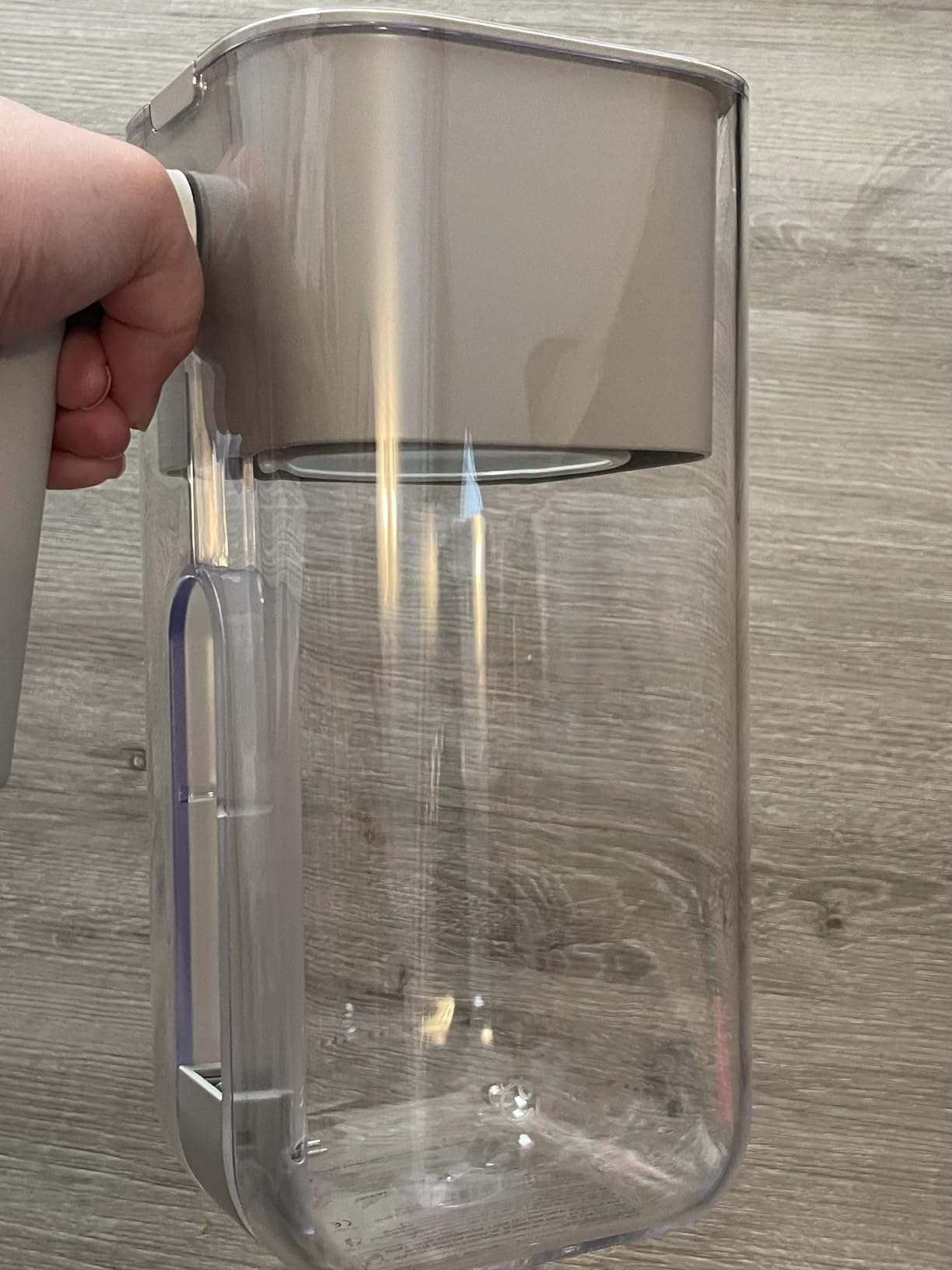
ZeroWater’s filter life isn’t really a fixed number, it’s a sliding scale based on your source water’s TDS. The legacy filter is rated at 15 gallons; the new Culligan version at 20. But in practice:
- TDS 51–200 (typical for most U.S. tap water): 25–40 gallons
- TDS 201–300: 15–25 gallons
- TDS 301–400: 8–15 gallons
- TDS 401+: 8 gallons or fewer
Most Amazon and Reddit reviewers report 2–4 week filter life, with taste degradation starting earlier. At roughly $15–18 per filter, WaterFilterGuru calculated the ongoing cost at $0.90 per gallon, the highest of any pitcher filter tested. For context, Clearly Filtered costs ~$0.50/gallon with a 100-gallon filter life. A well-maintained under-sink reverse osmosis system can run as low as $0.02–0.10/gallon. EWG estimated first-year ZeroWater costs at $646 based on 2-gallon daily usage.
The fishy smell
ZeroWater’s most consistent complaint, a rotten fish odor in filtered water, has a specific chemical explanation. As the anion exchange resin degrades, it releases trimethylamine (TMA), a compound closely related to ammonia. High chlorine or chloramine levels in source water accelerate the degradation. Multiple buyer reports describe the smell appearing while the TDS meter still reads within the acceptable range (under 006), meaning you can’t rely on the meter to warn you.
The TDS meter’s blind spot
The TDS meter that comes with every ZeroWater pitcher is a useful tool for tracking overall ion exhaustion. But Culligan’s own FAQ acknowledges its limits: “No. The TDS meter measures Total Dissolved Solids, not specific contaminants like lead, PFAS, or bacteria.” Non-ionic compounds, disinfection byproducts, some pesticides, dissolved gases, don’t register on TDS. PFAS appear to hold in the filter even as TDS climbs, based on the Frontiers study. But you have no consumer-accessible way to monitor specific contaminant breakthrough in real time. The meter tells you when the filter is exhausted; it doesn’t tell you which contaminants stopped being removed first.
How ZeroWater compares to the main alternatives
| New Culligan ZeroWater | Clearly Filtered | Brita Elite | Under-Sink RO | |
| PFAS removal (broad, peer-reviewed) | ~99–100% | ~96–99% | ~20–48% | 90–99%+ |
| Fluoride removal | IAPMO Certified (99–100%) | 99.5% tested; not certified | None, by design | 85–99% (NSF 58) |
| Formal certifications | NSF 42, 53, 401 (25+ contaminants) | WQA: 3 contaminants certified; 365+ tested | NSF 42, 53, 401 (~20 contaminants) | NSF 58 (varies by model) |
| Filter life | 20 gallons | 100 gallons | 120 gallons | 2–3 years (membrane) |
| Cost per gallon | ~$0.90 | ~$0.50 | ~$0.17 | ~$0.02–0.10 |
| Est. first-year cost | ~$646 (EWG) | ~$437 (EWG) | ~$100–130 | $250–1,200 (installed) |
| Key problem | Short life; microplastics concern; mineral stripping | Only 3 formally certified contaminants | Weak broad PFAS; no fluoride | Requires installation |
On Brita Elite’s PFAS numbers: Brita’s IAPMO certification shows 98.1% removal for PFOA and PFOS under controlled lab conditions, a figure the company highlights prominently. But the 2024 Frontiers study testing 75 PFAS compounds found only 20–48% volume-weighted average removal over 160 liters. Brita’s activated carbon catches long-chain PFAS reasonably well; short-chain variants largely pass through. This discrepancy between the certification number and the real-world performance number is worth understanding before you buy.
On Clearly Filtered: It’s the strongest alternative for anyone who wants comparable PFAS and fluoride removal with substantially longer filter life and lower running cost. The performance is verified by third-party testing and the 100-gallon filter life makes the $42–55 replacement cost more digestible. The honest limitation is certification breadth, only 3 contaminants are formally WQA-certified, despite the company testing 365+. Clearly Filtered is currently transitioning its certifications from WQA to NSF; broader formal certification is pending. We covered it in our best countertop filters for PFAS roundup.
On reverse osmosis: If you own your home and can handle a one-time installation, under-sink RO is the objectively superior solution for PFAS and fluoride removal. NSF/ANSI 58-certified systems routinely achieve 90–99%+ on both, with membranes that last years and an ongoing cost measured in cents per gallon. The comparison to pitcher filters isn’t close on performance or long-term cost. The barrier is exclusively upfront: you need to install it, you pay more at the outset, and in apartments or rentals it usually isn’t practical. Our countertop vs. under-sink comparison covers the three-year total cost of both options in detail.
Who should buy ZeroWater, and who shouldn’t
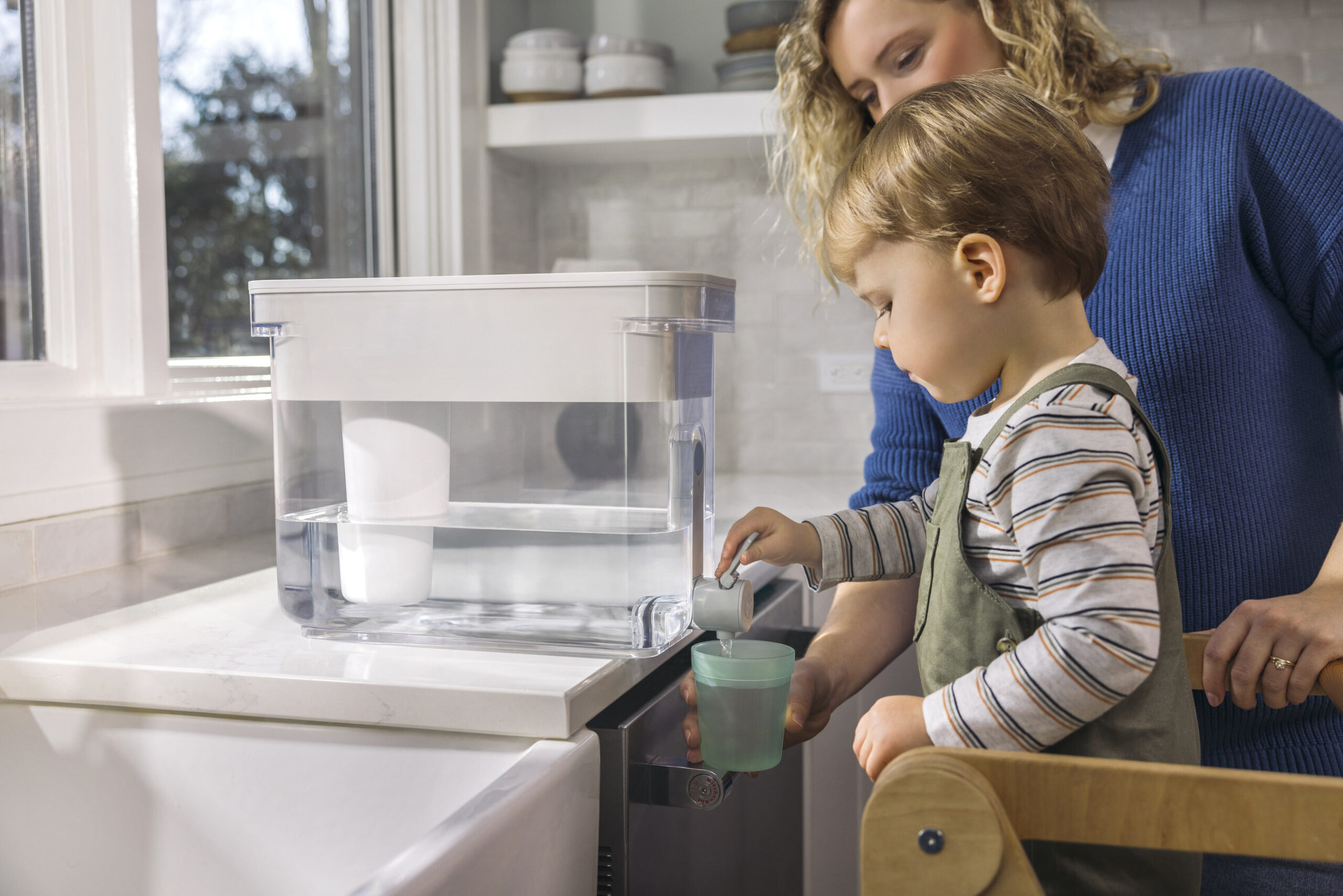
Buy the new Culligan ZeroWater if you want a pitcher with formal certification for both PFAS and fluoride, something no other pitcher currently offers, and you’re willing to absorb the higher ongoing cost. The new version’s IAPMO certification across 25+ contaminants is a genuine distinction. It’s also the only pitcher in this class that independently verified all of its performance claims with a third-party body. If you’re a renter, live somewhere that makes installation impractical, or just want a no-plumbing solution you can trust for PFAS and fluoride, the new Culligan ZeroWater is the pitcher to buy.
Don’t buy the legacy ZeroWater if certified fluoride removal is your primary goal. The filter likely delivers 99% fluoride removal in practice. But “likely” and “certified” are meaningfully different when you’re making a decision about drinking water contaminants. Given that both versions retail at similar prices, there’s little reason to choose the legacy product unless your pitcher is incompatible with the new filter design.
Consider Clearly Filtered instead if long filter life and lower running costs matter to you and you’re comfortable relying on extensive third-party lab testing rather than formal certification. You get similar contaminant performance, including fluoride removal at >99.5%, with filters that last five times longer and cost about half as much per gallon to run. If the unresolved microplastics concern with ZeroWater bothers you, Clearly Filtered is also the cleaner alternative on that specific issue.
Consider under-sink reverse osmosis if you own your home and are willing to spend a few hours on installation once. You’ll get certified, comprehensive removal of PFAS, fluoride, and virtually everything else, at a cost per gallon that makes every pitcher option look expensive by comparison. The long-term economics consistently favor RO over pitcher filters for any household with meaningful daily water consumption. We’ve broken down the numbers in our countertop vs. under-sink comparison and our under-sink filters that remove PFAS guide.
ZeroWater’s ion exchange technology is genuinely effective. The peer-reviewed evidence on PFAS removal is stronger than any other pitcher filter on the market. The fluoride removal consistently hits near-100% in independent tests. The new Culligan ZeroWater closed the certification gaps that made the legacy product harder to recommend with full confidence.
What ZeroWater hasn’t solved: filter life is still the shortest of any major pitcher by a significant margin, the cost per gallon is the highest, the microplastics question remains open, and mineral stripping drops your water to slightly acidic. These aren’t deal-breakers if you know going in. They are problems if you don’t.
If you’re choosing between the two versions today, buy the new Culligan with ZeroWater Technology. The legacy version does its job, but the new one does the same job with formal certification to back it up, and at essentially the same price, that’s the obvious choice.
Questions You Might Have
Is ZeroWater NSF certified?
The legacy ZeroWater filter is IAPMO-certified to NSF/ANSI 42 and 53 for six contaminants: chlorine, lead, chromium-6, PFOA, PFOS, and mercury. The new Culligan with ZeroWater Technology is IAPMO-certified to NSF 42, 53, and 401 for 25+ contaminants including total PFAS, fluoride, pharmaceuticals, and BPA. IAPMO certification carries equal weight to NSF certification, both are accredited third-party bodies operating under the same ANSI standards framework.
Does ZeroWater remove fluoride?
Yes, independent testing consistently shows 99–100% fluoride removal on a fresh filter. The legacy product achieves this but is not formally certified for it; the new Culligan ZeroWater filter is IAPMO-certified for fluoride reduction under NSF/ANSI 53, making it the only currently available pitcher with formal certification for fluoride removal.
Does ZeroWater remove PFAS and forever chemicals?
Yes. ZeroWater’s ion exchange technology removes PFAS at 99–100% in peer-reviewed testing across 75 compounds. The legacy filter is certified only for PFOA and PFOS. The new Culligan ZeroWater is certified for total PFAS, the full class of forever chemicals, under NSF/ANSI 53.
How long does a ZeroWater filter last?
The legacy filter is rated at 15 gallons; the new Culligan version at 20 gallons. Actual lifespan depends heavily on your source water’s TDS level. Most U.S. households report 2–4 weeks of use before taste degrades. High-TDS water (above 300 ppm) can exhaust a filter in under 10 gallons.
Does the new Culligan ZeroWater replace the old ZeroWater filter?
No, the new Culligan filter uses a top-down drop-in design that is not backward-compatible with legacy ZeroWater pitchers. If you have an older pitcher, you’ll need to use legacy filter cartridges or purchase a new Culligan-compatible pitcher.
Is ZeroWater safe to drink?
For most people, yes. The main concerns are mineral stripping (calcium and magnesium are removed along with contaminants, lowering pH to around 6.6), an unresolved 2020 ConsumerLab finding that showed significant microplastic increase post-filtration, and trimethylamine off-gassing as filters age. None of these represent acute health risks for healthy adults, but they’re worth knowing before you commit.