
You’re here because you’ve spent time looking at water filters, and you’ve noticed something confusing; is there a water filter that removes fluoride without reverse osmosis, or do all the options that claim to do so fall apart once you look closer?
Plenty of filters promise to “improve water quality,” and some even hint at fluoride reduction, yet reverse osmosis keeps coming up as the only option people seem confident about.
I’ll help you unpack the answer, not because most water-filters suck, but because fluoride doesn’t behave like most of the things common filters are designed to handle.
Why fluoride is harder than it sounds

Most everyday water filters are built to deal with obvious problems: chlorine taste, odors, sediment, sometimes lead. Fluoride is different. It’s already dissolved at a very small level, and it doesn’t “stick” easily to standard filter materials.
That’s why filters that work great for taste can still leave fluoride almost untouched, this difference alone is also why so many people feel misled. The filter improves the water, sure, but not in the way they were actually hoping for.
Why people want fluoride removal without reverse osmosis
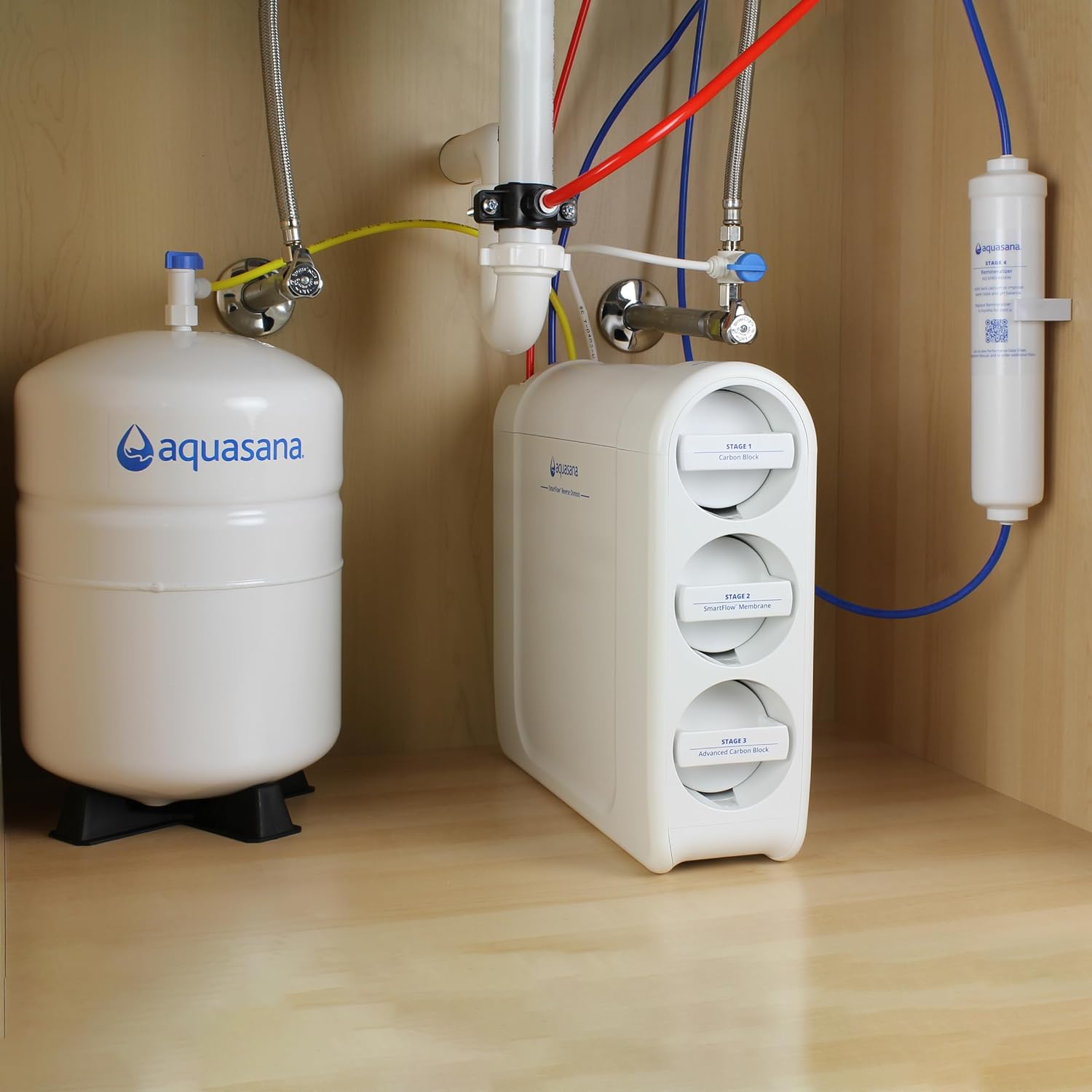
Reverse osmosis has a reputation: it works. Aquasana’s SmartFlow RO is the system we tend to recommend for people who want consistency above all else. It’s not the simplest to install, but it reliably removes fluoride and other contaminants and reintroduces minerals afterward.
Best recommendation
Once it’s installed, the Aquasana SmartFlow mostly disappears, you just use the small faucet when you want filtered water. It’s a solid option if fluoride reduction actually matters to you, but setup takes some effort and a few users mention install headaches or minor leaks if things aren’t tightened properly. Filter replacements are part of the deal.
But in general, RO systems tend to:
- Waste water.
- Take up space.
- Slow down the tap.
- Remove minerals along with fluoride.
- Cost more than basic filters.
For example, our guide to Delta’s Clarifi RO system shows how high certification costs, constant pump noise and mandatory accessories can nearly double the sticker price
For many households, especially renters or people who just want better drinking water, that feels excessive. Their goal usually isn’t perfection, it’s reduction without hassle.
That’s where non-RO options enter the conversation.
The few filter types that can reduce fluoride (without RO)
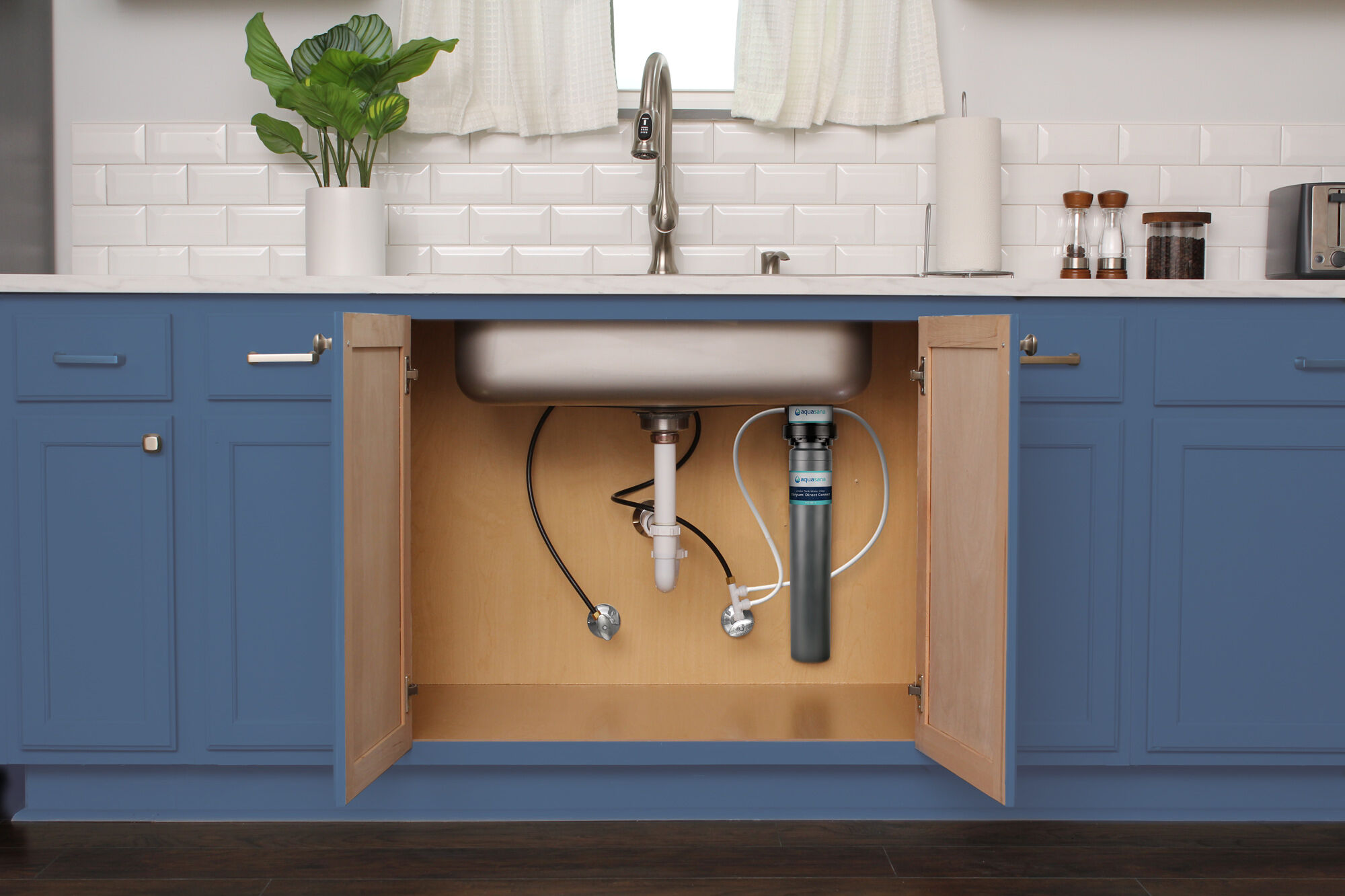
There are filtration approaches that don’t use a reverse osmosis membrane and can still lower fluoride levels. The trade-off is that they’re more sensitive to how they’re used.
Activated alumina filters
Activated alumina is one of the most common non-RO materials used for fluoride reduction, think of it as a material that can grab fluoride as water passes through, if the water moves slowly enough and the filter is changed on time.
When those conditions are met, fluoride levels can drop. When they aren’t, performance fades quietly. There’s no obvious signal when the filter stops working, which is why maintenance matters more here than with basic carbon filters.
Some under sink water filters that remove fluoride rely on this approach, and they can make sense for people willing to stay on top of replacements.
Ion exchange–based filters
These filters work by swapping fluoride for something else already attached to the filter. They can reduce fluoride, but they’re easily affected by whatever else is in the water and don’t last as long as people expect.
They’re effective on paper, less forgiving in real kitchens.
Bone char systems
Bone char has been used to reduce fluoride for decades, so the issue isn’t whether it can work, it’s consistency. Results vary widely, certifications are rare, and replacement timing is unpredictable. For some households, that alone rules it out.
Where most filters fall short
Here’s the part where I can save you money (and search time).
Pitcher filters and carbon-only systems
Pitcher filters, fridge filters, and most countertop carbon systems aren’t designed for fluoride. They improve taste and reduce chlorine, but fluoride mostly passes straight through.
If a filter relies only on carbon and doesn’t carry specific fluoride testing or certification, any fluoride reduction is incidental at best.
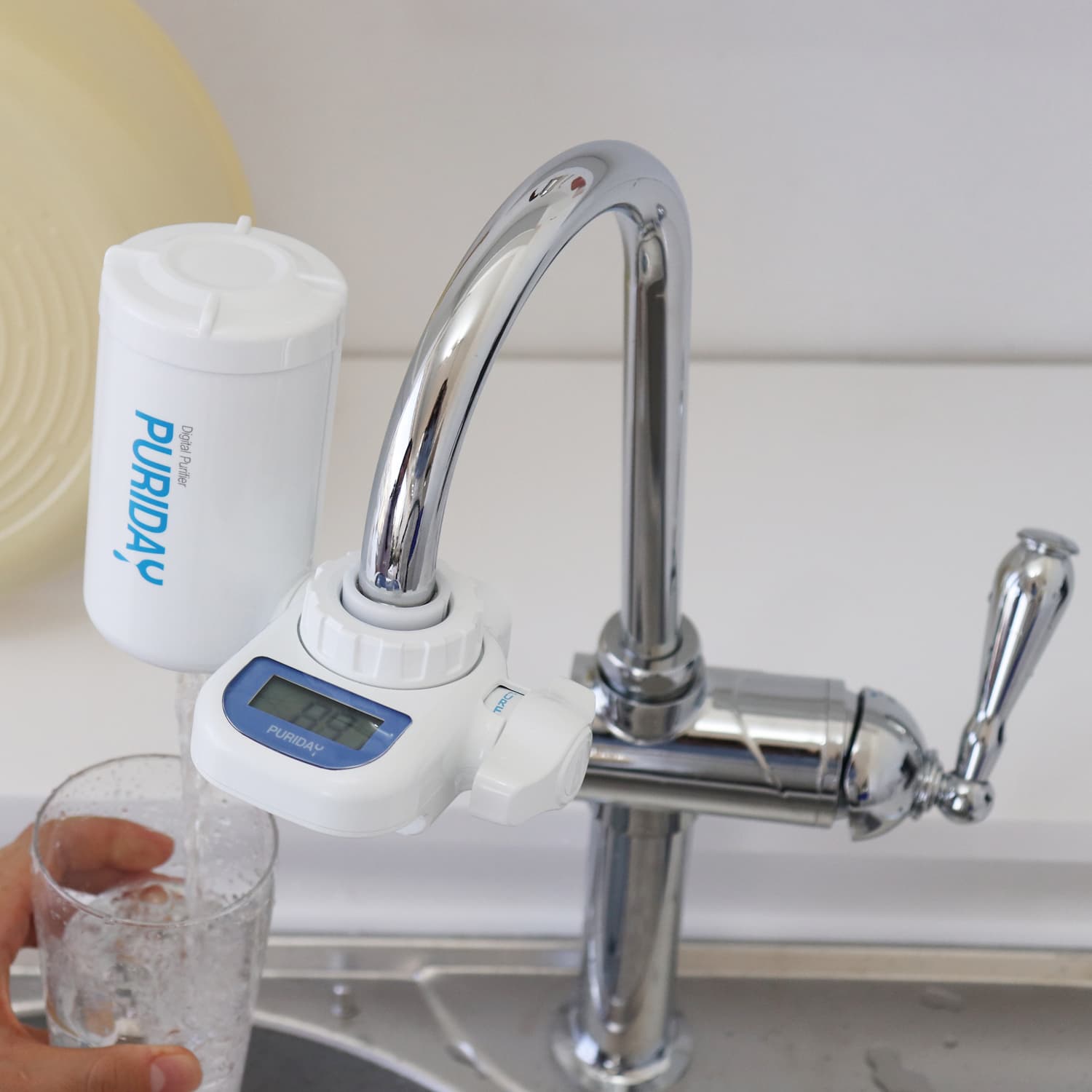
Faucet-mounted filters
A faucet-mounted water filtration tap system prioritizes convenience: small size, fast flow, easy install. Those same features make fluoride removal unlikely.
That’s why faucet filters are commonly certified for lead or chlorine but not fluoride. We go deeper into this in Do Faucet-Mounted Water Filters Actually Remove Fluoride?, this is a must-read if faucet-mounted filters are on your list.
So, is there a water filter that removes fluoride without reverse osmosis?
Here’s where the picture becomes clearer.
Yes, some filters can reduce fluoride without RO, but they do it under tighter conditions, with slower flow, and with more maintenance than most people expect. None of them offer the same reliability or margin for error as reverse osmosis.
That’s why people either feel satisfied with partial reduction or eventually circle back to RO after trying simpler systems first. Are you willing to invest the time and money is usually what this decision comes down to.
For a broader comparison of all fluoride-capable filter types, including RO, we lay that out in Water Filters That Remove Fluoride: What Actually Works.
Choose realistically, not optimistically
If you’re deciding based on real-life use:
- Reverse osmosis is still the most predictable option.
- Non-RO under-sink systems are compromises, not shortcuts.
- Faucet and pitcher filters solve different problems entirely.
There’s nothing wrong with choosing convenience, especially for renters, just don’t expect it to do a job it wasn’t built for.
By now, you can probably see why the question keeps coming up. Is there a water filter that removes fluoride without reverse osmosis? Technically, yes, but practically, only with trade-offs.
Once you understand those limits, the decision becomes less about chasing the perfect filter and more about choosing which compromises you’re actually comfortable living with.