
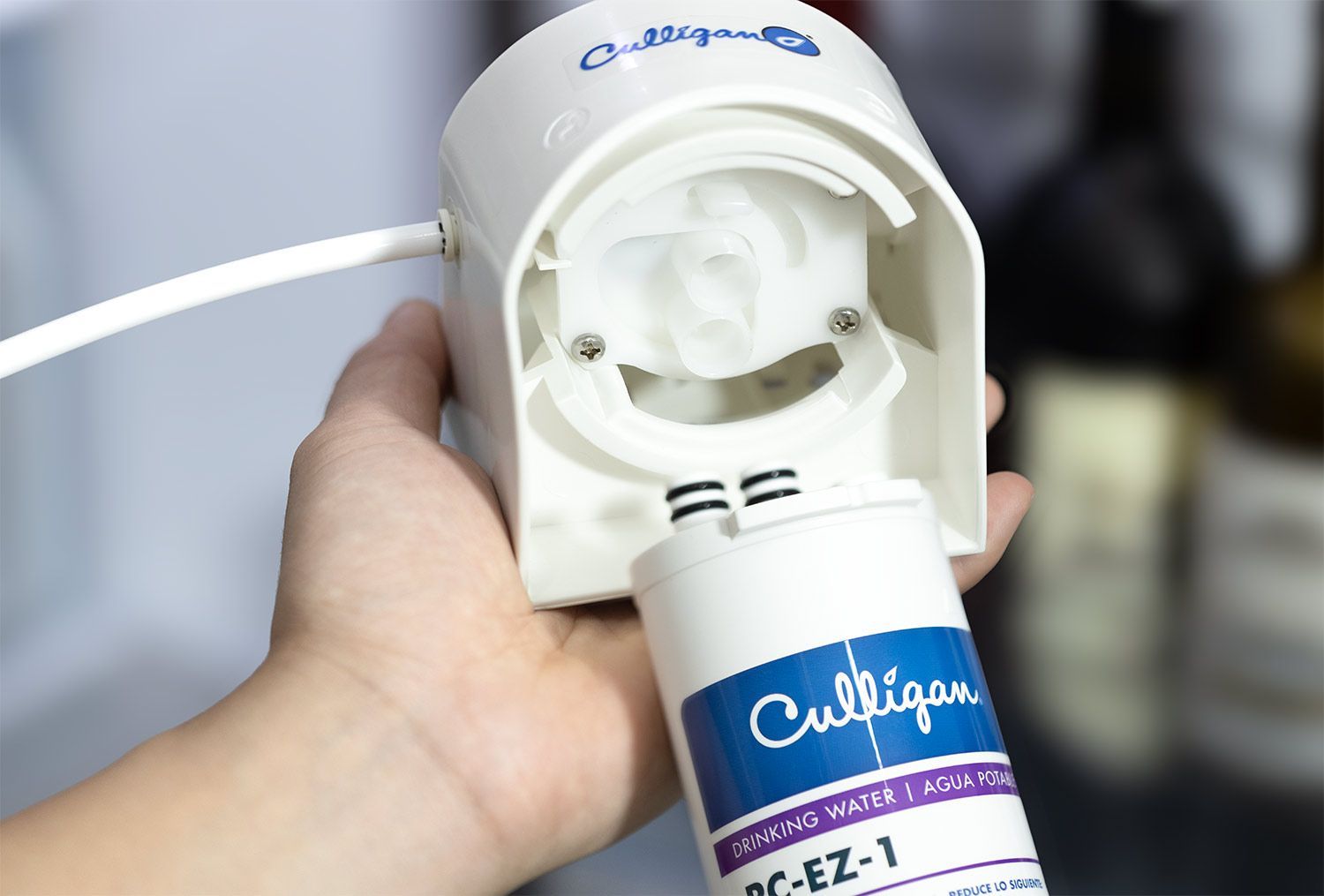
Do refrigerator water filters remove lead? Only if the exact cartridge inside your fridge door carries NSF/ANSI Standard 53 certification, named specifically for lead. Most retail fridge filters don’t. They carry NSF/ANSI Standard 42 instead, which tests taste and odor and has no health-contaminant requirement at all. The difference between those two standards is the entire article.
Already Replacing Your Fridge Filter on Schedule? Check the Model Number First
- If your filter’s exact model number is certified to NSF/ANSI 53 for lead, specifically, you’re covered. Keep replacing it on schedule.
- If it’s certified to NSF/ANSI 42 only, or you genuinely don’t know which standard it carries, lead isn’t being removed, no matter what the box implies.
- If you rent, live in a pre-1986 building, or know your water system has lead service lines, treat an unverified fridge filter as no protection and add a dedicated point-of-use filter instead.
- If there’s a child or someone pregnant in the household, verify certification now. The EPA states there’s no safe blood lead level for children.
Do Refrigerator Water Filters Remove Lead? NSF/ANSI 42 Covers Taste, Not This
NSF/ANSI 42 is the standard almost every refrigerator filter ships with, and it certifies exactly one thing: aesthetic improvement. Chlorine taste, odor, and particulate reduction. It carries zero health-contaminant testing requirement, which means a filter can be fully, legitimately NSF/ANSI 42 certified and do nothing whatsoever about lead.
NSF/ANSI 53 is the standard that actually tests lead, along with cysts like Giardia and Cryptosporidium, select VOCs, and, since a 2020 revision, PFOA and PFOS. A fridge filter certified to NSF/ANSI 53 for lead had to pass a materially stricter protocol than one carrying 42 alone. The box might say “reduces contaminants.” The model number, checked against NSF’s own standard, tells you which contaminants.
Why “Activated Carbon” Doesn’t Guarantee Lead Removal
Every refrigerator filter on the market uses activated carbon in some form, either loose granules or a solid carbon block. The word “carbon filter” on its own promises nothing about lead. Generic granular carbon isn’t reliably engineered to capture it, while carbon block media can be, if it’s formulated and independently tested specifically for that purpose.
There’s a chemistry reason the formulation matters. A lab study on coal-based activated carbon found lead adsorption is strongly pH-dependent, peaking above 90% removal near pH 5.0 to 5.5 and dropping off above pH 6. Household tap water typically runs pH 6.5 to 8.5, well outside that peak range, which is exactly why a manufacturer has to engineer and certify specific media rather than rely on carbon generically to handle lead at normal tap pH.
Where a cartridge is formulated and NSF/ANSI 53-certified for lead, performance can be strong. GE’s MSWF cartridge, for example, is NSF/ANSI 53 certified for 99.3% lead reduction at pH 6.5 and 98% at pH 8.5, though this figure comes from the manufacturer’s own spec sheet and hasn’t been independently retested. That’s not a contradiction of the generic-carbon caution above. It’s the difference between certified, purpose-built media and carbon that just happens to be in a cartridge.
Which Fridge Filter Brands Actually Carry Standard 53 for Lead
Checking info.nsf.org’s live certified-product database directly for this brief returned no usable results, which means every brand claim below comes from manufacturer or retailer pages, not a confirmed independent database pull. Treat the following as starting points to verify yourself, not settled fact.
Whirlpool’s everydrop line, GE’s SmartWater cartridges, Samsung’s HAF-QIN, LG’s LT1000P, and Frigidaire’s PurePour line are each represented on their own manufacturer pages as certified to NSF/ANSI 42, 53, and 401 on their current flagship cartridge. [Each brand claims this certification on its product pages, though this hasn’t been independently verified against NSF’s public database.] GE’s page goes further, separately claiming tested reduction of five trace pharmaceuticals.
One widely-repeated claim did not hold up under a direct check: that only Whirlpool’s everydrop Filter 3 carries a PFOA/PFOS reduction claim while Filters 1, 2, 4, and A don’t. Fetching the actual source page cited for that claim found no such statement anywhere on it. It appears to be a fabricated search-summary artifact, and it does not belong in any CleanFaucet article until it can be independently confirmed.
“NSF Certified” and “Tested to NSF Standards” Are Not the Same Lead Claim
This is the single most useful thing a reader can walk away with. “NSF Certified,” sometimes written “NSF Listed,” means NSF International itself tested or audited that exact model and it appears in NSF’s public certification database, with ongoing plant audits to keep it there. “Tested to NSF standards” or “NSF compliant” means a manufacturer paid a private lab to run the protocol, with no NSF oversight and no public listing.
The second phrase is designed to sound like the first. It isn’t verifiable by a consumer the way a real listing is. The only way to tell the difference is to take the exact model number off your cartridge and look it up on info.nsf.org directly, rather than trusting either phrase on the box.
This gap isn’t hypothetical. NSF International has issued public enforcement notices against aftermarket refrigerator-filter sellers, including Aqua-Pure and Alpine Water, for falsely claiming NSF certification on Amazon and eBay listings, though those notices date to 2019 and are worth a fresher check since no later retraction was found. Both cases involved third-party aftermarket cartridges, not the major OEM brands named above, which is itself a useful distinction: a generic replacement filter is a bigger certification risk than a brand-name original.
Are Refrigerator Water Filters Good Enough, or Do You Need an Upgrade
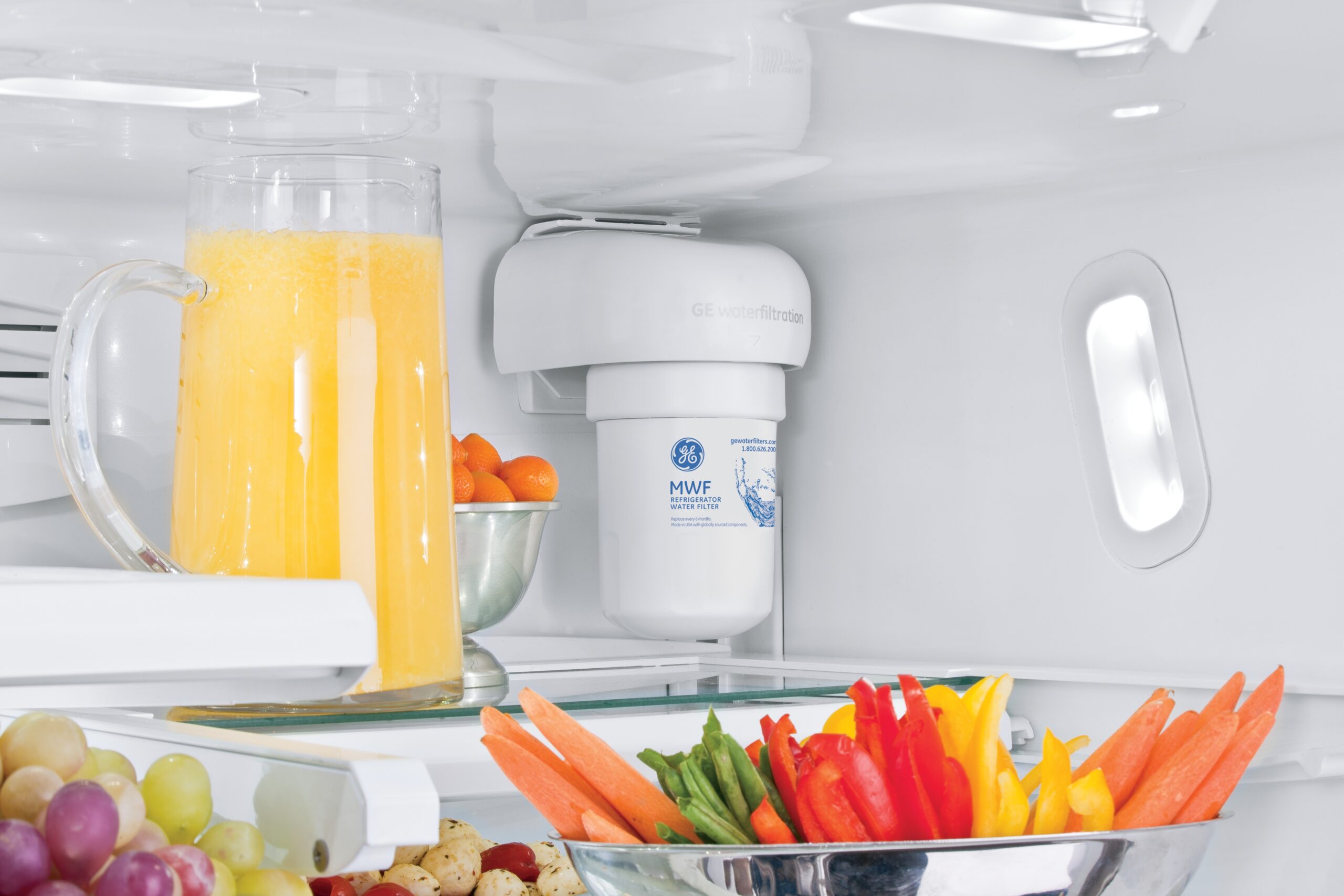
A properly certified fridge filter is good enough for lead, on its own terms. The honest problem is that no independent tester, not WaterFilterGuru, not Tap Score, not ConsumerLab, not TechGearLab, has published refrigerator-filter-specific lead test data. Every lead-removal number currently available for a fridge cartridge, including GE’s 98 to 99.3% figures above, is manufacturer-published, not independently retested.
That’s a real gap, not a reason to assume the numbers are wrong. It’s a reason to treat a certified fridge filter as adequate rather than exceptional, and to lean harder on the certification check than on the percentage itself. A filter that’s actually NSF/ANSI 53-listed for lead is doing its job. A filter that only sounds like it is isn’t.
If you want a second, independently-documented layer, the point-of-use filters recommended below have more corroborated certification trails than any fridge cartridge currently does.
Refrigerator Filter vs Under-Sink Filter: The Upgrade Path for Lead
A refrigerator filter’s biggest practical limitation isn’t chemistry, it’s reach. It only treats water from the fridge dispenser and ice maker, not the kitchen tap, the bathroom sink, or anywhere else lead-contaminated water comes out of a faucet. An under-sink filter or a point-of-use pitcher covers the tap you actually drink from and cook with, which is the water an EPA-recommended, NSF/ANSI 53-certified filter needs to reach.
For renters specifically, the practical upgrade path isn’t under-sink at all. CleanFaucet’s guide to the best water filter for lead in old apartment buildings covers no-install options in more depth, but the short version is the same one that applies here: a certified pitcher or faucet-mount filter closes the gap a fridge filter leaves at every other tap in the home, without needing a landlord’s permission or a plumber.
How to Check Whether Your Refrigerator Water Filter Actually Removes Lead
Find the model number printed on the cartridge itself, not the fridge model number. Search that exact filter model number on info.nsf.org’s certified product listings. If NSF/ANSI 53 appears next to “lead” in the results, you’re covered. If only NSF/ANSI 42 appears, or the model doesn’t show up at all, it isn’t tested for lead regardless of marketing language. This single check takes under five minutes and is more reliable than anything printed on the box.
Three Ways to Cover Lead When Your Fridge Filter Doesn’t
Do refrigerator water filters remove lead the same way across every brand? No. If yours checks out as NSF/ANSI 42 only, or you can’t confirm its certification, three products close the gap without a plumber:
The everydrop by Whirlpool Refrigerator Water Filter 5 (EDR5RXD1) is the OEM option for Whirlpool, Maytag, Amana, KitchenAid, and JennAir fridges, and is NSF/ANSI 42, 53, and 401 certified, with Whirlpool claiming 99% lead reduction, though this hasn’t been independently verified. It fits the appliance you already own, which makes it the simplest swap if your current cartridge isn’t certified for lead.
For anywhere other than the fridge, the PUR PLUS Faucet Mount Filtration System attaches directly to a kitchen faucet with no tools and no plumber, rated for 100 gallons per filter. PUR’s own certification language, traced to an NSF.org press statement, describes the unit reducing lead below 10 parts per billion when challenged at 150 ppb, ten times the EPA’s current action level, though this specific figure should be re-confirmed directly against NSF.org before republishing it as settled fact.
The Brita Elite pitcher (Metro Elite, 6-cup) is certified by IAPMO R&T against NSF/ANSI 53 and by WQA against 42, 53, and 401, with Brita claiming 99% lead reduction, though this hasn’t been independently verified. It needs no installation at all, which makes it the lowest-friction option for renters.
A fourth option worth naming: the ZeroWater 10-Cup Pitcher (ZP-010) carries both NSF/ANSI 53 and 42 certification and claims 99% lead and chromium reduction, though this hasn’t been independently verified. Its ongoing filter replacement cost couldn’t be confirmed for this brief, so it’s named here as a certified option, not priced below.
What It Actually Costs to Cover Lead, Compared
| Filter Type | Upfront Cost | Annual Filter Cost | Total Year 1 Cost |
|---|---|---|---|
| everydrop Filter 5 (EDR5RXD1), fridge cartridge | $0 (fits existing fridge) | ~$66.50 (2 cartridges/year at $33.25 each, Amazon subscribe-and-save pricing) | ~$66.50 |
| PUR PLUS Faucet Mount | ~$26.95 | ~$29.44 (4-pack replacement filters/year at subscribe-and-save pricing) | ~$56.39 |
| Brita Elite pitcher (Metro Elite) | ~$15-$35 | ~$28-$30 (2 filters/year at $14-$15 each) | ~$43-$65 |
None of these three require a plumber, drilling, or produce wastewater. That’s the tradeoff RO systems carry and these don’t. The headline worth remembering: a fridge cartridge feels free because you already own the appliance, but it’s the priciest recurring line item of the group, not the cheapest.
So, do refrigerator water filters remove lead? Only the ones carrying an NSF/ANSI 53 certification for it, specifically, and even then, only at the fridge dispenser.
Frequently Asked Questions
Are refrigerator water filters good?
Refrigerator filters can meaningfully improve taste and reduce chlorine and sediment, but whether they touch lead depends entirely on the exact certification. NSF/ANSI 42 alone covers taste and odor, not lead. Check the filter’s actual certification against NSF’s database, not the marketing claim on the box.
Do refrigerator water filters remove lead?
Only if the exact model is certified to NSF/ANSI 53 with lead specifically named. Many fridge filters carry NSF/ANSI 42 only, taste and odor, which never tests lead. Check the model number against NSF’s certified listings, not the box copy.
What does NSF 42 cover?
NSF/ANSI 42 covers aesthetic issues only: chlorine taste, odor, and particulate reduction. It carries no health-contaminant testing requirement whatsoever. A filter certified to NSF 42 alone offers no verified protection against lead; look for NSF/ANSI 53 for that specifically.
What does NSF 53 refrigerator water filter certification actually mean?
NSF/ANSI 53 certification means the filter was independently tested to cut lead to 5 parts per billion or below, a threshold tightened in 2020 from the prior 10 ppb standard. Without that specific certification, a refrigerator filter has no verified lead-removal performance at all.
Are refrigerator water filters good enough compared to other options?
For lead specifically, a properly NSF/ANSI 53-certified fridge filter performs comparably to a certified pitcher or faucet-mount filter, based on manufacturer-published figures, since no independent tester has published fridge-filter-specific lead data for direct comparison. Its real limitation is reach: it only treats the fridge dispenser, not the kitchen tap.
Does lead in drinking water affect children differently?
Children absorb lead more readily than adults, and the EPA and CDC state there is no safe blood lead level for kids. That makes verified filter certification especially important in households with children or pregnant members.
Want to know what’s actually in your fridge filter or faucet filter before you buy a replacement? How to Choose a Water Filter walks through reading an NSF certification listing in under a minute, and Do Water Filter Pitchers Remove PFAS and Fluoride covers the same certification gap for pitcher filters specifically.