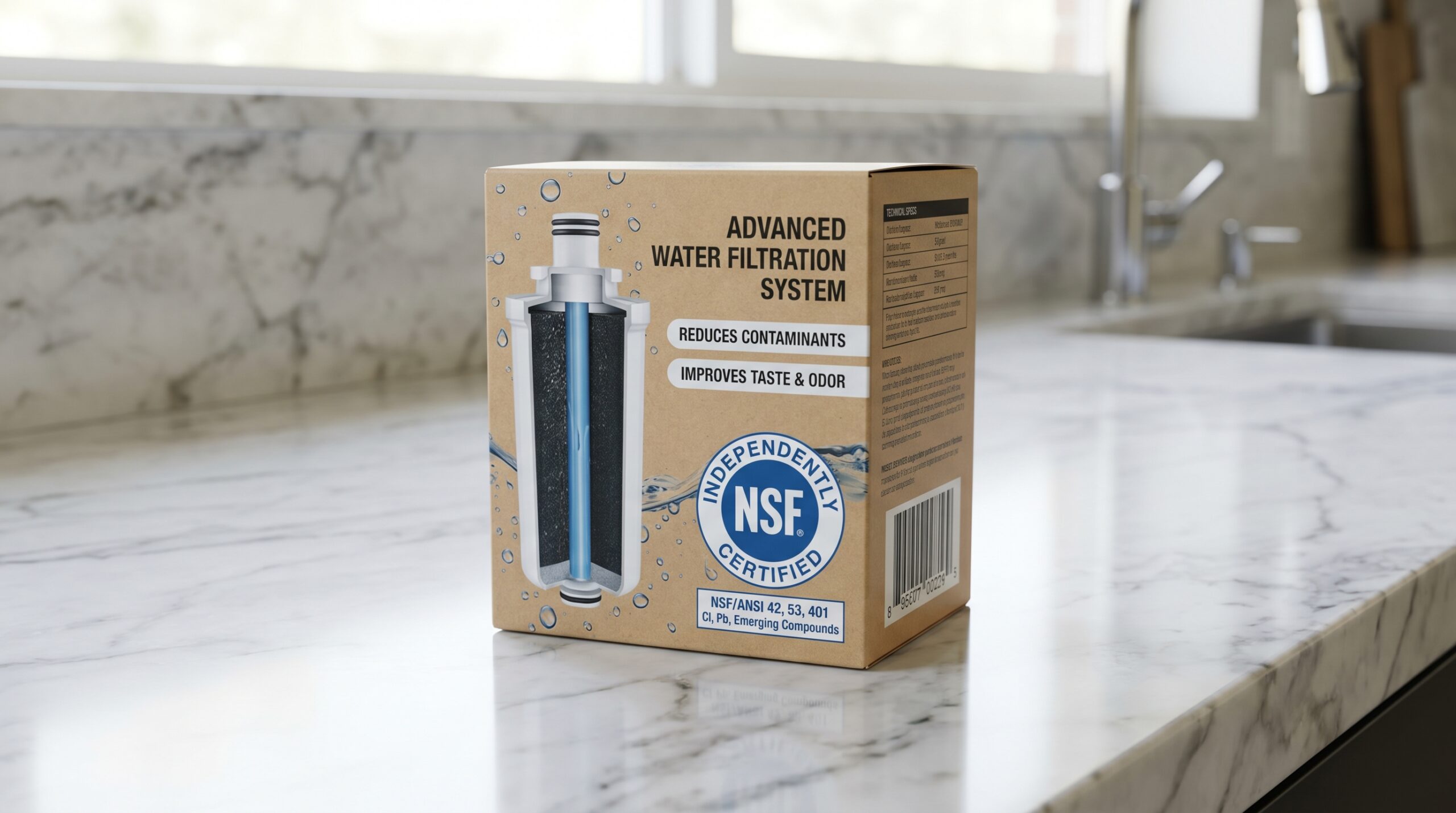
How to choose a water filter sounds like it should have a simple answer. Well.. It doesn’t, and the reason is almost never the filter itself. It’s that most people are making the decision based on the wrong information. Brand names, stage counts, vague “removes 99% of contaminants” claims none of that tells you whether the filter handles the specific thing you’re actually worried about.
There is one thing that does. It’s a number on the box, and once you know how to read it, picking the right filter takes about three minutes!
This is for people who want to know their filter actually removes what they’re worried about, think lead, PFAS, fluoride, nitrates, chlorine, or anything else. If you already have a certified filter matched to your specific contaminant concern and you’re just looking for a product roundup, check out our guides on under-sink filters for lead or under-sink filters that remove PFAS.
What “NSF Certified” Actually Means When You Buy a Water Filter
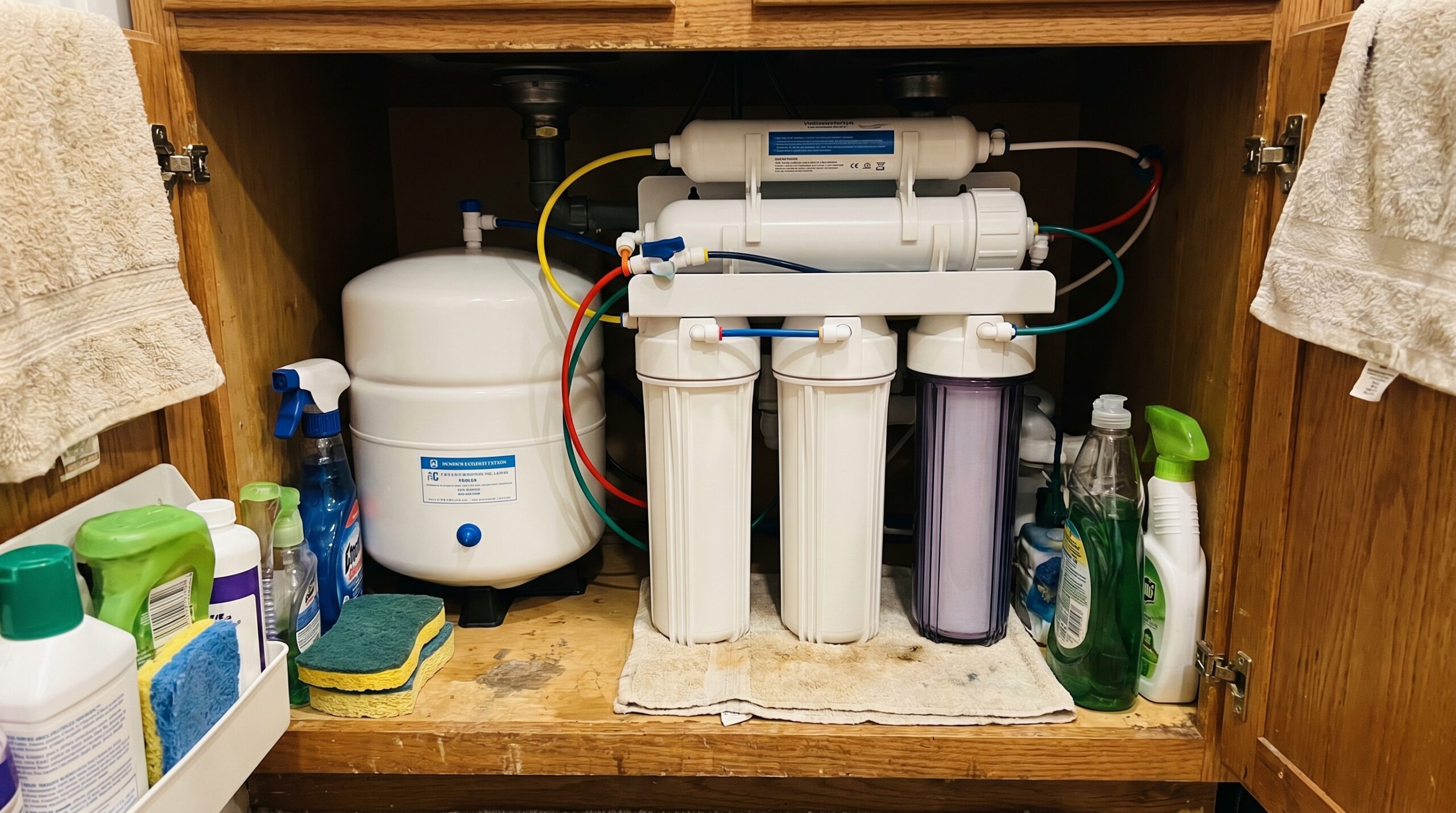
Here is the thing most filter marketing hopes you never figure out.
When a box says “NSF certified,” that is not a blanket stamp of approval for everything the filter might remove. NSF International, the organization that runs these tests, tests each filter against a specific list of contaminants — and only certifies the claims the filter actually passed (NSF International). A filter can carry NSF certification for chlorine taste and smell, and still do absolutely nothing for lead. Both facts can be true at the same time, on the same product.
NSF itself makes this explicit: “certification to an NSF/ANSI standard or protocol does not mean that a filter, purifier or treatment system will reduce all possible contaminants.” That’s not a disclaimer buried in fine print. It’s the operating logic of the entire system.
The numbers after “NSF” — 42, 53, 58, 401 — are the standards. Each one covers a different category of contaminants. A filter gets certified to a specific standard, for specific claims, after independent lab testing at NSF’s Ann Arbor facility. Annual factory audits follow. The database at info.nsf.org is updated in real time and is the actual source of truth, not the box.
This is how to choose a water filter that does what it promises: find the standard that matches your concern, then verify the filter carries a certified claim for that exact contaminant.
The Number on the Box Is a Category, Not a Guarantee
Think of NSF standards like departments in a hospital. Being admitted to the hospital doesn’t mean you saw a cardiologist. Which department you went to is what matters. The numbers work the same way.
NSF/ANSI 42 is the taste and smell department. It covers chlorine, particulates, and in some cases chloramine (if that specific claim is listed). That’s it. If you see a Brita pitcher with NSF 42 certification, that pitcher has been tested to improve water taste and reduce chlorine. It has not been tested for lead, PFAS, fluoride, or anything else with a health effect (NSF). Most basic pitchers, fridge filters, and standard faucet attachments live here.
NSF/ANSI 53 is where health-effect contaminants live. Lead, Cryptosporidium and Giardia cysts, volatile organic compounds, mercury, chromium-6, arsenic, and — since a major update in 2019 — PFOA and PFOS, the two most common PFAS compounds. In 2022, four more PFAS compounds were added: PFHxS, PFNA, PFHpA, and PFBS. A filter certified under NSF/ANSI 53 for lead means it reduces lead in challenge water to at or below 5 micrograms per liter — a threshold that was tightened from 10 µg/L in 2019. Carbon block under-sink filters, better quality pitchers, and some countertop systems typically carry this standard.
NSF/ANSI 58 is the reverse osmosis department. Any product certified to this standard must demonstrate at least 75% total dissolved solids reduction as a baseline, and can earn optional certified claims for fluoride, nitrates, arsenic, chromium, lead, perchlorate, and PFAS (NSF). If fluoride or nitrates are your concern, you need NSF/ANSI 58 — no other standard reliably covers them for point-of-use filters. Under-sink RO systems and countertop RO units carry this one.
NSF/ANSI 401 is for emerging contaminants that the EPA hasn’t formally regulated yet. The list covers up to 15 specific compounds: pharmaceuticals like ibuprofen, carbamazepine, and estrone; pesticides like DEET and metolachlor; and industrial chemicals like BPA and TCEP (NSF). This standard does not cover PFAS — that’s a common misconception. PFAS claims live under 53 and 58. Higher-end carbon block systems and multi-stage RO units tend to carry 401 as an add-on to 42 and 53.
What Most Articles Get Wrong About Choosing a Water Filter

The standard advice is “look for NSF certification.” That’s true, but it stops about three steps too early.
The actual mistake people make is buying a filter because it says “NSF certified” on the front, without checking which contaminant that certification actually covers. A faucet filter certified to NSF/ANSI 42 will proudly display the NSF logo. So will a premium under-sink filter certified to 42, 53, and 58 for lead, PFAS, fluoride, and cysts. The logo looks the same. The protection is completely different.
The other version of this mistake shows up with “tested to NSF standards” language. That phrase means nothing. Any manufacturer can test their product against the protocol and write that on the box without submitting it for third-party certification. “NSF certified” and “tested to NSF standards” are not the same thing (TapWaterData). Only the first involves independent verification. The EPA agrees: for lead specifically, it only recommends filters carrying third-party certified marks, not self-tested ones (EPA).
One more: some filter brands still reference “NSF P473 certified” in their marketing. P473 was an early PFAS-specific protocol created in 2016 when the EPA issued a 70 parts-per-trillion health advisory for PFOA and PFOS (Federal Register, 2016). In 2017, NSF absorbed P473 entirely into Standards 53 and 58. It no longer exists as a standalone certification (NSF). A product listing that still says “P473 certified” is describing test methodology that has since been folded into the main standards. It’s not wrong, but you should confirm the filter has a current NSF/ANSI 53 or 58 PFAS reduction claim in the live database rather than relying on older packaging language.
How to Pick a Filter for Your Specific Concern
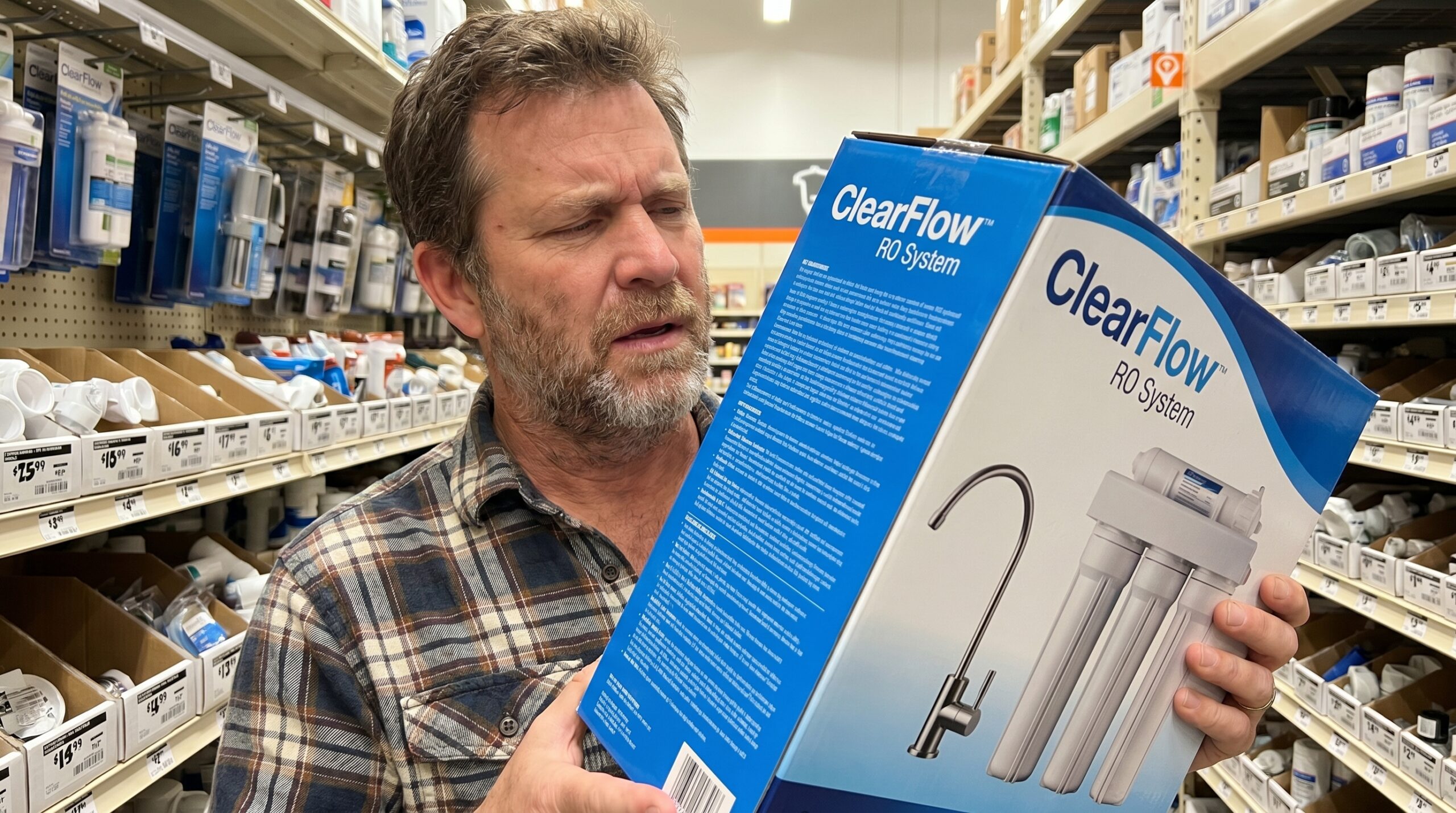
This is the actual cheat sheet. Match what you’re worried about to the certification you need, then verify the claim is listed in the NSF database for your exact model.
Lead. You need NSF/ANSI 53 with a specific “Lead reduction” claim. Not just the number 53 on the box — the actual lead claim in the listing. A 2023 peer-reviewed review of 23 studies published in Water Research (Tang et al., PMC11866865) found that real-world performance of NSF 53 certified lead filters can vary depending on water pH, the form lead takes in your pipes, and whether the cartridge is changed on schedule. Certification is a meaningful baseline, not a guarantee of perfect performance under all conditions. The EPA recommends pairing NSF/ANSI 53 for lead reduction with NSF/ANSI 42 Class I for particulate reduction, since some lead in older pipes travels as particles rather than dissolved ions (EPA). Our guide on certified under-sink filters for lead goes deeper on this.
PFAS (forever chemicals). You need NSF/ANSI 53 or NSF/ANSI 58 with a specific PFOA/PFOS or “Total PFAS” reduction claim. The current NSF threshold for PFAS certification is 20 parts per trillion combined — but the EPA’s April 2024 maximum contaminant level set individual limits for PFOA and PFOS at just 4 ppt, which is stricter than what the current NSF standard requires (NSF; EPA). NSF is working with the EPA to align the standards. For now: a certified filter will meaningfully reduce PFAS, but it may not eliminate it below the new MCL. Reverse osmosis under NSF 58 tends to achieve higher reduction rates than carbon-only systems under NSF 53. If PFAS is your main concern, an RO system is the more conservative choice. Also worth reading: what happens when you don’t change your filter on time — expired carbon filters can actually increase PFAS levels in your water rather than reduce them.
Fluoride. You need NSF/ANSI 58, which means a reverse osmosis system. While NSF/ANSI 53’s 2023 update added a fluoride test method, a search of the NSF database (info.nsf.org) returns essentially no non-RO products with a certified fluoride reduction claim under Standard 53. In practice, fluoride removal belongs to RO. Any non-RO filter claiming fluoride reduction without a Standard 58 listing in the NSF or IAPMO database should be treated as an unverified marketing claim. For pitcher-specific context, see our breakdown of whether ZeroWater filters actually remove fluoride.
Nitrates. NSF/ANSI 58 only. Carbon filters, no matter how many stages they advertise, do not certifiably remove nitrates. Reverse osmosis does. If you’re on well water in an agricultural area, nitrate contamination is a real concern, the nitrate removal guide explains which filter types actually work.
Chlorine and taste. NSF/ANSI 42 is fine here. One thing to watch: if your utility uses chloramine instead of chlorine as a disinfectant, you need a filter that specifically lists chloramine reduction as a certified claim, not just chlorine. More than one in five Americans gets water treated with chloramines (EPA), and chloramine requires longer contact time with filter media than chlorine does (WQA). The NSF/ANSI 42 listing will tell you explicitly whether chloramine is included. If it isn’t listed, assume it isn’t covered.
Pharmaceuticals, BPA, pesticides. NSF/ANSI 401, which covers up to 15 specific compounds including ibuprofen, carbamazepine, BPA, DEET, estrone, and TCEP. This standard does not cover PFAS. If both pharmaceutical and PFAS coverage matter to you, you need a filter carrying 53 (or 58) and 401. Many higher-end carbon block systems carry all three: 42, 53, and 401.
Cysts (Cryptosporidium, Giardia). NSF/ANSI 53 with a specific “Cyst reduction” claim. Most under-sink carbon block filters with NSF 53 carry this. RO systems under NSF 58 can also include it.
Arsenic. NSF/ANSI 53 covers pentavalent arsenic reduction to at or below 10 µg/L (the EPA’s maximum contaminant level). NSF/ANSI 58 covers both arsenic forms more broadly. If arsenic is your concern, an RO system is the safer choice.
Verify a Filter in the NSF Database (Takes 90 Seconds)
Go to INFO NSF. Type the brand or the exact model number from the packaging. Click into the listing. Look for two things:
First, the model number in the database should match exactly what’s on your box or the product listing. SKU variations sometimes have different certifications.
Second, look at the specific claims listed — not just the standard number. A filter listed under NSF/ANSI 53 might show “Chloramine reduction, Cyst reduction, VOC reduction” and nothing else. That means lead and PFAS are not certified claims for that product, even though they fall under the 53 umbrella.
The database is updated in real time. NSF runs annual surveillance audits and can decertify products. The listing you see today is the current status.
NSF isn’t the only body running these tests. IAPMO R&T certifies to the same NSF/ANSI standards under equivalent ANSI and SCC accreditation. Their product directory is at IAPMORT. The Water Quality Association’s Gold Seal program does the same thing, with a searchable database at find.wqa.org. All three are equally accepted by regulators in the US and Canada (IAPMO R&T). A filter certified only by IAPMO is just as legitimate as one certified only by NSF.
What If You Don’t Know What’s in Your Water?
The certification map only works if you know what you’re filtering for. If you don’t, the first step isn’t buying a filter — it’s testing your water.
The EWG Tap Water Database pulls from utility-reported data and shows contaminants detected in your area by ZIP code. It’s a reasonable starting point for municipal water.
For more precise results, especially on well water, a mail-in test kit from Tap Score or SimpleLab will test for a specific panel of contaminants and return lab-verified results. Once you know what’s in your water, matching it to the right certification is straightforward using the map above.
The short version for most people on municipal water: if you want broad coverage of lead, PFAS, cysts, and VOCs, a carbon block under-sink filter certified to NSF/ANSI 53 with explicit lead and PFAS claims handles most concerns at a reasonable cost. If fluoride or nitrates are on the list, add NSF/ANSI 58 — which means reverse osmosis. If you want everything covered and budget allows, an RO system with a NSF 58 certification and additional NSF 53 and 401 claims is the most complete point-of-use option available.