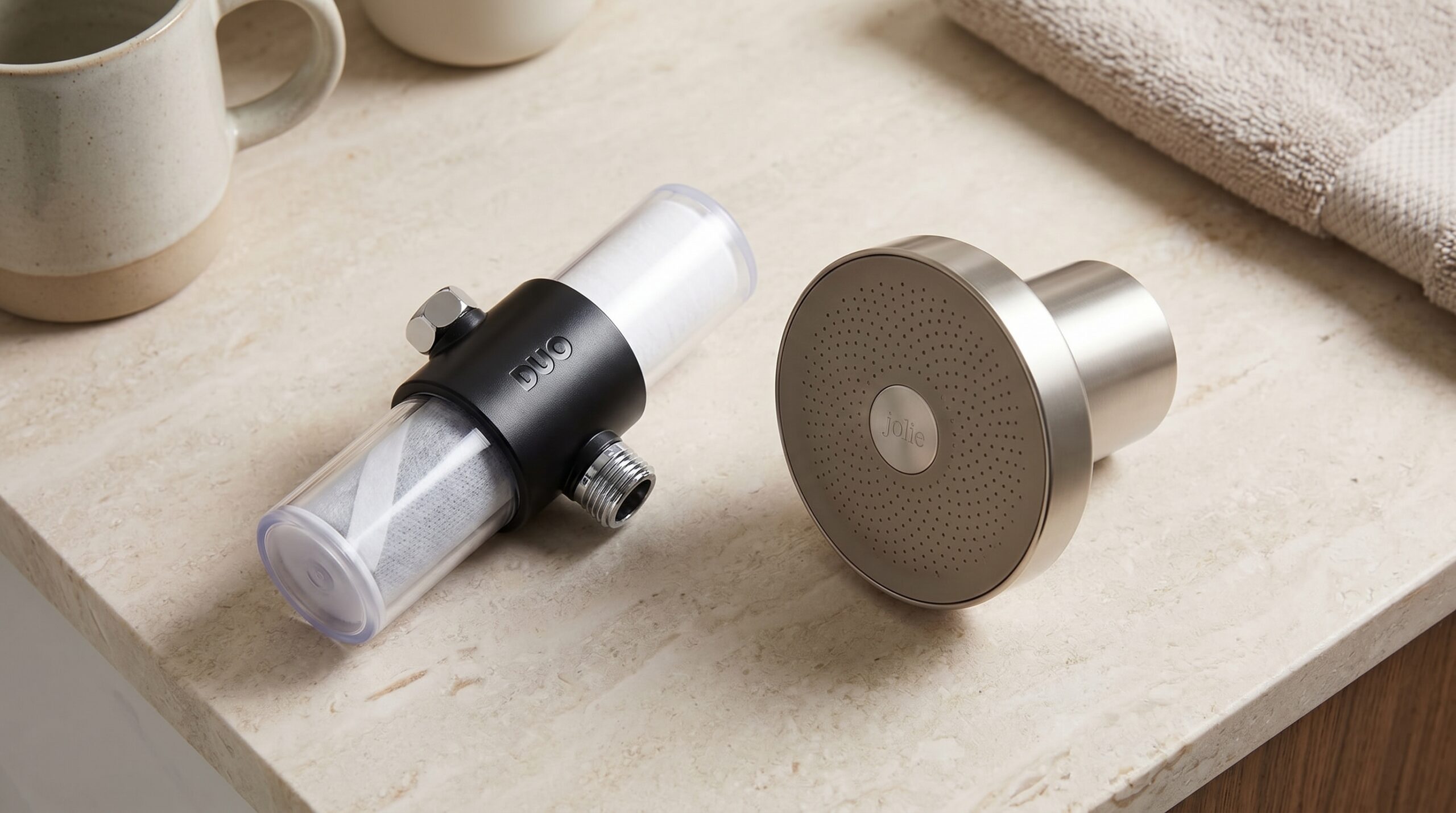
Weddell Duo vs Jolie shower filter is one of the most common comparisons that comes up in filtered showerheads right now, and for good reason. While price range is slightly different, both target people worried about chlorine and skin health, and both are heavily marketed. The difference between them, once you look at the actual certification and lab data, is not subtle.
Who this is for
- Shoppers who want a shower filter with verified chlorine and PFAS reduction backed by NSF or IAPMO certification
- Renters who cannot install an under-sink system and want the next best thing at the showerhead
- Anyone currently using Jolie and wondering whether the performance claims hold up
Who should look elsewhere
- Anyone whose primary concern is chloramine rather than chlorine. Neither product is certified for chloramine, and no shower filter currently is. See our best shower filter for chloramine guide for the full picture.
- Households with hard water. Neither unit softens or reduces calcium or magnesium.
- Anyone who wants PFAS-level filtration at the kitchen tap. For that, you need a certified under-sink system, not a showerhead.
Only One of These Has a Real Certification
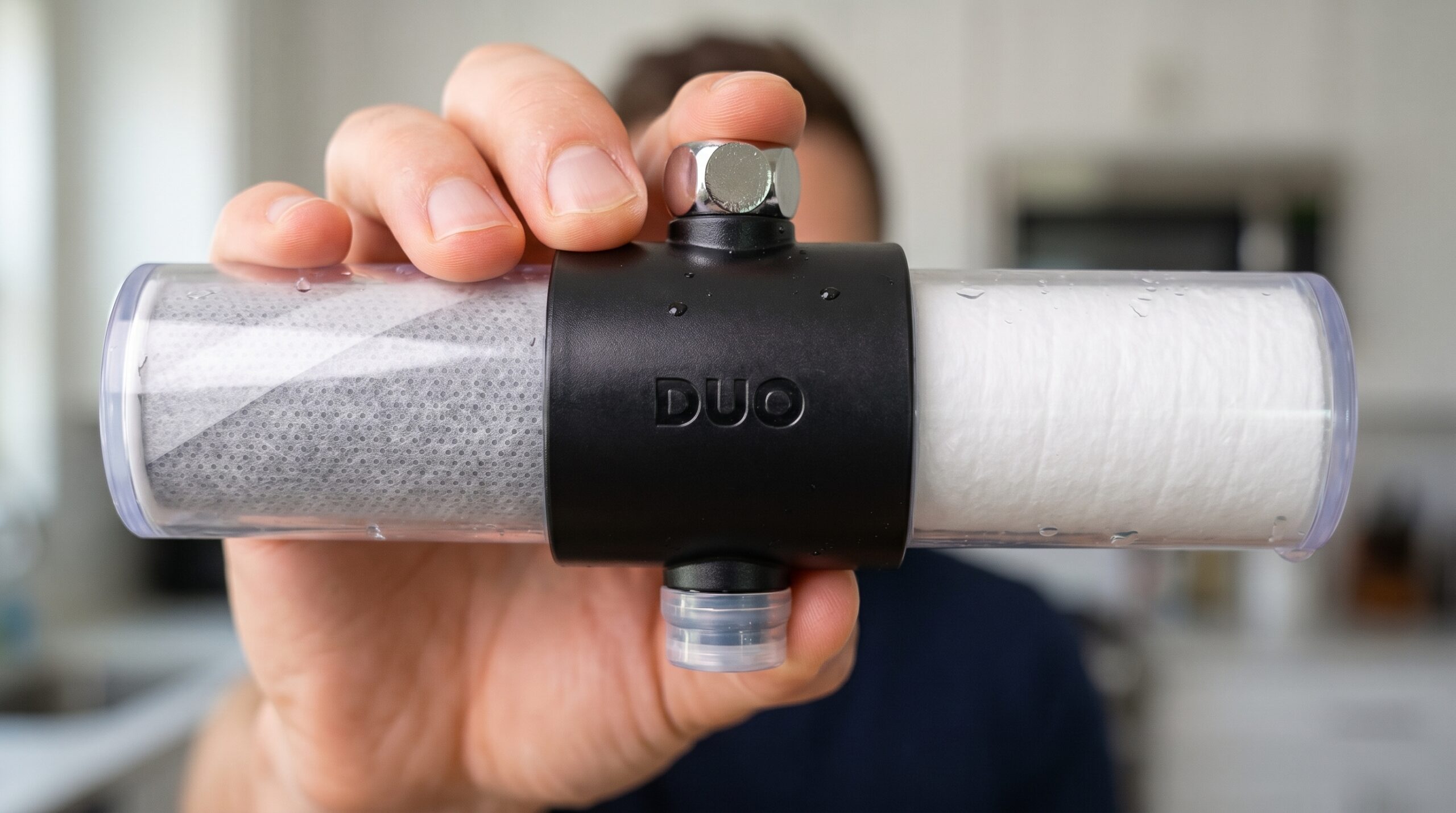
The Weddell Duo holds an active NSF/ANSI 177 listing for free available chlorine reduction. Model WD-100 is listed in the NSF certified products database with a rated 8,000-gallon service cycle at 2.8 gpm, manufactured in Korea, and additionally designated lead-free under NSF/ANSI/CAN 372. That listing is publicly verifiable on the NSF database right now.
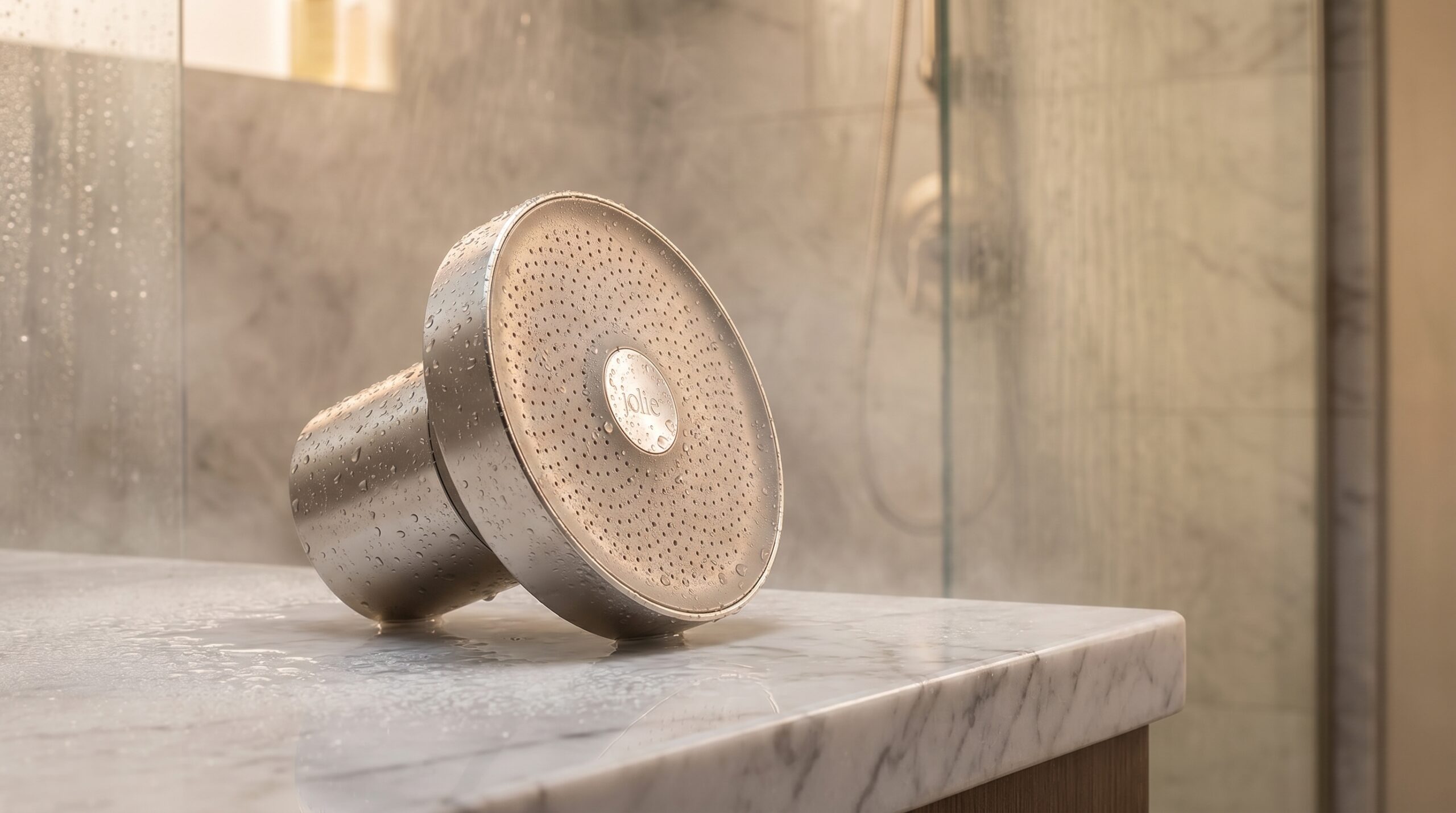
Jolie has no NSF certification. Not a partial one. Not a pending one. NSF issued a public notice on April 10, 2024 specifically naming Jolie’s Filtered Showerhead and replacement filter, stating the company is not certified by NSF and is not authorized to make NSF certification claims. The notice directly targeted Jolie’s “exceeds NSF-177” marketing language.
That gap matters more than most reviews acknowledge. A certification is not just a stamp. It means a third party tested the product at an accredited lab, verified the claims, and put those results in a public database anyone can check. Jolie’s performance data, by contrast, comes from its own marketing materials with no public test report attached.
It is easy to see how someone ends up buying Jolie without knowing any of this. The brand is all over social media, the packaging looks premium, and the claims sound authoritative. But there is a real difference between a product that looks credible and one that has been independently verified to be.
What Independent Lab Testing Shows for Each Product
WaterFilterGuru sent both filters through SimpleLab Tap Score testing on Colorado municipal water. The results are the sharpest evidence available outside the NSF database, and they tell a clear story.
The Weddell Duo removed 100% of chlorine on a new filter, taking the sample from 1.68 PPM down to non-detect. It also removed 100% of all four disinfection byproducts detected in the baseline water: chloroform, bromodichloromethane, dibromochloromethane, and bromochloromethane. Hardness was unchanged, which is expected. The filter makes no hardness claim.
Jolie’s independent result was different. On a brand-new filter, chlorine dropped from 2.70 PPM to 1.23 PPM, a 54% reduction. Jolie’s marketing claims over 85% reduction for the filter’s entire lifespan. More significantly, the four detected disinfection byproducts showed no meaningful reduction, and zinc concentration in the filtered water increased by 4,500%, from 0.00919 PPM to 0.42455 PPM, leached from the KDF-55 media inside the cartridge. None of that appears in Jolie’s product copy.
WaterFilterGuru explicitly flagged Jolie’s FAQ claim of being “NSF Certified” as false. CNN Underscored, which tested 11 shower filters over a full year, identified the Weddell Duo as the only NSF-certified filter in its test pool.
Weddell Duo vs Jolie Shower Heads: Filter Media and What It Means
The two products use completely different filtration approaches, and that explains most of the performance gap.
The Weddell Duo runs a dual cartridge design: a solid activated carbon block as the primary filter, plus a white sediment pre-filter. Carbon block is the same media used in certified under-sink and pitcher systems. It physically adsorbs chlorine and traps DBPs and particulates. Weddell’s IAPMO R&T test data, published on their website though not listed in the NSF database, shows PFAS reduction of 99.05% or greater (influent 0.10 to 2.19 µg/L; effluent at or below 0.01 µg/L), and particulate reduction of 96.59 to 99.66% in the 15 to 30 µm range.
Jolie uses KDF-55, a copper-zinc alloy that works via redox reaction, combined with calcium sulfite. KDF-55 can reduce some free chlorine, but it has no PFAS mechanism, no certified DBP reduction, and as the WaterFilterGuru zinc result shows, it can introduce trace metals into the water. There is no activated carbon in the Jolie cartridge.
This matters if you are choosing between the Weddell Duo vs Jolie shower heads for anything beyond basic chlorine reduction. If PFAS, DBPs, or particulates are your concern, the media difference is not cosmetic. It is the entire ballgame.
What Most Reviews Get Wrong About These Two Products
Most coverage of the Jolie treats its “clinically tested” and NSF language as credible marketing shorthand. It is not. The NSF public notice from April 2024 is a hard fact that the majority of lifestyle and beauty-focused reviews ignore entirely, because those outlets are not checking certification databases.
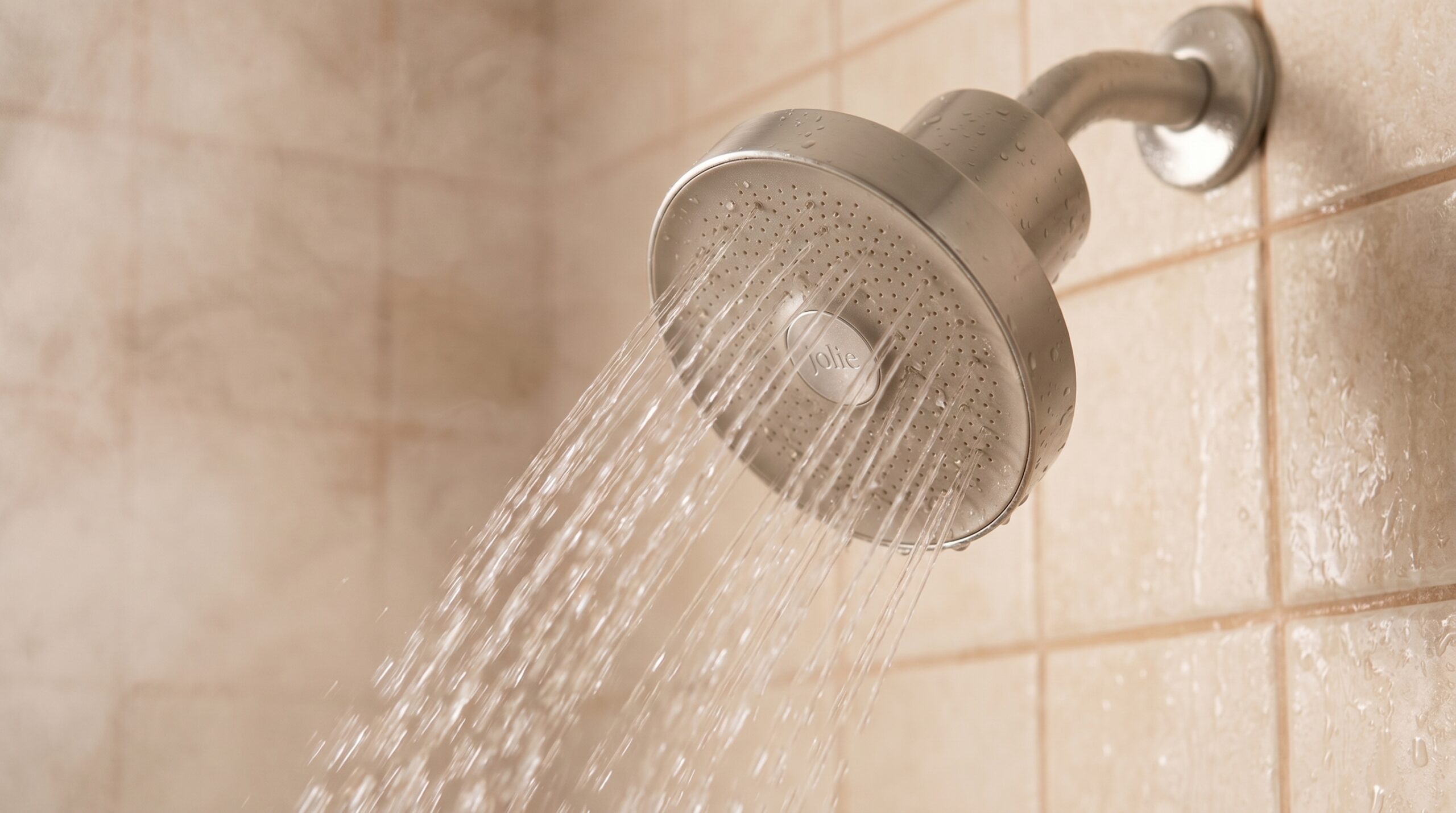
The same coverage tends to treat all shower filters as equivalent in function. They are not. Jolie was designed as a beauty product first. The brand launched with influencer marketing around hair shedding and skin texture, and a claimed 46% reduction in hair fall in a “clinical” study. That study has not been published or made publicly available by Jolie. CleanFaucet treats unpublished manufacturer-funded studies the same way we treat any other unverified claim.
Think about the last time you bought something based on social proof and polished branding, then looked up the underlying data afterward. Sometimes the product holds up. Sometimes the gap between the story and the evidence is wider than you expected. That is exactly what happened here, and it is worth knowing before spending $165.
The Weddell Duo is a water filtration product that also happens to be a showerhead attachment. That distinction shapes what evidence is available and what you can reasonably expect from each.
For anyone specifically trying to reduce chloramine exposure, neither of these filters addresses it. KDF-55 and calcium sulfite do not reduce chloramine. Activated carbon can reduce chloramine in some configurations but the Weddell Duo has not been tested or certified for it. If chloramine is the goal, read our shower filter for chloramine guide before buying either product.
Comparing the Weddell Duo vs Jolie on Cost
Both units sit at roughly $165 to $169 upfront. That feels like a draw until you look at what happens over the following 12 months.
| Weddell Duo | Jolie | |
|---|---|---|
| Upfront Cost | ~$165 | $165 to $169 |
| Filter Capacity | 8,000 gallons | 3,000 gallons |
| Replacement Frequency | Every 5 to 6 months (single user) | Every 90 days |
| Replacement Cartridge Cost | $29.99 (set) | $33 to $48 per filter |
| Annual Filter Cost | ~$71.98 | ~$152 |
| Total Year 1 Cost | ~$237 | ~$317 to $321 |
Jolie operates as a subscription by default. The Weddell Duo sells replacement cartridges direct and on Amazon without a subscription requirement.
On a per-gallon basis, the Weddell Duo costs approximately $0.012 versus Jolie’s $0.026, more than double, and the Weddell filter lasts nearly three times as long before replacement. Over two years, the cost gap widens to roughly $150 to $200 in Jolie’s disfavor.
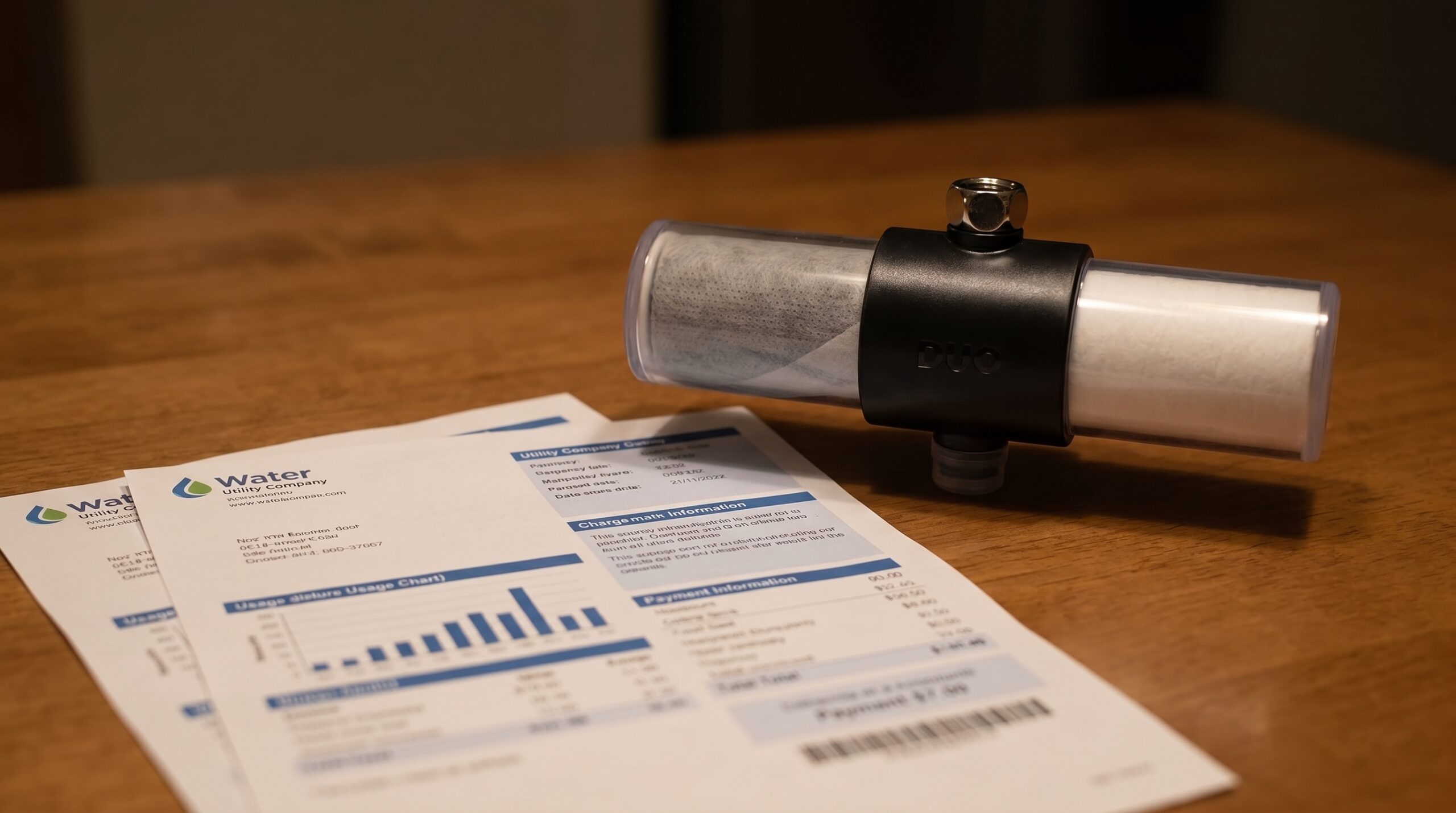
The one area where Jolie has a genuine practical edge is form factor. It replaces the showerhead entirely, so you get a new fixture and a filter in one purchase. The Weddell Duo is an inline filter that attaches between your shower arm and your existing showerhead. You keep your current fixture, which is an advantage if you have a handheld or a rain shower you prefer. It is a disadvantage if your existing showerhead is worn and you were due for a replacement anyway.
Weddell Duo vs Jolie: Who Should Buy Which
Buy the Weddell Duo if verified chlorine and DBP reduction matters to you, you want PFAS reduction with published third-party test data, or you are making a filtration decision rather than a showerhead upgrade decision. The certification is real, the lab results are public, and the cost over time is lower. If you are already thinking carefully about what your water contains, the Weddell Duo is the more defensible choice.
Consider Jolie only if the all-in-one showerhead design is a firm requirement and you are primarily focused on aesthetics and odor improvement rather than verified contaminant reduction. Go in with accurate expectations: the independent lab result found 54% chlorine reduction on a new filter, not the 85% or more the brand claims, and there is no NSF certification behind any of Jolie’s performance statements.
If your water concern extends beyond the shower to what you are drinking and cooking with, it is worth understanding what certified under-sink filtration can do. Our under-sink water filter for lead guide covers certified options that require zero drilling, and our countertop vs under-sink comparison lays out the full tradeoffs by setup and budget.
For PFAS specifically, filter certification is the only reliable signal. Our best under-sink PFAS filters guide covers the certified options in that category with the same verification standard applied here.
A Note on What Neither Filter Can Do
No shower filter currently holds third-party certification for chloramine reduction, not the Weddell Duo, not Jolie, and not any other shower filter on the US market. NSF/ANSI 177 covers only free available chlorine. If your municipal utility uses chloramine as a disinfectant, and many do, you can confirm this in your annual water quality report. Neither of these products will meaningfully address it.
This does not make the Weddell Duo a poor choice. Chlorine reduction with verified DBP and PFAS removal is still a meaningful upgrade over unfiltered shower water. Someone who grew up on well water and moved to a heavily chlorinated city supply will notice the difference quickly. But if chloramine is your stated concern, the filter choice changes entirely. Our best shower filter for chloramine article covers what the evidence actually supports in that scenario, including why no current product can be recommended on certification grounds alone.