
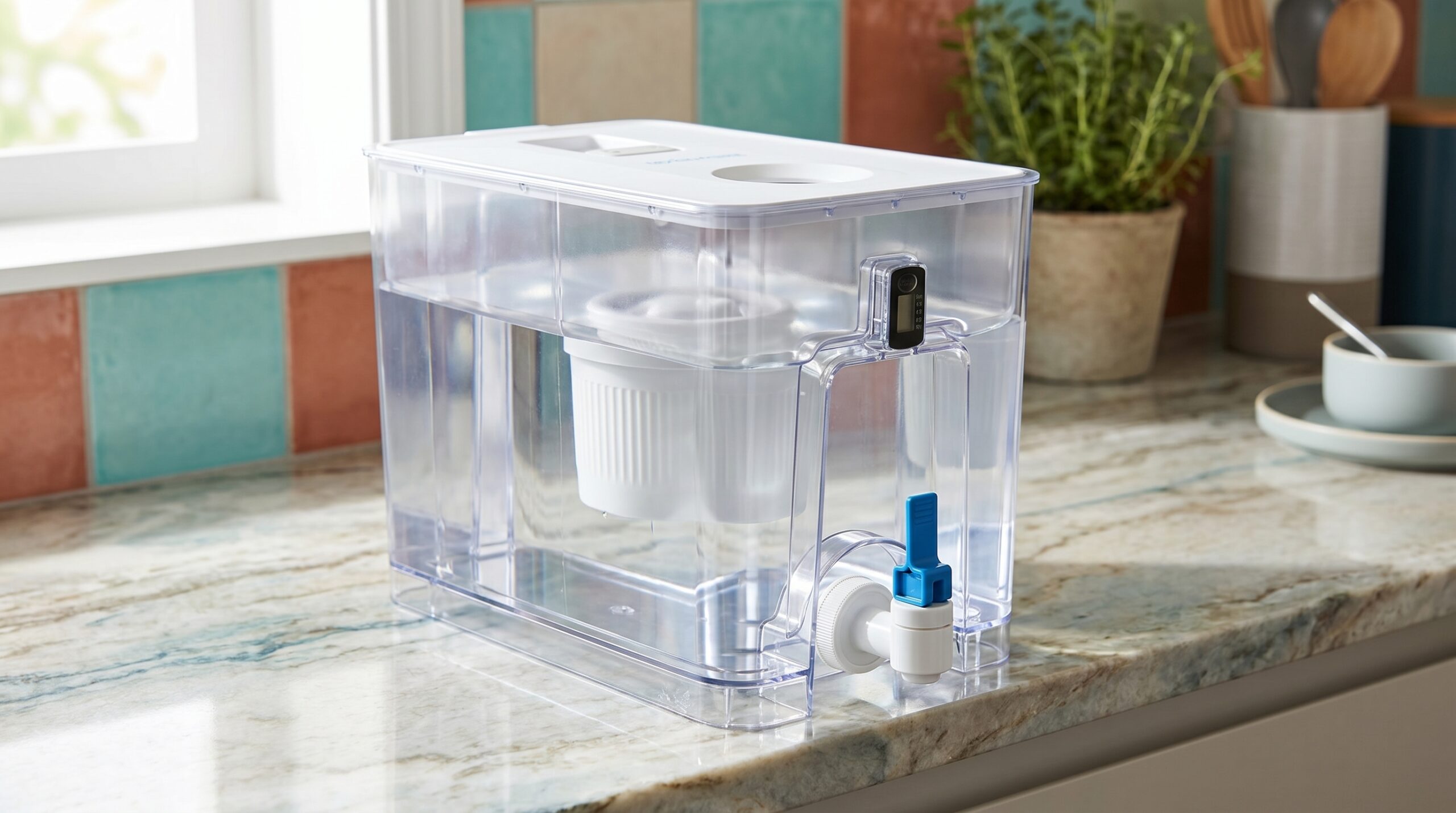
Is the Epic Pure XP worth buying if PFAS, fluoride, or lead removal is your actual goal? That depends almost entirely on a distinction Epic’s marketing hopes you won’t notice. The Pure XP launched February 11, 2026 with strong claims and a compelling sustainability angle, but what it’s certified to do and what it’s merely been tested for are two very different things.
Jump straight to:
Oh, and you might find these articles helpful:
- Do water filter pitchers remove PFAS and fluoride?
- Do ZeroWater filters remove PFAS and fluoride?
- Water filters that remove fluoride: what actually works
Who this is for
Buyers who prioritize sustainability and want a US-made pitcher with broad contaminant coverage and don’t need a public certification body to have verified the performance claims. Also worth considering if you mainly want chlorine and taste improvement with a cleaner conscience about plastic waste.
Who should look elsewhere
Anyone whose primary concern is documented, certified removal of PFAS, lead, or fluoride. The Epic Pure XP is not NSF, IAPMO, or WQA certified for any health-effect contaminant. If that matters to you, the Culligan ZeroWater or Clearly Filtered pitcher carry the certifications this one lacks.
What Epic Actually Sells With the Pure XP
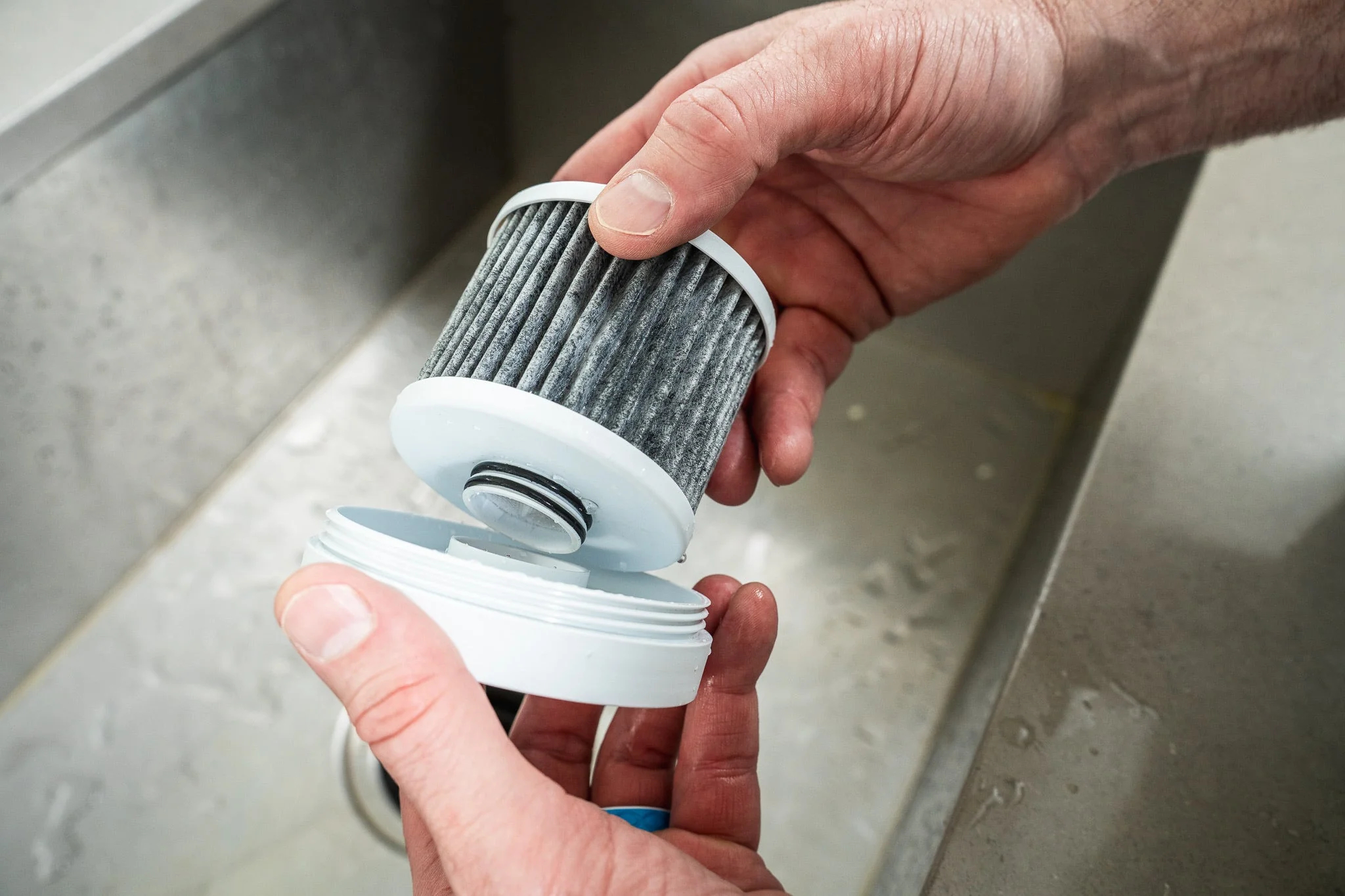
The Epic Pure XP is a gravity-fed pitcher filter built around Epic’s new CoreXchange dual-layer cartridge. The outer layer is a nano-fiber wrap targeting microbiological contaminants like bacteria, parasites, and cysts. The inner layer is a carbon-fiber block handling chemicals, heavy metals, taste, and odor. The replaceable inner cartridge is the design’s headline feature: only the insert gets swapped, not the entire filter housing, which Epic claims reduces plastic waste by up to 75% compared to whole-cartridge designs, though no third-party lifecycle assessment backs that figure.

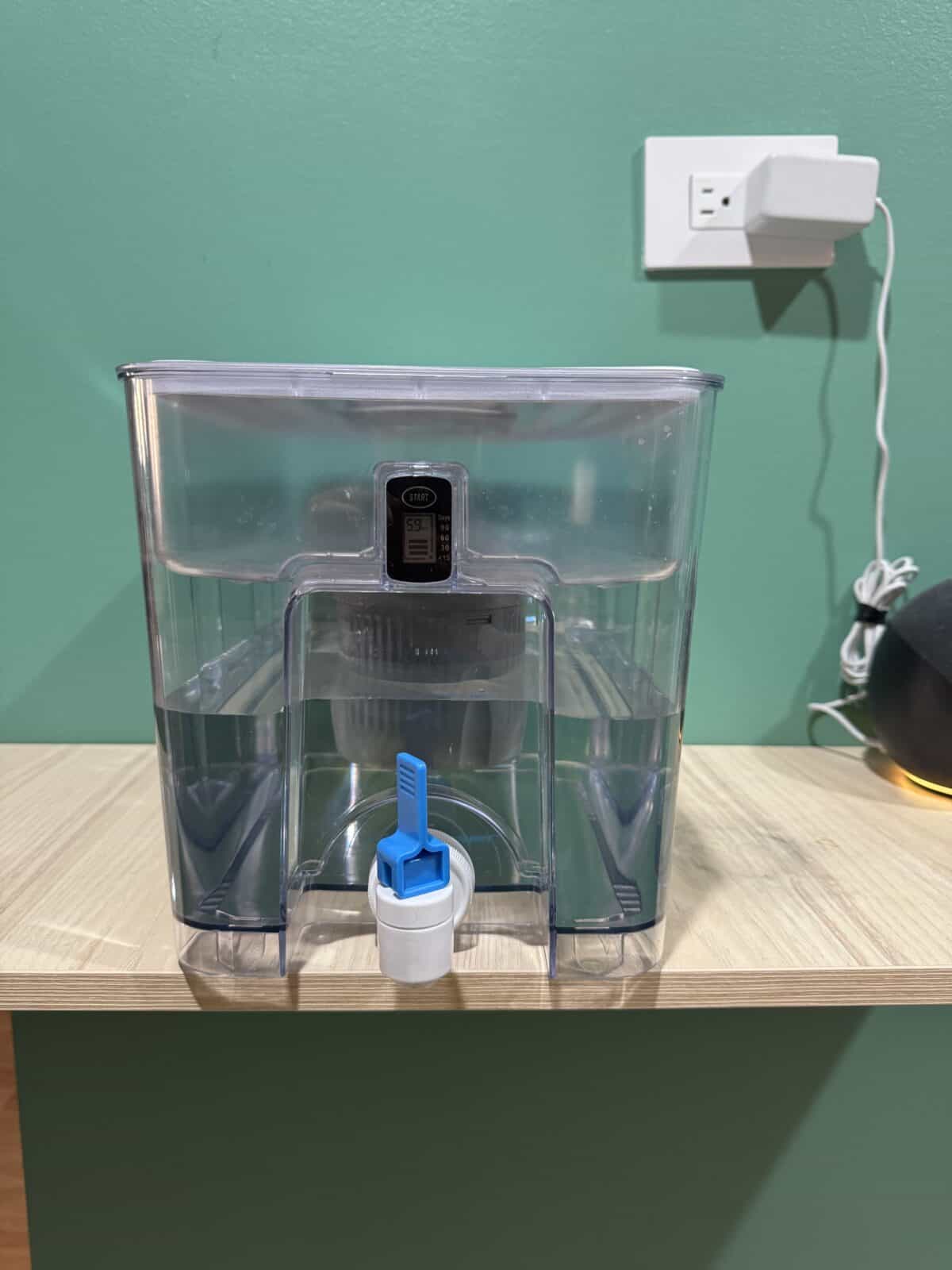
The pitcher holds 10 cups and comes in white and bamboo or blue. There is also a 36-cup dispenser version. Filtration is slow by design: 10 to 15 minutes per full pitcher once the media is saturated. Epic is upfront that the first two pitchers should be discarded to activate the filter. The system requires no electricity and no installation.
The Pure XP retails for $84 at Epic’s site and on Amazon. Replacement cartridges start at $46 individually; the three-pack bundle works out to roughly $48 per cartridge. At normal use (two to three daily fills), expect to replace the filter every three to four months, putting annual cartridge costs at $138 to $192 before any subscription discount.
The Certification Gap Is the Whole Story
This is the part every review of the Epic Pure XP needs to get right, and most won’t.
Epic’s product page and packaging say the Pure XP is “NSF certified to Standard 42 and independently tested against NSF/ANSI standards 42, 53, 401, P231, and P473.” Read that sentence carefully. NSF/ANSI 42 is the material safety and aesthetic standard. It confirms the filter won’t leach harmful substances and that it reduces chlorine taste and odor. That’s it. It says nothing about lead, PFAS, fluoride, pharmaceuticals, bacteria, or parasites.
The health-effect standards, NSF 53 for heavy metals and health contaminants, NSF 401 for emerging contaminants like pharmaceuticals, NSF P473 for PFOA and PFOS, NSF P231 for microbiological purification, are the standards the Pure XP has only been tested against, not certified to. Epic’s own customer help center confirmed this for the predecessor Pure pitcher: the filter “has been tested by a third party and exceeds NSF/ANSI standards 42, 53, 401, and P231 but hasn’t been certified by the company NSF.” That policy carried forward to the XP.
The practical difference matters. NSF certification requires ongoing facility audits, off-the-shelf product retesting, and the right to revoke the mark if the product changes. “Independently tested” means a manufacturer paid an accredited lab to run the test method once on a sample they supplied. No ongoing oversight. No accountability if the formulation changes after that initial test.
Epic is not hiding this. The wording on their product pages is precise once you know what to look for. But the marketing visuals, the NSF badge, the bold-type certified language, are designed to make it easy to miss.
What the Performance Numbers Actually Mean
Epic claims the Pure XP removes up to 99.9% of PFAS, 99.2% of fluoride, 99.9% of lead, 99.99% of bacteria, and 99.9% of parasites. Every single one of those figures is a manufacturer claim that has not been independently verified for this specific product.
There is no published EWG, Tap Score, WaterFilterGuru, QualityWaterLab, or ConsumerLab dataset on the Pure XP specifically. The product launched in February 2026 and independent testers haven’t published on it yet. The article you’re reading is one of the first editorial pieces to flag this gap.
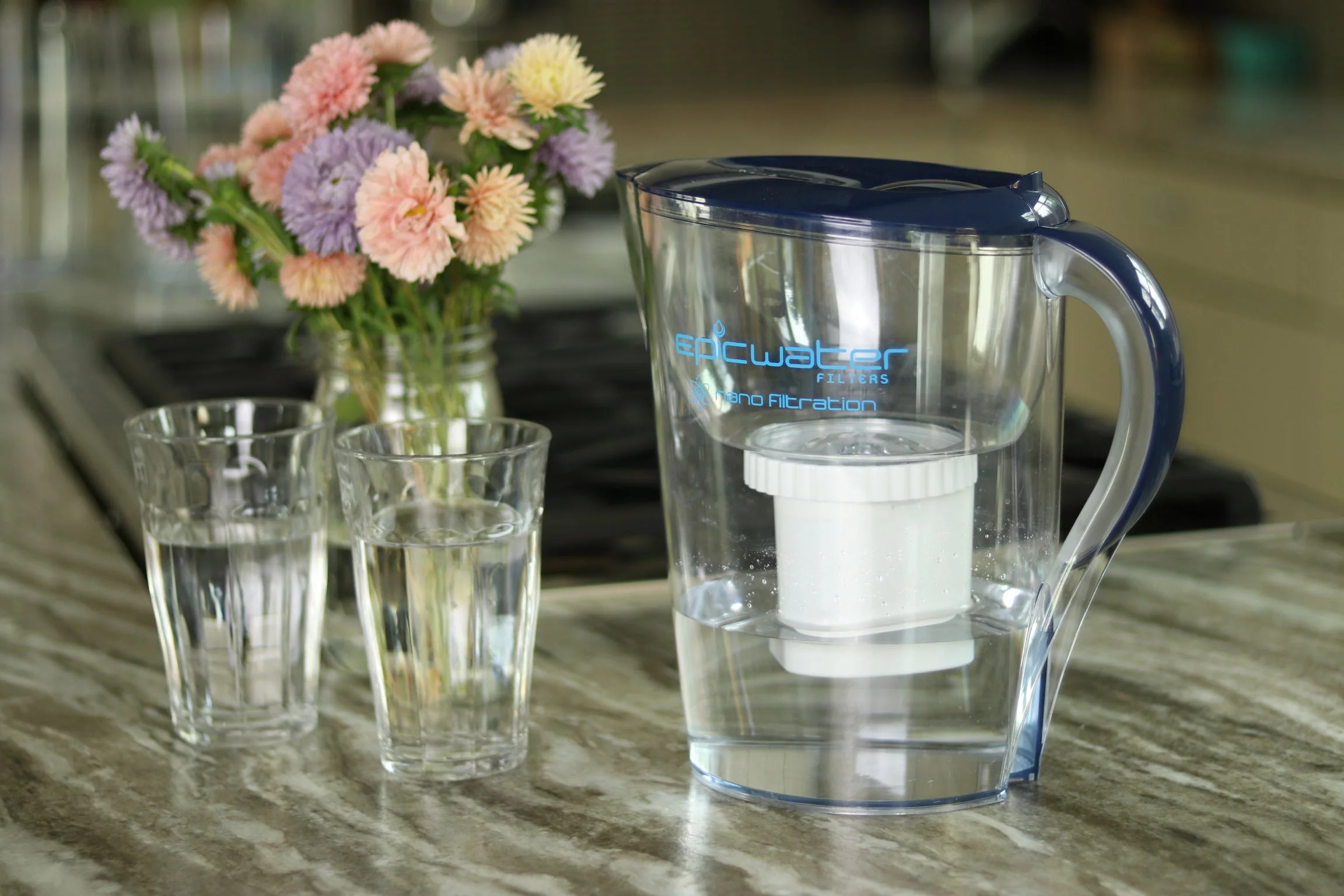
What we do have is data on the predecessor Epic Pure pitcher, and it does not always line up with Epic’s published numbers. WaterFilterGuru’s Tap Score bench test found the original Pure reduced barium by 41% against Epic’s claimed 92.7%, and nitrate by 20% against Epic’s claimed 88.2%. The XP uses different pleated media with twice the surface area, so direct comparison isn’t clean, but the discrepancy on the Pure pitcher is a real data point.
The EWG “most effective overall” claim that appears prominently in Epic’s marketing is real, but it refers to the original Epic Pure tested in 2023, not the XP. In that same EWG test, the original Pure reached 98% PFAS reduction. That sounds strong until you see that ZeroWater, Clearly Filtered, and Travel Berkey all reached 100% in the same test.
Peer-reviewed pitcher testing by Lapointe found PFAS removal ranged from 20% (Brita Elite) to 99% (ZeroWater and Clearly Filtered) across 12 pitchers, with Aquagear landing at 77%. Carbon-fiber media like what the XP uses can perform very well or adequately depending on construction, flow rate, and water chemistry. There’s no reason to assume the XP fails at what it claims. There’s also no independent data yet confirming it succeeds.
Is the Epic Pure XP Worth Buying Compared to Certified Alternatives?
Here is how the Pure XP sits against pitchers that carry the health-effect certifications it lacks.
Clearly Filtered No.1 Pitcher is WQA certified to NSF 42, 53, and 372, with QFT third-party testing covering PFOA and PFOS. EWG measured 100% PFAS reduction in 2023. Annual filter cost runs roughly $90. It’s the closest direct competitor if certified PFAS removal is the requirement.
Culligan ZeroWater 10-Cup Pitcher carries IAPMO certification to NSF 42 and NSF 53 for total PFAS, lead, chromium-6, mercury, fluoride, and pharmaceuticals. That is a wider certified scope than any other pitcher on this list. The tradeoff is filter cost: ZeroWater’s five-stage filters last roughly 20 gallons each, making annual cost potentially $650 or more for a family of four, per EWG’s methodology.
Brita Elite Filter is NSF certified to Standards 42, 53, and 401 for lead (99%), asbestos, benzene, cadmium, mercury, and select pharmaceuticals. It is not certified for PFAS or fluoride. At roughly $36 to $44 per year in filter replacements, it’s the low-cost baseline, but it does not compete with the Pure XP on contaminant breadth.
Aquagear Pitcher occupies the same “independently tested but not certified” tier as the Epic Pure XP. ISO 17025 lab testing documents 97.5% lead removal, 90% fluoride removal, and 99.87% chromium-6. Lapointe et al. measured 77% total PFAS for Aquagear in real-water conditions. At roughly $60 per filter (150-gallon capacity), it’s a credible comparison point for buyers comfortable with the tested-not-certified model.
What the Epic Pure XP Does Well
The sustainability angle is real and not trivial. The replaceable inner cartridge design genuinely reduces plastic waste compared to pitchers that discard the entire housing on each replacement, even if the 75% reduction figure is a manufacturer claim without a published lifecycle analysis. Epic manufactures in Palmetto, Florida in an NSF-certified facility using media sourced from the US and Japan, which is more supply-chain transparency than most pitcher brands offer.
The microbiological claim is genuinely differentiated for this category. Very few gravity pitcher filters claim any meaningful bacteria or parasite reduction. NSF P231 and P473 testing, even without certification, covers protocols most pitcher filters don’t even attempt. If you’re on a well water system with a history of coliform issues, or if you’re buying for camping or emergency use alongside municipal water, the microbiological coverage is worth taking seriously even without the certification badge.
The slow flow rate, 10 to 15 minutes per pitcher, is actually evidence the filter is working harder than a standard carbon pitcher. Epic frames this as intentional: contact time drives performance. That’s accurate chemistry. Buyers who find this frustrating should buy a dispenser version or accept filling the pitcher the night before. It’s not a defect.
And the $84 price point is fair for what the product claims to do. The Epic Pure XP is not cheap, but it’s not asking for a premium without offering something. The CoreXchange cartridge design, the US manufacturing, and the broader contaminant scope are real product decisions, not just marketing.
What Most Articles Get Wrong About the Epic Pure XP
The “NSF certified” badge gets reproduced without scrutiny. Because the Pure XP says “NSF certified” on the box, most review sites will pick that up and repeat it as shorthand for comprehensive performance verification. It is not. The certification is to Standard 42 only.
The EWG endorsement also gets misused. The 2023 EWG test naming Epic’s Pure pitcher “most effective overall” was for the original Pure filter. The XP is a different product with different media construction. Until EWG or another independent lab publishes on the XP, that endorsement cannot be transferred.
The filtration time gets called a flaw when it is a feature. Ten to fifteen minutes per pitcher reflects dense, sub-micron media with high contact time. A fast gravity pitcher is usually a less thorough one.
Is the Epic Pure XP Worth Buying? The Verdict
Is the Epic Pure XP worth buying if you need documented, third-party certified removal of PFAS, fluoride, or lead? No, not yet. The certifications that matter for those contaminants don’t exist for this product as of its February 2026 launch. That may change. If EWG or Tap Score publishes independently verified performance data that matches Epic’s claims, the calculus shifts. But right now you’re being asked to trust a manufacturer’s commissioned test with no ongoing oversight.
If you specifically need certified PFAS removal in a pitcher, the Culligan ZeroWater (IAPMO certified, total PFAS) and Clearly Filtered (WQA certified, PFOA and PFOS) are the right options.
If chlorine taste, broad contaminant testing, microbiological coverage, and US manufacturing matter more to you than a certification mark, and you can live with a 10 to 15 minute fill time, the Epic Pure XP is a well-built pitcher from a company that publishes its lab data and stands behind the product. The inner-cartridge replacement design is a genuine step forward for the category.
The version to skip is the original Epic Pure pitcher at this point. The XP adds microbiological protection, improved media, and the replaceable-cartridge sustainability feature for roughly the same price. If you were already an Epic Pure buyer, the XP is the clear upgrade.
For everyone else, the Aquagear Pitcher offers a comparable tested-not-certified profile with 77% real-world PFAS reduction documented in peer-reviewed testing, at roughly $54 for a 150-gallon filter. It’s the closest honest comparison point.
Cost Comparison
| Filter | Upfront Cost | Annual Filter Cost | Total Year 1 Cost |
|---|---|---|---|
| Epic Pure XP Pitcher | $99 | $138–$192 | $222–$276 |
| Clearly Filtered Pitcher | $100 | ~$90 | ~$180 |
| Culligan ZeroWater 10-Cup | ~$30 | ~$650 | ~$680–$695 |
| Brita Elite Pitcher | ~$40 | $36–$44 | ~$71–$94 |
| Aquagear Pitcher | ~$70 | ~$120 | ~$190 |
Annual filter cost for ZeroWater reflects family-of-four usage at roughly 2 gallons per day per EWG’s methodology. Other figures assume normal household use of one to two fills per day.
Frequently Asked Questions
Is the Epic Pure XP NSF certified for PFAS removal?
The Epic Pure XP is NSF certified to Standard 42, which covers material safety and chlorine taste reduction only. It has been independently tested against NSF P473 (the PFOA and PFOS protocol) but is not NSF, IAPMO, or WQA certified for PFAS removal. The testing exists; the ongoing third-party oversight does not.
How does the Epic Pure XP compare to Clearly Filtered for PFAS?
Clearly Filtered holds WQA certification to NSF 53 for PFOA and PFOS, confirmed by a public certification body with ongoing oversight. The Epic Pure XP has commissioned lab tests showing high PFAS reduction but no equivalent certification. EWG’s 2023 testing found both the original Epic Pure (98% reduction) and Clearly Filtered (100% reduction) performed well, but that data applies to earlier product generations.
How long does the Epic Pure XP filter last?
The CoreXchange cartridge is rated for 100 gallons, which translates to roughly three to four months at normal household use (two to three fills per day). Heavy use or highly contaminated source water will shorten that lifespan. The outer pitcher casing is reused indefinitely; only the inner cartridge is replaced.
Why does the Epic Pure XP filter so slowly?
Gravity feeds water through dense sub-micron media at a rate that maximizes contact time between water and filter material. The 10 to 15 minutes per pitcher is a design choice, not a defect. Faster gravity pitchers typically use less dense media with shorter contact time and correspondingly less thorough filtration.
Does the Epic Pure XP remove fluoride?
Epic claims 99.2% fluoride reduction based on commissioned third-party testing. That figure has not been independently verified for the XP specifically. The predecessor Epic Pure pitcher showed strong fluoride reduction in some tests but inconsistent results in others. If fluoride removal is the primary reason you’re shopping, the Culligan ZeroWater is IAPMO certified for fluoride; our guide to water filters that actually remove fluoride covers the full landscape.
Is the Epic Pure XP worth buying for well water?
The microbiological claims (bacteria and parasite reduction via NSF P231 testing) make the Epic Pure XP one of the few gravity pitchers with any well water relevance. That said, Epic explicitly states the pitcher is not rated for biologically unsafe water. For well water with documented coliform issues, a certified under-sink filter for lead and contaminants or a UV system is a more defensible solution.