
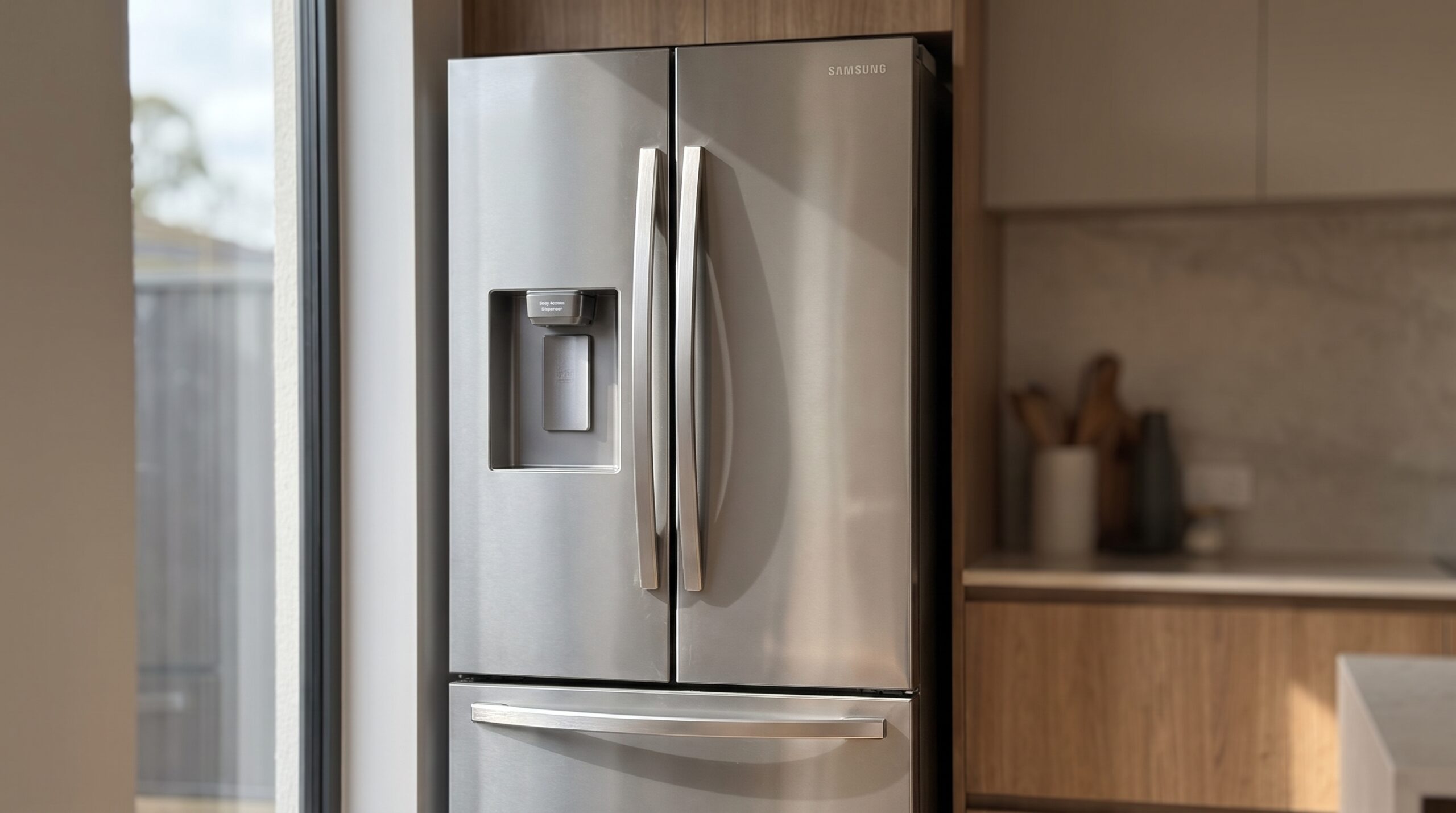
If you own a Samsung refrigerator, the honest answer to does your Samsung refrigerator water filter remove PFAS is no, not the filter it came with. Samsung’s genuine replacement filters are certified for chlorine taste and odor, lead, and a list of pharmaceuticals and industrial chemicals. PFAS, the “forever chemicals” showing up in headlines and water utility reports across the country, is not on that certified list for any US-sold Samsung filter.
That is not a knock on Samsung specifically. It is how most refrigerator filters work, full stop. But if you bought a Samsung fridge partly because the water and ice dispenser felt like a built-in safety net, this is the post that tells you what that filter actually does, what it does not do, and what to put in its place if PFAS is the thing you are actually worried about.
Does your Samsung refrigerator water filter remove PFAS
Here is the quick answer:
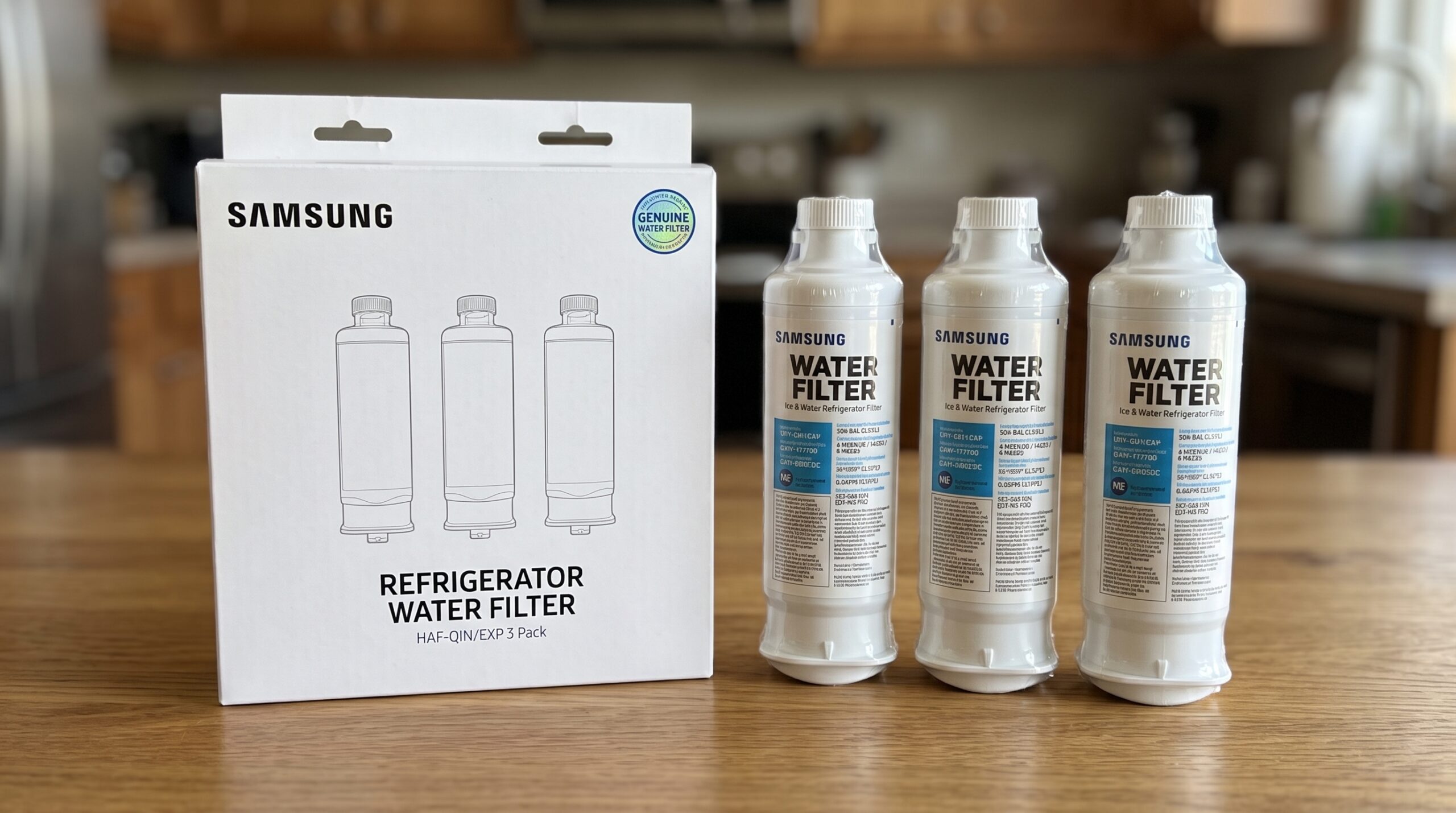
Skip relying on your stock Samsung filter if PFAS removal is the goal. Samsung’s HAF-QIN, HAF-CIN, and HAF-CIN3 filters (the ones sold for US refrigerators) are certified under NSF/ANSI 42, 53, and 401. None of those certifications cover PFOA, PFOS, or total PFAS. So if you’re asking does your Samsung refrigerator water filter remove PFAS and planning to lean on the stock cartridge alone, the answer stays no. The filters do a solid job on chlorine taste, lead, and a set of pharmaceuticals and industrial contaminants, but PFAS reduction was never part of what they were tested or certified to do.
Buy a PFAS-rated replacement filter instead, either a compatible cartridge that fits your existing Samsung filter housing and carries real third-party PFAS testing, or a dedicated under-sink or reverse osmosis system if you want certainty rather than a percentage claim. More on both below.
One geographic footnote worth knowing: Samsung does sell a filter called the HAF-HIM outside the US that carries an NSF/ANSI 53 listing covering PFOA and PFOS. It is not sold through US retail or Samsung’s US parts catalog, so unless you are importing a part, it is not an option for an American kitchen.
What your Samsung refrigerator filter is actually certified to remove
Every genuine Samsung refrigerator filter sold in the US falls into one of a few model families: HAF-QIN, HAF-CIN, HAF-CIN3, and HAFIN2, depending on which refrigerator you have. All of them are tested and certified against two or three NSF/ANSI standards, and none of those standards is the reason a Samsung refrigerator filter does not remove PFAS. The gap comes down to which tests were run in the first place.
NSF/ANSI 42 covers aesthetic effects. This is chlorine taste and odor, plus particulates. It is the “your water tastes and smells better” certification, not a health claim.
NSF/ANSI 53 covers health effects, meaning contaminants the EPA regulates because they can harm you, not just taste bad. For Samsung’s filters, that means lead and cyst reduction (cryptosporidium and giardia). The 2025 edition of NSF/ANSI 53 added PFOA and PFOS effluent limits as an available certification, but that only applies to a filter if the manufacturer specifically tested and certified for it. Samsung’s US filters have not added that listing.
NSF/ANSI 401 covers what NSF calls “emerging compounds,” a list of over-the-counter and prescription pharmaceuticals, plus BPA and a handful of pesticides. This standard is sometimes confused with a PFAS certification because the phrase “emerging contaminants” gets used loosely in marketing, but NSF 401 explicitly does not include PFAS compounds. If a listing implies otherwise, that is a marketing stretch, not a technical fact.
None of this means your filter is doing nothing. Chlorine taste and odor reduction, plus lead and cyst removal, are genuinely useful jobs for a kitchen filter to do. It just means that when people ask does Samsung refrigerator filters remove PFAS, the certifications on the box simply never covered it.
Why PFAS needs its own certification, and why it’s harder to get
Whether any refrigerator water filter removes PFAS comes down to one thing: was it tested against a PFAS-specific standard at all. PFAS is not one chemical, it is a family of several thousand synthetic compounds, and the two most studied, PFOA and PFOS, behave differently in water than chlorine or lead. Standard activated carbon, which is what most refrigerator filters use, can reduce some PFAS compounds, but doing it reliably and at a certified level requires a specific test protocol and a specific carbon formulation tuned for it.
That is why PFAS reduction lives under its own standards: NSF/ANSI 58, which covers reverse osmosis systems, and NSF P473, a standard built specifically for point-of-use filters targeting PFOA and PFOS. A filter earning either of those listings has been independently tested against a defined PFAS challenge concentration and shown to bring it down to a specified level. A filter without either listing has not been tested that way, which is different from saying it definitely removes zero PFAS. It means nobody has verified the number.
Some third-party and compatible filter brands have gone and gotten that testing done, which is where the actual fix comes in.
Is PFAS even in your tap water?
That depends entirely on where you live, and the regulatory ground has been shifting under everyone’s feet. In April 2024 the EPA finalized the first national drinking water limits for PFAS, setting maximum contaminant levels of 4.0 parts per trillion for PFOA and PFOS individually. That is an extremely low threshold, reflecting how little exposure regulators consider acceptable.
Utilities are still working toward full compliance. As of May 2026 the EPA has a proposed rule on the table that would let water systems request an extension to 2031 to meet those limits, though that rule has not been finalized. In practical terms, that means some tap water in the US may still carry PFAS levels above the new limit for several more years while utilities install treatment. Regardless of whether your refrigerator water filter removes PFAS, knowing what’s actually coming out of your tap is the part that matters most.
If you are on a public water system, you can usually find your utility’s PFAS test results in its annual water quality report. If you are on a well, there is no utility testing anyone, so the only way to know is to test it yourself. Before you buy a home water testing kit for PFAS, it is worth understanding what the different kits actually measure, since not all of them test to the sensitivity PFAS requires.
The compatible filter that gives you a Samsung refrigerator water filter that does remove PFAS
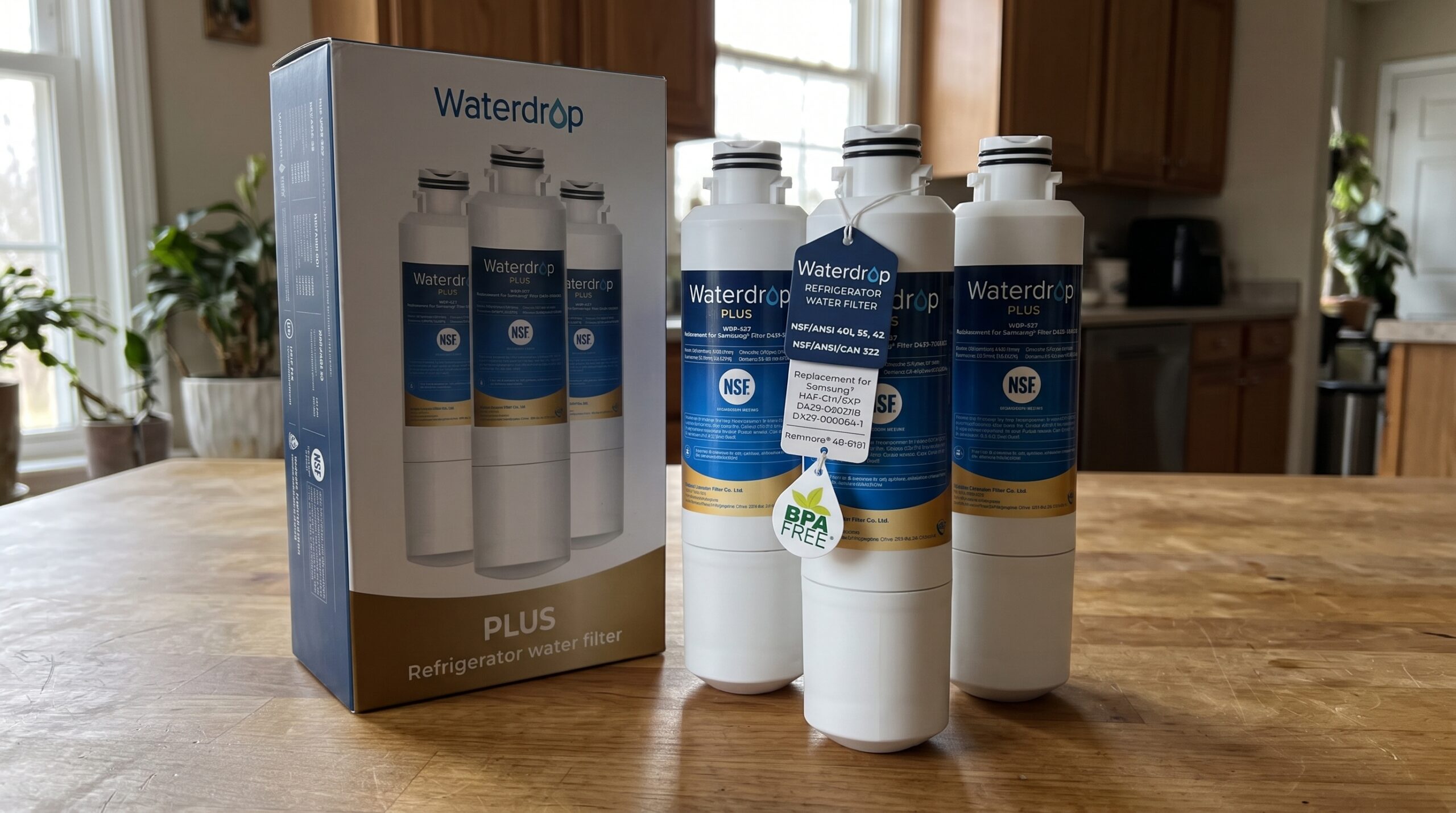
If you want to keep using your Samsung refrigerator’s filter housing but want real PFAS reduction, the fix is a compatible replacement cartridge built for that purpose rather than the Samsung original. This is about as close as you’ll get to a Samsung refrigerator water filter that removes PFAS, since it drops straight into the same slot without touching your fridge’s hardware.
The Waterdrop Plus DA29-00020B (also listed as WDP-F27) is designed as a direct replacement for Samsung’s HAF-CIN/EXP housing and is certified under NSF/ANSI 42, 53, and 372. Separately from that certification, Waterdrop states the filter was tested by a third-party laboratory to reduce PFOA and PFOS by up to 95.3 percent. That reduction figure is the manufacturer’s own third-party test claim rather than an NSF-issued PFAS certification, which is a distinction worth keeping straight, but it is still a specific, tested number rather than a vague “reduces contaminants” line. It’s currently available on Amazon for around $20 to $40 depending on pack size.
If your refrigerator uses the newer HAF-QIN housing instead of HAF-CIN, check the product listing’s compatibility chart before buying, since the two filter shapes are not interchangeable.
For anyone who wants certainty rather than a percentage, a dedicated under-sink filter carrying an NSF P473 or NSF/ANSI 58 certification is the more airtight option, installed separately from the fridge and used just for drinking and cooking water. Here’s a breakdown of under-sink filters that specifically remove PFAS if that route makes more sense for your household.
“NSF certified” does not mean your refrigerator water filter removes PFAS
This is the single most common mix-up in refrigerator filter marketing, and it is worth clearing up directly. Seeing “NSF certified” on a box or product page tells you a filter was tested against at least one specific standard, for at least one specific contaminant or contaminant group. It does not mean the filter was tested against every standard that exists, and it definitely does not mean that refrigerator filter removes PFAS by default.
A filter can be entirely truthful about being NSF certified while still saying nothing about PFAS, lead, or any contaminant it was not specifically tested for. The honest way to read a filter’s certification is to check which standard numbers are listed and what each one actually covers, not just whether the words “NSF certified” appear somewhere on the packaging. If lead is also a concern in your house, this covers which refrigerator filters are actually certified for it, and the same “check the specific standard number” rule applies there too.
What it actually costs to switch
Genuine Samsung filters and PFAS-tested alternatives land in a similar price range, so switching away from a Samsung refrigerator water filter that doesn’t remove PFAS is not really a budget decision.
| Filter | Upfront cost | Replacement interval | Annual cost (approx.) |
|---|---|---|---|
| Samsung HAF-QIN/EXP (genuine, 1-pack) | $49.99 | 6 months / 300 gallons | ~$100/year |
| Samsung HAF-QIN/EXP (genuine, 2-pack) | $89.99 | 6 months / 300 gallons | ~$90/year |
| Samsung HAF-CIN/EXP (genuine, with subscription) | $49.99, about $15 off per filter on Subscribe & Save | 6 months / 300 gallons | ~$60-70/year |
| Waterdrop Plus DA29-00020B (PFAS-tested compatible) | ~$30-40 per filter, cheaper in multi-packs | 6 months / 300 gallons | ~$60-80/year |
The takeaway is that a PFAS-tested compatible filter is not a premium upgrade. In most cases it costs about the same as staying with the genuine Samsung filter, especially once you account for subscription pricing on either option. The real cost of sticking with the stock filter is not dollars, it is the gap between what the filter is marketed to do and what it is actually certified for.
FAQ
Does your Samsung refrigerator water filter remove PFAS?
Not in the US. Samsung’s HAF-QIN, HAF-CIN, HAF-CIN3, and HAFIN2 filters carry NSF/ANSI 42, 53, and 401 certifications, none of which cover PFOA, PFOS, or total PFAS. A non-US model, the HAF-HIM, does carry an NSF 53 PFOA/PFOS listing, but it is not sold through US retail channels.
Does Samsung refrigerator filters remove PFAS in any model at all?
No genuine US-sold Samsung model does. The certifications across the HAF-QIN, HAF-CIN, and HAFIN2 lines stop at chlorine taste and odor, lead, cysts, and a set of emerging pharmaceutical compounds. PFAS was never part of the test protocol for any of them.
What’s the difference between NSF 401 and a PFAS certification?
NSF/ANSI 401 covers a separate group of contaminants called emerging compounds, mainly pharmaceuticals, BPA, and some pesticides. PFAS is not part of that list. A filter needs a specific NSF/ANSI 58 (reverse osmosis) or NSF P473 (point-of-use) listing, or independently verified third-party test data, to back up a PFAS reduction claim.
Does a regular refrigerator water filter remove PFAS better than Samsung’s?
Not automatically. Most refrigerator water filters, regardless of brand, use standard activated carbon and were not tested against a PFAS standard either. The brand name on the housing matters less than whether that specific filter model carries an NSF/ANSI 58, NSF P473, or verified third-party PFAS test result.
Is my tap water likely to have PFAS in it?
It depends on your location and water source. The EPA’s national PFOA/PFOS drinking water limits took effect in 2024, but many utilities are still working toward full compliance, and a proposed 2026 rule could extend some deadlines to 2031. Checking your utility’s annual water quality report, or testing your own water if you’re on a well, is the only way to know for sure.
Can I just swap in a compatible filter without changing anything else?
Yes. PFAS-tested compatible filters like the Waterdrop Plus DA29-00020B are built to fit directly into the same housing as the genuine Samsung filter, so there’s no plumbing or hardware change involved, just a different cartridge.
The bottom line
So, does your Samsung refrigerator water filter remove PFAS? Not the one that came with your fridge, and not any genuine US Samsung filter on the market right now. What it does remove, chlorine taste, lead, and a handful of pharmaceuticals, is real and worth having. PFAS just was not part of the deal. If that’s the contaminant you’re actually trying to deal with, a certified compatible filter or a dedicated under-sink system is the move, not the stock cartridge.