
The countertop vs under-sink water filter comparison is the single most common question I get asked, usually while someone’s staring at their phone with six browser tabs open, trying to figure out which system actually makes sense for their kitchen. I’ve spent years installing, maintaining, and ripping out water filtration systems in people’s homes, and after seeing what works and what quietly fails, I can tell you most of what’s out there gets this comparison wrong.
Most of what you’ll find online is written by companies selling you one or the other. They’ll dress it up with pros-and-cons lists and stock photos of smiling families, but the recommendation always lands on whatever they happen to manufacture. Funny how that works!
This is different. This is a real countertop vs under-sink water filter comparison based on actual specs, verified lab data, NSF certifications, and the stuff I’ve seen go wrong in real kitchens, not marketing brochures. No affiliate sales pitch. Just what works, what doesn’t, and which one fits your actual life.
Summary
This countertop vs under-sink water filter comparison covers installation, contaminant removal, real costs, and which system fits your situation, based on verified lab data and NSF certifications, not marketing claims.
Big household or heavy cooking? Under-sink, full stop. Countertop RO tanks can’t keep up with daily demand.
Renting or can’t drill? Countertop RO (AquaTru). No installation, certified fluoride + PFAS removal.
Homeowner wanting the best value? Under-sink RO (iSpring RCC7AK). Removes everything at just $0.14/gallon over 3 years.
Just want cleaner-tasting water? Under-sink carbon (Aquasana AQ-5200). Zero wastewater, minimal maintenance.
Fluoride is your concern? RO systems only. Countertop or under-sink. Standard carbon filters cannot remove fluoride.
First, Know What You’re Actually Comparing
This trips people up immediately. “Countertop” and “under-sink” aren’t just two locations for the same thing. They describe fundamentally different product categories with different technologies, different flow rates, different installation requirements, and wildly different contaminant removal capabilities.
Here’s what actually exists:
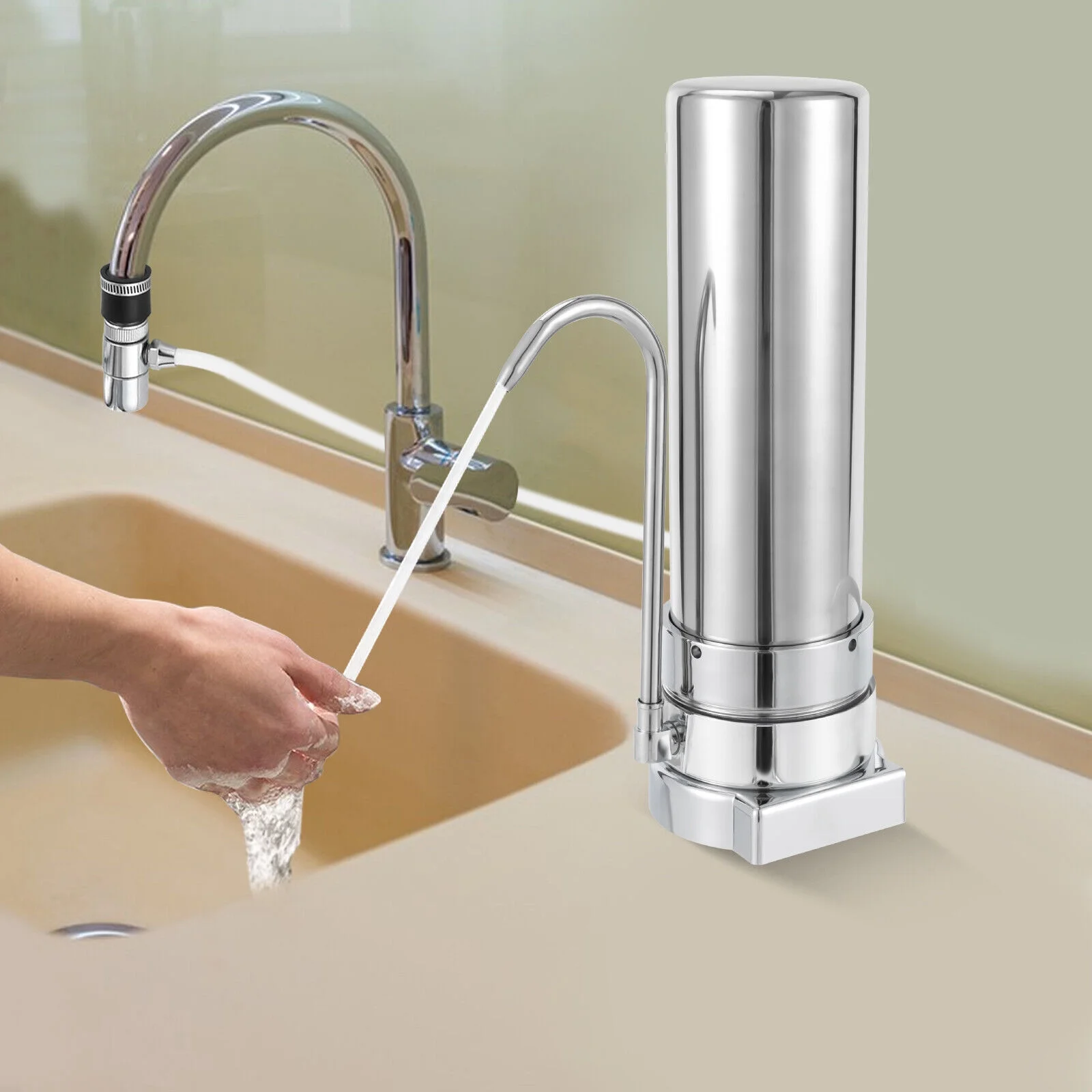
Countertop carbon filters connect to your faucet with a diverter valve. Water passes through a carbon block and comes out the other side. Think Aquasana AQ-4000 or APEX MR-1050. Simple, cheap, limited.
Countertop RO systems sit on your counter and don’t connect to the faucet at all. You pour water into a tank, a pump pushes it through a reverse osmosis membrane, and purified water collects in a separate chamber. AquaTru is the most well-known. These are a completely different animal from carbon countertops.
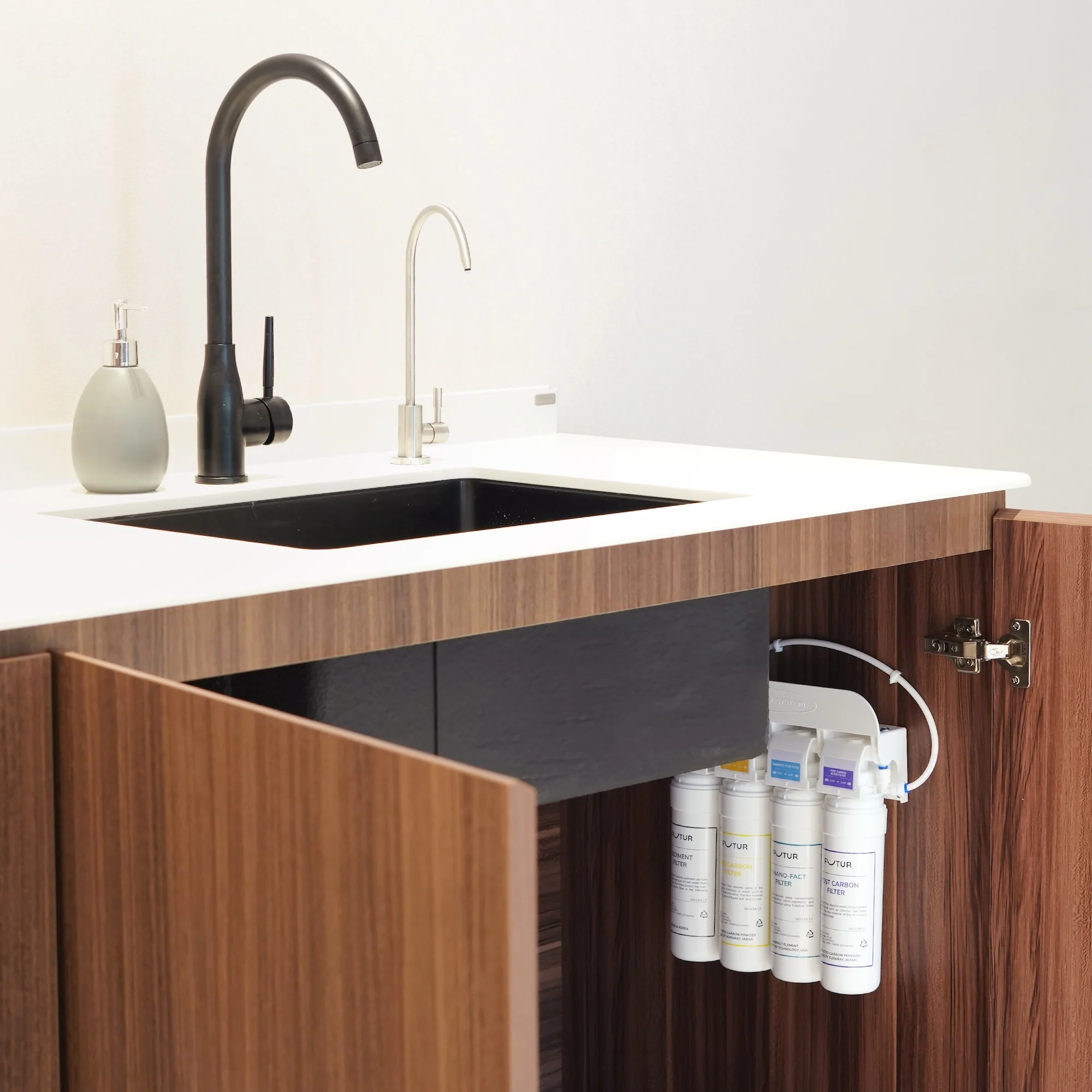
Under-sink carbon filters tap into your cold water line beneath the sink and dispense through a dedicated faucet (or sometimes your existing one). Aquasana AQ-5200 is a solid example. Better flow, hidden from view.
Under-sink RO systems also connect under the sink but add a reverse osmosis membrane plus a storage tank (or no tank in newer tankless models). iSpring RCC7AK, APEC ROES-50, Waterdrop G3P800, these are the heavy hitters.
When people ask about the difference between countertop and under-sink water filters, they’re often comparing apples to four different kinds of oranges. The technology matters more than the location.
Installation: Where Things Get Real
Countertop Carbon
You unscrew your faucet aerator, screw on a diverter valve, and connect a hose. Five minutes. No tools. Done.
Except here’s the part nobody tells you: if you have a pull-down, pull-out, or touchless faucet (which is now the majority of kitchen faucets sold in the US) this won’t work. These faucets don’t have removable aerators with standard threads. Aquasana’s own manual says the AQ-4000 is “NOT compatible with faucets that feature a pullout sprayer.” Moen’s popular models (7165, 7365, 5882) use proprietary aerator threads that reject standard diverters entirely.
I cannot tell you how many people I’ve talked to who ordered a countertop filter, got excited, unboxed it, and then realized it physically cannot connect to their faucet. This compatibility issue is almost never mentioned in comparison articles.
Countertop RO
Zero installation. Plug it in, fill the back tank with tap water, press a button. That’s it. No faucet connection needed.
The catch: you need a power outlet on your counter, and the unit itself takes up roughly the footprint of a toaster oven. The AquaTru is about 14″ × 8″ × 16″. The Waterdrop A1 is tall enough that some users report it won’t fit under their upper cabinets.
Under-Sink Carbon
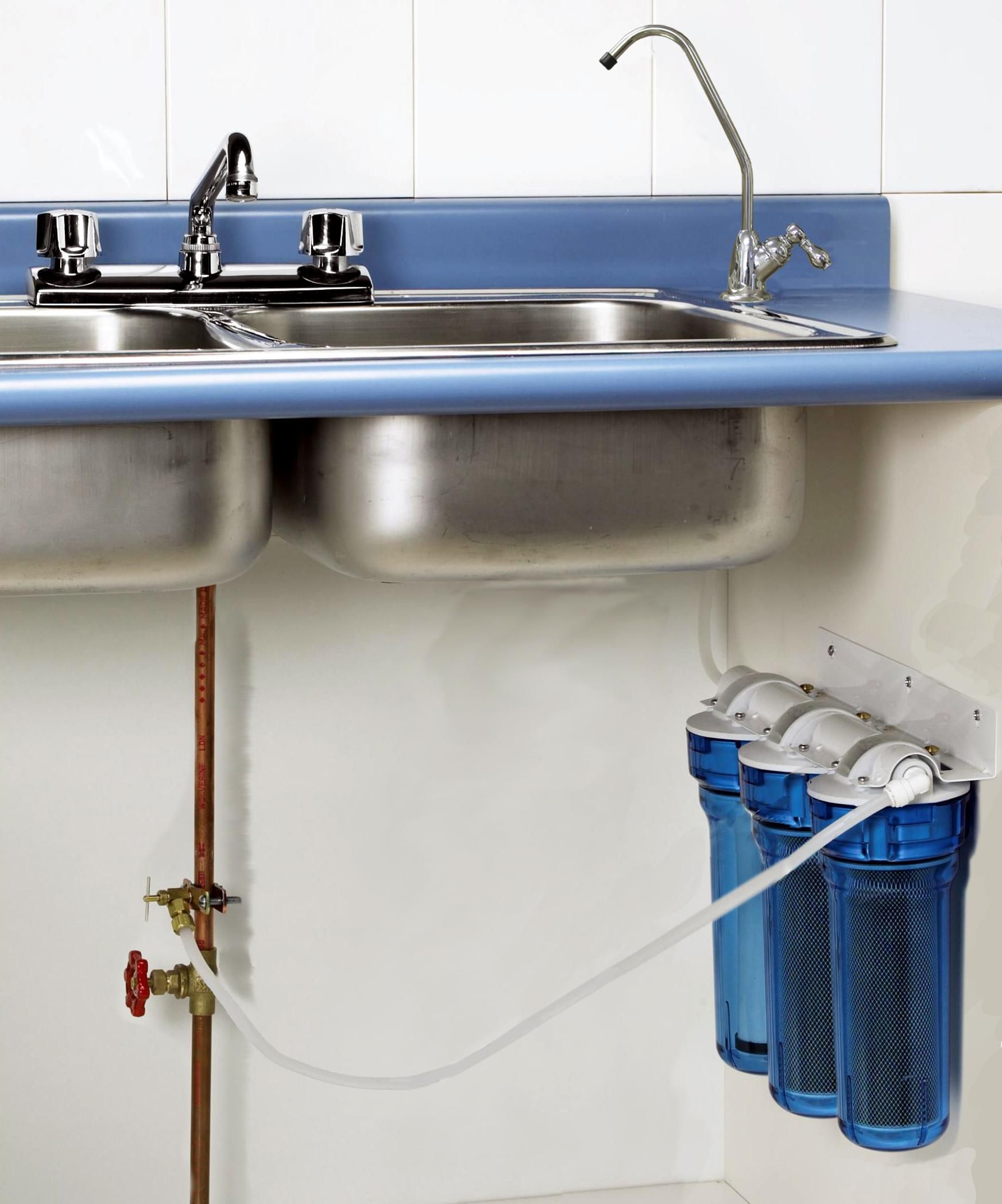
Moderate DIY job; 20 to 45 minutes. You’re connecting a T-fitting to your cold water supply line and mounting a bracket inside the cabinet. Most systems include a separate dedicated faucet that requires either an existing spare hole in your sink or drilling a new one.
If you’re handy with basic plumbing, this is doable. If “T-fitting” made you nervous, budget $150–$300 for a plumber.
Under-Sink RO
This is the most involved installation. Everything from the carbon under-sink install, plus:
A drain saddle that requires drilling a ¼” hole into your drainpipe. A pressurized storage tank that needs to fit in your cabinet (the APEC ROES-50 system needs 17″ × 6″ × 18″ of space plus an 11″ × 15″ tank). Tankless models like the Waterdrop G3P800 skip the tank but need a 110V electrical outlet under the sink.
Expect 1 to 2.5 hours for a DIY install. Budget $200–$500 for professional installation.
The honest take on installation: Countertop is easier — there’s no debate there. But “easier” doesn’t automatically mean “better.” Under-sink installation is a one-time project. Once it’s done, you never think about it again. Every single day after that, filtered water just comes out of the faucet.
What Each System Actually Removes
This is the section most comparison articles phone in with vague claims like “removes up to 99% of contaminants.” That tells you nothing. Removes which contaminants? Certified by whom? Tested how?
Here in Clean Faucet, we break this down by what actually matters.
Fluoride
Here’s the uncomfortable truth that most filter companies dance around: standard carbon filters cannot remove fluoride. Not countertop carbon, not under-sink carbon. It doesn’t matter how many stages they have or how expensive they are. Fluoride exists as a tiny dissolved ion at about 0.26 nanometers, carbon simply doesn’t have the chemical affinity to grab it.
Only reverse osmosis (both countertop and under-sink) reliably removes fluoride. The AquaTru is certified to remove 93.5% and has been lab-tested at 100%. The iSpring RCC7AK removes over 97.4% per its NSF 58 certification. The Waterdrop G3P800 hit 100% in independent lab testing.
If fluoride removal is your primary reason for buying a filter, and for a lot of people reading this, it is — your options are RO or nothing. Carbon won’t cut it. Period. We go deeper on which specific filter types are actually certified for fluoride in our guide to water filters that remove fluoride.
Nitrates follow the same pattern. Carbon filters miss them entirely regardless of where they sit. Our breakdown of which water filters remove nitrates shows you exactly what does and doesn’t work.
There’s one notable exception in the carbon world; Clearly Filtered uses an ion exchange resin alongside carbon that has tested at 100% fluoride removal. But that’s a rare outlier, not the norm for carbon systems.
PFAS (Forever Chemicals)
EPA set maximum contaminant levels at 4 parts per trillion each for PFOA and PFOS in 2024. That’s incredibly strict, which tells you how seriously regulators take these compounds.
The good news: both quality carbon block filters and all RO systems effectively remove PFAS when properly certified.
The critical distinction: compressed carbon block with sub-micron pores works. Loose granular activated carbon — the stuff inside a basic Brita pitcher — does not. The Aquasana AQ-4000 was actually the first filter ever certified for PFOA/PFOS removal back in 2016 (NSF P473). So yes, a countertop carbon filter can handle PFAS — but only the right kind.
RO systems handle PFAS across the board. AquaTru is IAPMO-certified to NSF 53 for PFOA/PFOS. Under-sink models like the Waterdrop G3P800 carry the same certification.
Lead, Chlorine, VOCs
All four system types handle these reasonably well. Carbon is actually the ideal technology for chlorine and VOCs, it’s what carbon does best. Lead removal varies by model but most NSF 53-certified systems hit 95–99%+ regardless of whether they sit on your counter or under it.
Microplastics
This is a newer concern, and the data is still catching up. RO membranes block all microplastics by mechanism — the pores are 0.0001 microns, and microplastics are enormous by comparison. Sub-micron carbon block filters can also capture them effectively. The AquaTru is NSF 401 certified for microplastics at 0.5 microns and above.
Basic carbon filters? A 2023 study published in PMC found that some GAC filters may not only fail to remove microplastics but could actually release previously trapped particles. Not ideal.
The Contaminant Matrix
| What You Want Removed | Carbon Countertop | Countertop RO | Under-Sink Carbon | Under-Sink RO |
|---|---|---|---|---|
| Fluoride | No | Yes (93–100%) | No* | Yes (97–100%) |
| PFAS | Yes (carbon block only) | Yes | Yes | Yes |
| Lead | Yes (95–99%) | Yes (98–100%) | Yes (99%+) | Yes (98–100%) |
| Chlorine | Yes (95–99%) | Yes | Yes (97–99%) | Yes |
| Microplastics | Partial | Yes (NSF 401) | Yes (sub-micron block) | Yes (all) |
| VOCs | Yes | Yes | Yes | Yes (w/ carbon stage) |
*Except Clearly Filtered, which uses ion exchange alongside carbon.
Flow Rate: How Fast Does Water Actually Come Out?
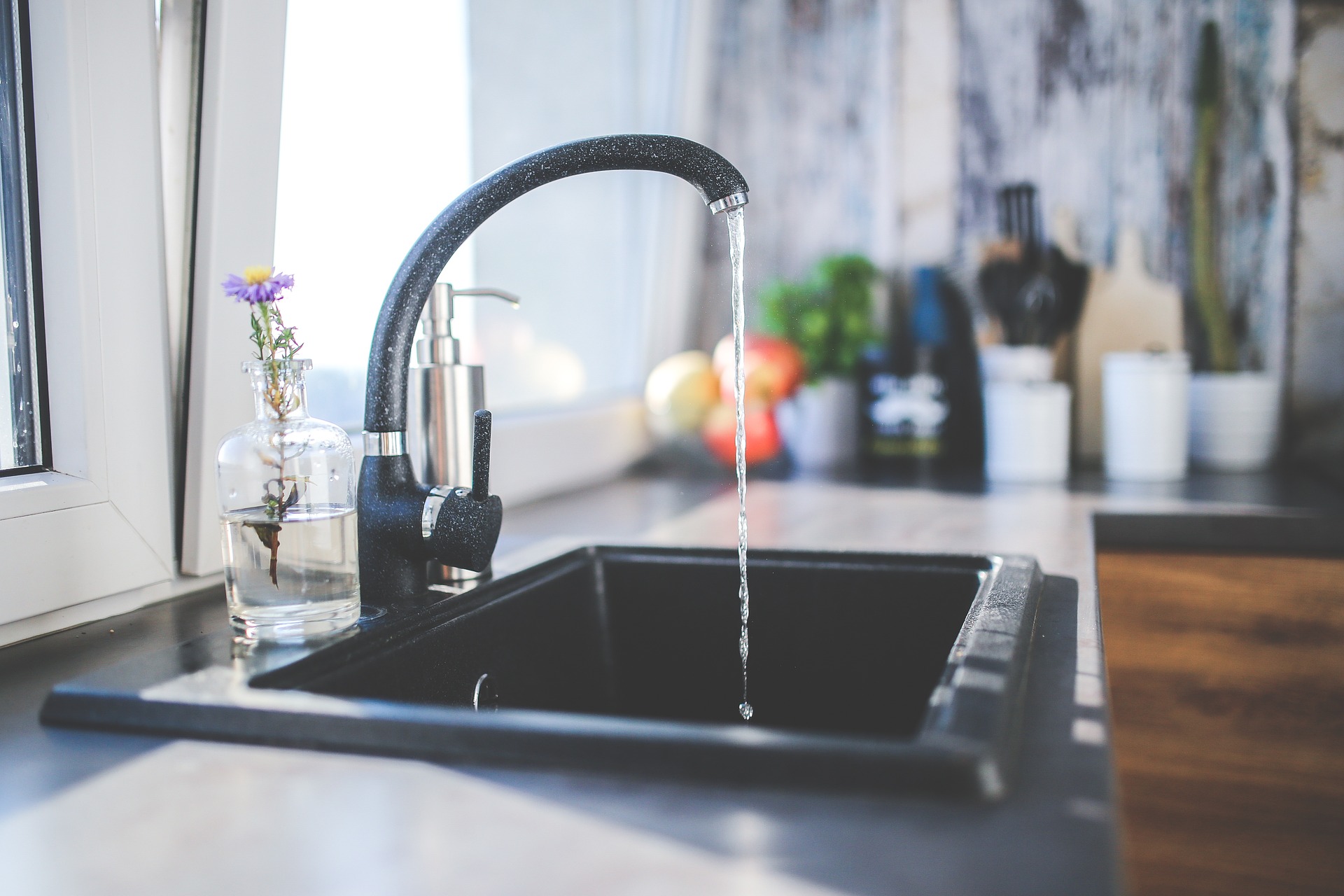
This is where the countertop vs under sink water filter debate gets practical in a way that matters every single day.
Countertop carbon: 0.5 to 0.75 GPM. Basically normal faucet speed, maybe slightly reduced. You won’t notice a meaningful difference filling a glass or a pot.
Countertop RO: Here’s where reality hits. The AquaTru produces about 0.08 GPM. QualityWaterLab timed it at 15 minutes and 53 seconds to fill its roughly 3-quart tank. That’s not a flow rate, that’s a wait time. You are not spontaneously filling a large pot for pasta. You’re planning your water use in advance, filling after dinner and storing in the fridge overnight.
Under-sink carbon: 0.5 to 0.72 GPM through the dedicated faucet. Fast enough that most people can’t tell the difference from their regular tap.
Under-sink RO (tankless): The Waterdrop G3P800 delivers about 0.28 GPM, roughly half the speed of a carbon system, but more than 3× faster than any countertop RO. Fills a 6-ounce glass in about 5 seconds. Perfectly usable for daily life.
Under-sink RO (tank): Burst flow from the pressurized tank is solid, great for filling a glass quickly. But the tank refills slowly (50–75 gallons per day), and usable capacity is only about 25–40% of stated volume. A “4-gallon tank” realistically holds 1 to 1.5 gallons of filtered water at any given time.
Bottom line? If you cook a lot, have a family, or just don’t want to babysit your water supply, under-sink systems are meaningfully better. Countertop RO is a patience exercise.
The Stuff Nobody Talks About (But Should)
Countertop Hidden Issues
AquaTru’s reputation is polarized. The product genuinely performs, lab-verified PFAS and fluoride removal to non-detect levels. But the company holds a 2.5 out of 5 rating on Trustpilot and 2.7 on PissedConsumer. Complaints center on third-party call centers, slow shipping, leaking units, and unresponsive customer support. The filtration technology is solid. The customer experience is a gamble.
Hard water destroys countertop RO systems faster than manufacturers admit. AquaTru’s own support documentation acknowledges mineral scale buildup clogging pumps. One Trustpilot reviewer put it bluntly: “Don’t buy if you’re in a hard water area even with monthly descaling.” If your water is above 150 ppm hardness, factor in significantly shorter membrane life.
Countertop RO noise is a thing. The AquaTru produces a distinct humming sound during its 12 to 16 minute filtration cycles. The Waterdrop A1’s cooling mode gets flagged as noisy. Only pumpless gravity-fed designs avoid this. If your kitchen is open-concept and you’re noise-sensitive, this matters.
You have to manually empty wastewater. AquaTru specifically warns that you cannot just keep refilling the back tank without dumping the waste chamber. Skip this step and you’ll clog filters prematurely.
Under-Sink Hidden Issues
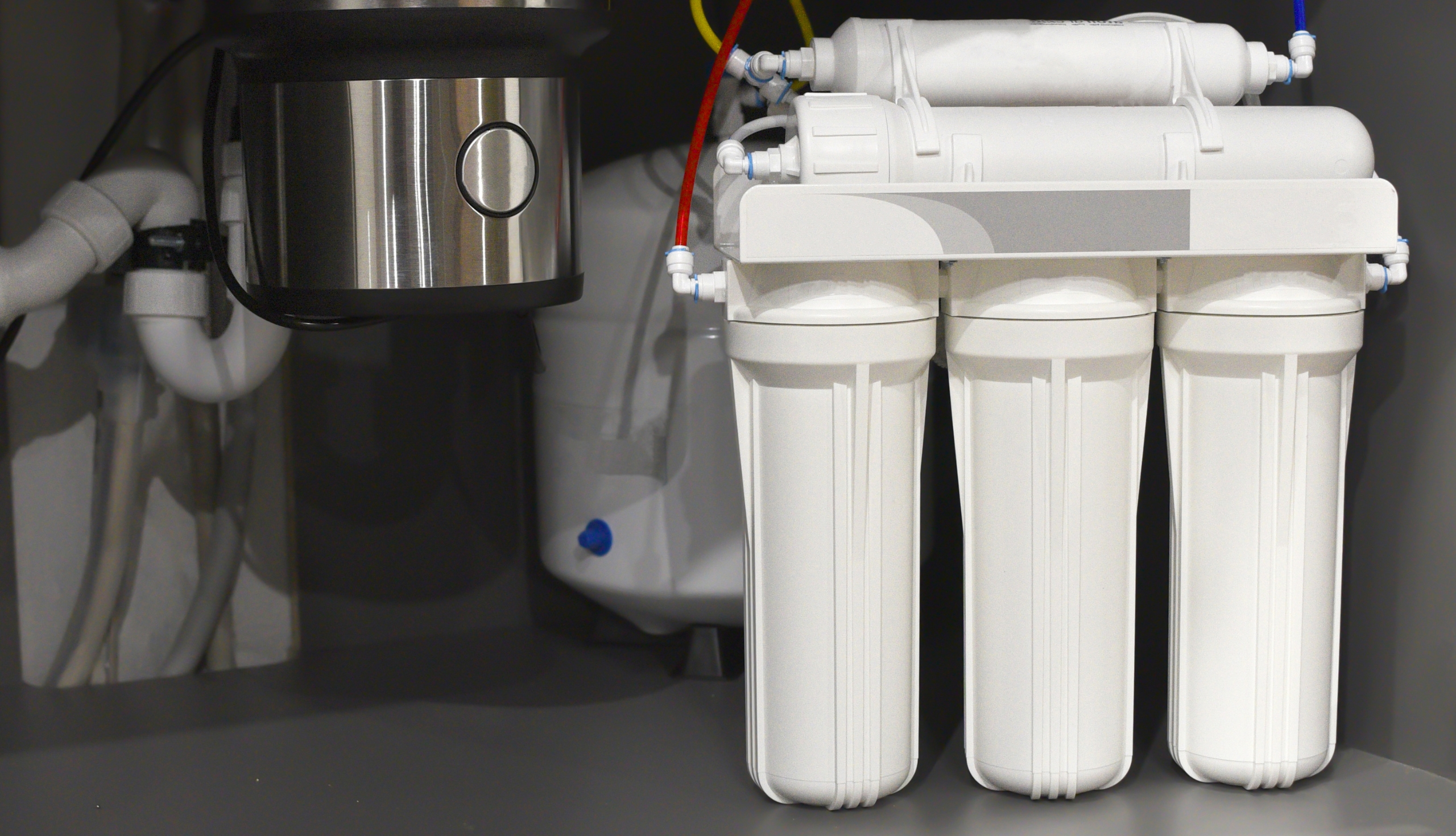
Leak risk is the big one, and almost no comparison article mentions it. ClassAction.org has investigated class-action-level claims against GE, Aquasana, Whirlpool, Culligan, and Pentair for cracked filter housings that flooded kitchens. Forum users describe coming home to entire kitchens destroyed, with water damage extending to basements and adjacent rooms. One user on Bogleheads called a water leak alarm “mandatory, non-negotiable” for any under-sink system. I agree completely. A $15 leak detector could save you thousands.
Installation can go sideways. Despite “DIY-friendly” marketing, I’ve seen drain tubes installed backward, fittings that don’t match, and my personal favorite, a contractor who installed the filter stages in the wrong order, resulting in higher TDS readings after filtration than before! If you’re not comfortable with basic plumbing, hire someone.
“Out of sight, out of mind” is a real maintenance problem. Countertop units stare at you every day with their LED indicators. Under-sink systems hide in the cabinet, and people routinely run them months past filter expiration. Set a calendar reminder. Your phone is right there.
The dedicated faucet aesthetics issue. Most under-sink systems include a small chrome faucet that looks fine in a builder-grade kitchen but sticks out awkwardly next to high-end fixtures. Matching faucet options exist but add cost and planning.
Algae can grow in post-filter lines. It sounds gross because it is. Documented in multiple plumbing forums. Once water passes through the filter, there’s no residual chlorine to prevent biological growth in the tubing. Periodic cleaning of the output lines is something manufacturers rarely mention.
What It Actually Costs Over 3 Years
Everyone fixates on the sticker price. That’s the wrong number. Filter replacements, electricity, and water waste add up quietly. Here’s a realistic countertop vs under-sink water filter comparison based on total cost of ownership over three years, assuming roughly 2.5 gallons per day of filtered water.
| System Type | Example Model | Purchase Price | 3-Year Filter Cost | 3-Year Total | Cost Per Gallon |
|---|---|---|---|---|---|
| Countertop Carbon | APEX MR-1050 | $65–$90 | $90–$270 | $155–$360 | $0.09 |
| Countertop Carbon | Aquasana Clean Water Machine | $150–$200 | $300–$390 | $450–$590 | $0.19 |
| Countertop RO | SimPure Y7P | $370 | ~$200 | $570 | $0.21 |
| Countertop RO | AquaTru Classic | $395–$475 | ~$260 | $735–$740 | $0.27 |
| Under-Sink Carbon | Aquasana AQ-5200 | $130–$170 | ~$300 | $430–$470 | $0.17 |
| Under-Sink RO | iSpring RCC7AK | ~$219 | ~$165 | $384 | $0.14 |
| Under-Sink RO | APEC RO-90 | $230–$280 | ~$120–$170 | $350–$450 | $0.15 |
| Under-Sink RO | Waterdrop G3P800 | ~$849 | ~$350 | $1,200 | $0.44 |
| Under-Sink Carbon | Clearly Filtered 3-Stage | ~$500 | ~$800 | $1,300 | $0.47 |
A few things jump out here.
The iSpring RCC7AK is a full 6-stage reverse osmosis system that removes fluoride, PFAS, lead, and virtually everything else, costs less over three years than an Aquasana countertop carbon filter that can’t touch fluoride. Read that again. The under-sink RO that does more costs less. That’s not intuitive, but it’s math.
The APEX MR-1050 is the cheapest option at $0.09 per gallon, but it lacks NSF certifications and doesn’t remove much beyond chlorine and sediment. You get what you pay for.
The Waterdrop G3P800 and Clearly Filtered are premium options justified by specific advantages, tankless on-demand convenience and no-drill installation respectively, not by being objectively “better.”
For reference, bottled water costs $0.50 to $7.50 per gallon. Every single system on this list destroys that.
Which One Should You Actually Buy?

Here’s where I’ll be direct, because the whole point of a comparison like this is to help you decide, not to leave you more confused than when you started.
You’re renting and can’t modify anything:
Go countertop RO. The AquaTru is the most comprehensively certified option (IAPMO to NSF 42, 53, 58, and 401). It removes fluoride, PFAS, lead, microplastics, and 80+ other contaminants. Zero installation, completely portable when you move. Yes, it’s slow. Yes, it takes counter space. That’s the trade-off for not drilling into your landlord’s plumbing.
You might find these articles helpful:
Best Under-Sink Water Filter for Lead: 4 Certified Options (2 Require Zero Drilling)
If you don’t care about fluoride and just want better-tasting water, a countertop carbon filter works, but check your faucet compatibility first. If you have a pull-down faucet, you’re stuck with fill-and-pour options anyway.
You’re a homeowner who wants the best filtration:
Under-sink RO, specifically the iSpring RCC7AK or APEC ROES-50. Best contaminant removal, lowest cost per gallon, hidden from view, on-demand flow. The installation is a weekend project. Once it’s in, you forget it exists until the filter reminder goes off.
If you want to skip the tank and don’t mind the higher price, the Waterdrop G3P800 is the tankless upgrade, faster flow, smaller footprint, 3:1 pure-to-waste ratio.
You have a family of 4+
Under-sink, full stop. Countertop RO tanks that hold 3 quarts and take 16 minutes to refill are categorically inadequate for a household that goes through water quickly. You need on-demand capacity.
You cook a lot:
Under-sink carbon (Aquasana AQ-5300+ at 0.72 GPM) or tankless under-sink RO. You need to be able to fill a big pot without standing there for 15 minutes. Countertop RO is a non-starter for serious cooking.
Fluoride is your main concern:
Any RO system — countertop or under-sink. Standard carbon cannot remove fluoride regardless of where it sits. Faucet-mounted filters are the most common example — they don’t remove fluoride despite being marketed as general-purpose filters. If you’re renting, go with AquaTru. If you own, iSpring RCC7AK. There is no carbon shortcut here.
You want minimal environmental impact:
Under-sink carbon produces zero wastewater, uses zero electricity, and generates relatively little cartridge waste, while still filtering lead, chlorine, PFAS, and VOCs. The only thing it can’t touch is fluoride. If you need fluoride removal with minimal waste, the Home Master TMAFC-ERP achieves roughly a 1:1 pure-to-waste ratio using a non-electric permeate pump, the most efficient tank-based RO available.
For perspective, a traditional under-sink RO can waste 3 to 5 gallons per gallon produced. Modern tankless units (Waterdrop G3P800) run about 3:1 pure-to-waste. Countertop RO units like the AquaTru sit at 4:1. All carbon filters produce zero waste.
You want the cleanest kitchen aesthetic:
Under-sink, any type. The whole system hides in the cabinet. The only visible element is a small dedicated faucet — or nothing extra at all with direct-connect models. No plastic appliance on your counter, no hoses, no diverter valves. If kitchen aesthetics matter to you, this isn’t even close.
The Environmental Picture

Since we’re being thorough: RO systems produce wastewater. Carbon systems don’t. Here’s what that looks like annually for a family using about 2 gallons of filtered water per day.
All carbon filters: 0 gallons wasted. Modern countertop RO (AquaTru at 4:1): roughly 183 gallons per year. Tankless under-sink RO (Waterdrop G3P800 at 3:1): roughly 243 gallons. Traditional tank-based under-sink RO (APEC at 1:3): roughly 2,190 gallons.
The EPA notes that typical point-of-use RO systems waste 5 or more gallons per gallon produced. WaterSense-labeled units must hit 2.3:1 or better.
Electricity costs are negligible across the board, countertop RO pumps run about $2 to $5 per year, tankless under-sink RO about $5 to $15. Traditional tank RO and all carbon systems use zero electricity.
As for plastic waste, every system generates used cartridges, typically 1 to 7 per year depending on type. Recycling programs are nearly nonexistent. Only Brita (through TerraCycle) and PUR offer filter recycling. Everyone else tells you to throw cartridges in the trash.
Quick Answers to the Questions Everyone Asks
Does a countertop water filter remove fluoride? Only countertop RO systems do (AquaTru, SimPure). Standard countertop carbon filters absolutely do not, regardless of what the marketing implies.
Can I install an under-sink filter in my rental? Traditional under-sink requires drilling a faucet hole — most landlords will say no. The Clearly Filtered under-sink is a rare exception that connects inline without drilling. Otherwise, go countertop.
Which lasts longer; countertop or under-sink filters? Under-sink filters generally have longer replacement cycles. Countertop carbon runs 4 to 6 months. Under-sink carbon runs 6 to 12 months. RO membranes on both types last 18 to 36 months.
Is under-sink worth the extra installation hassle? For homeowners, absolutely. Lower cost per gallon, better flow rates, hidden from view, no counter clutter. The iSpring RCC7AK costs just $384 over three years — less than some countertop options.
Do water filters actually remove PFAS? Quality carbon block and all RO systems do, when properly certified. Basic pitcher filters (Brita Standard, granular activated carbon) do not. Always check the Performance Data Sheet for specific PFAS claims, faucet-mounted filters are a special case; most faucet filters don’t remove PFAS in any meaningful way, even when marketed broadly. “Tested to NSF standards” is not the same as “NSF certified.”
What’s the biggest risk of an under-sink system? Water damage from leaks. Cracked housings and failed fittings have caused catastrophic flooding. Put a $15 water leak alarm under your sink. This is not optional.
Are countertop RO systems loud? Most produce noticeable pump noise during filtration — the AquaTru hums for 12 to 16 minutes per cycle. Pumpless gravity-fed designs are quiet. If noise bothers you, check decibel specs before buying.
Where This Leaves You
The whole countertop vs under-sink water filter comparison really comes down to three questions: Can you install under your sink? Do you need fluoride or PFAS removed? And how much water does your household actually use?
If the answer is yes, yes, and a lot, under-sink RO is the clear winner on performance, cost, and daily convenience. If the answer is no, yes, and not much, countertop RO gets the job done with zero installation. And if you just want cleaner-tasting water without fluoride concerns, a simple under-sink carbon filter is the most practical, lowest-maintenance choice for homeowners.
Don’t overthink it. Pick the system that matches your actual kitchen, your actual contaminant concerns, and your actual living situation. Then install it (or plug it in) and stop buying bottled water.
Your wallet, your body, and your plumber will thank you!