
PFAS countertop filters have become essential because nearly half of American tap water contains detectable PFAS chemicals, and the EPA now says there’s no safe exposure level for the most dangerous ones. If that statistic made you uncomfortable, good, you probably need this article.
You’ve seen the headlines about “forever chemicals” in drinking water. Maybe you’re pregnant, have young kids, or just read about the $10.3 billion settlement 3M paid because they knew their PFAS-laden products were contaminating water supplies for decades. You’re wondering if a PFAS countertop filter system is the answer, or an expensive overkill.
I spent weeks researching every major PFAS countertop filter on the market, verifying certification claims (and boy how many are misleading), reading hundreds of real user complaints, and calculating true 5-year ownership costs. What I found might surprise you: the most expensive systems aren’t the best, one popular brand has literally zero performance certifications, and most people are either over-filtering safe water or under-filtering dangerous water.
By the end of this guide, you’ll know exactly whether you need RO filtration, which renter-friendly RO system actually makes sense for your situation, and how to avoid the costly mistakes I see constantly in Reddit threads and Amazon reviews.
Should you consider PFAS countertop filters with reverse osmosis?
Let’s start with PFAS, since that’s likely why you’re here. Think of these chemicals as the cockroaches of the molecular world, they never break down, accumulate in your body over decades, and show up in places you’d never expect. The EPA detected them in 9,552 confirmed sites across all 50 states, and recent testing suggests 172 million Americans have drinking water that’s tested positive.
The health risks aren’t theoretical. A Mount Sinai study found a 56% increased risk of thyroid cancer diagnosis per doubling of PFOS concentration in blood. Children with higher PFAS exposure are 17-21% more likely to develop respiratory infections. The EPA’s new enforceable limit? Just 4 parts per trillion for PFOA and PFOS, with an explicit acknowledgment that zero is the only truly safe level.
The fluoride question is more nuanced than either side admits
Here’s where I’ll likely frustrate people on both ends of this debate. The ADA and CDC maintain that water fluoridation at 0.7 mg/L is safe and reduces cavities by approximately 25%. This position is supported by decades of research and hasn’t changed despite recent controversy.
However, the NTP’s August 2024 monograph reported “moderate confidence” that fluoride exposure above 1.5 mg/L is associated with lower IQ in children, though they explicitly state this cannot be extrapolated to US fluoridation levels (0.7 mg/L). The research that found cognitive effects came almost entirely from areas with natural fluoride levels 2-10 times higher than US targets.
What’s genuinely concerning though, is that dental fluorosis rates have tripled since the 1980s, from 22.6% to 70% of adolescents. Most cases are mild and cosmetic, but this suggests children are getting more fluoride than intended, from toothpaste, food, and water combined.
So, you likely need RO if:
- Your water tests show PFAS above 4 ppt (check the UCMR database, I’ll show you how below).
- You have infants drinking formula mixed with tap water.
- Your well water contains elevated fluoride, nitrates, or arsenic.
- You live near military bases, industrial sites, or airports (PFAS hotspots).
- You have kidney disease (kidneys excrete fluoride; impaired function causes accumulation).
And you probably don’t need RO if:
- Your water consistently meets all EPA standards.
- Your only concern is chlorine taste.
- You’re on city water in a low-contamination area (NYC, for example, has minimal PFAS).
- Budget is tight and your water tests clean.
If you’re specifically looking for the best water filters that remove fluoride, we’ve covered those alternatives separately.
How to test your water before buying a PFAS countertop filter
Before spending $300-500 on a countertop RO system, spend $0-299 to actually know what’s in your water. If you need help choosing the right testing method, check out our guide on home water testing kits for PFAS.
Free testing options
Consumer Confidence Reports: Every water utility must publish one annually by July 1. Find yours at EPA’s site or search “[your city] water quality report.” These show what’s detected at the treatment plant, though not at your tap.
EPA’s UCMR 5 database: This is the real gold mine. The EPA required large water systems to test for 29 PFAS compounds from 2023-2025. Search your system here. If your PFAS data isn’t there, your utility either hasn’t tested yet or serves fewer than 3,300 people.
Local health departments: Many offer free bacteria and nitrate testing for well owners. Iowa, Florida, and parts of Texas provide free testing for private wells, call your county environmental health office.
Paid testing that’s actually worth it
Tap Score (SimpleLab) is what independent reviewers use to verify manufacturer claims, and it’s what I’d recommend for homeowners:
- Essential City Water Test: $189 (49 contaminants, 5 business days).
- Advanced City Water Test: $299 (111 contaminants, includes some PFAS).
- Extended with full PFAS panel: $835 (if you suspect serious contamination).
How to read your results
| If Your Water Shows: | Action to Take |
|---|---|
| PFAS total > 4 ppt | PFAS countertop filter strongly recommended |
| Fluoride > 2 mg/L | RO recommended (especially with kids under 8) |
| Fluoride 0.7-2 mg/L | Standard range; RO optional based on preference |
| Nitrates > 10 mg/L | RO required (dangerous for infants) |
| Lead > 15 ppb | RO recommended + check pipes |
| Chlorine taste only | Carbon filter sufficient |
Common testing mistakes to avoid:
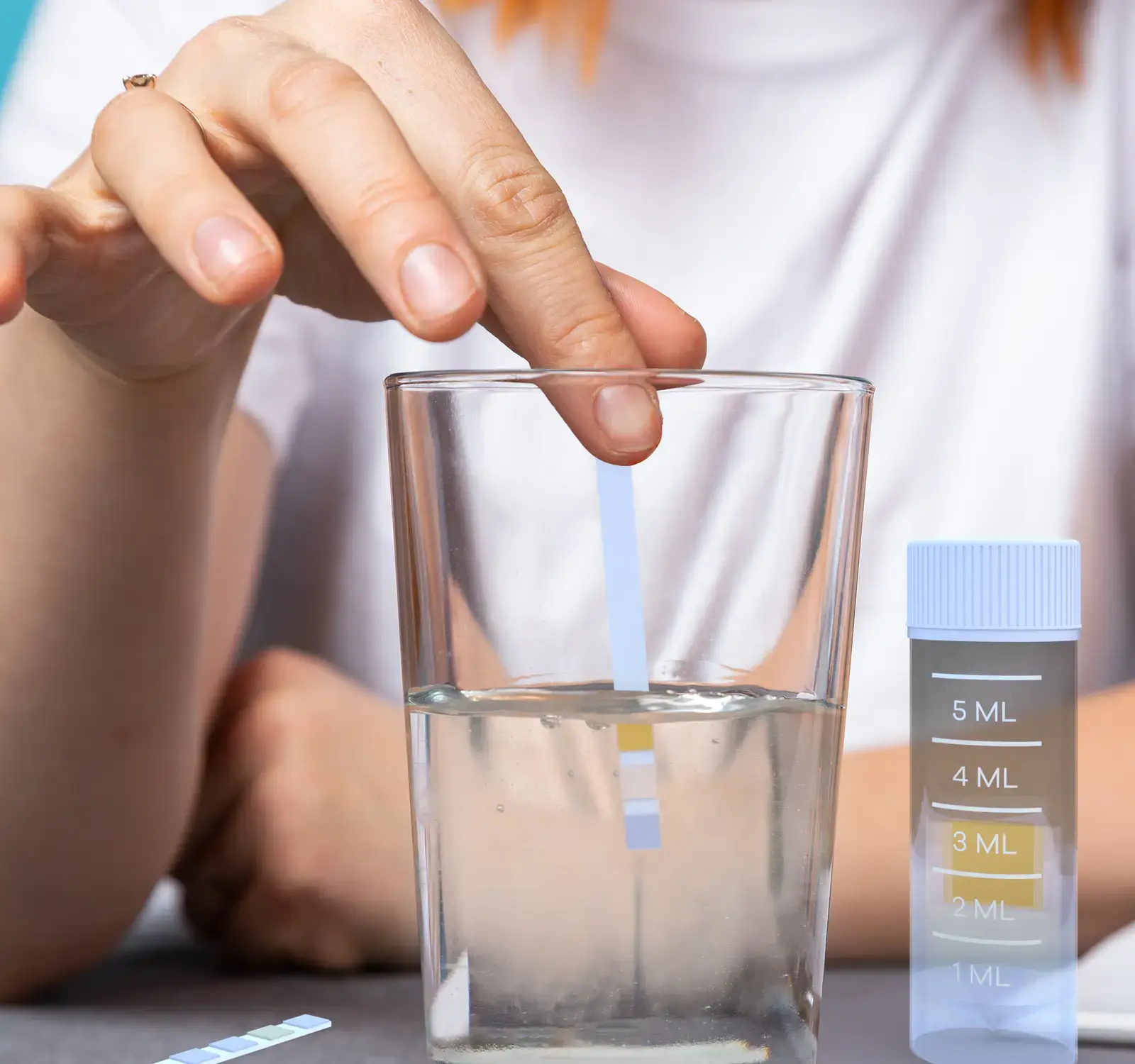
- Using cheap DIY test strips, they are unreliable.
- Delaying sample shipment (bacteria samples especially).
- Relying solely on your CCR, because it doesn’t reflect what comes out of your specific tap after sitting in your home’s pipes.
What RO actually does and when it’s overkill
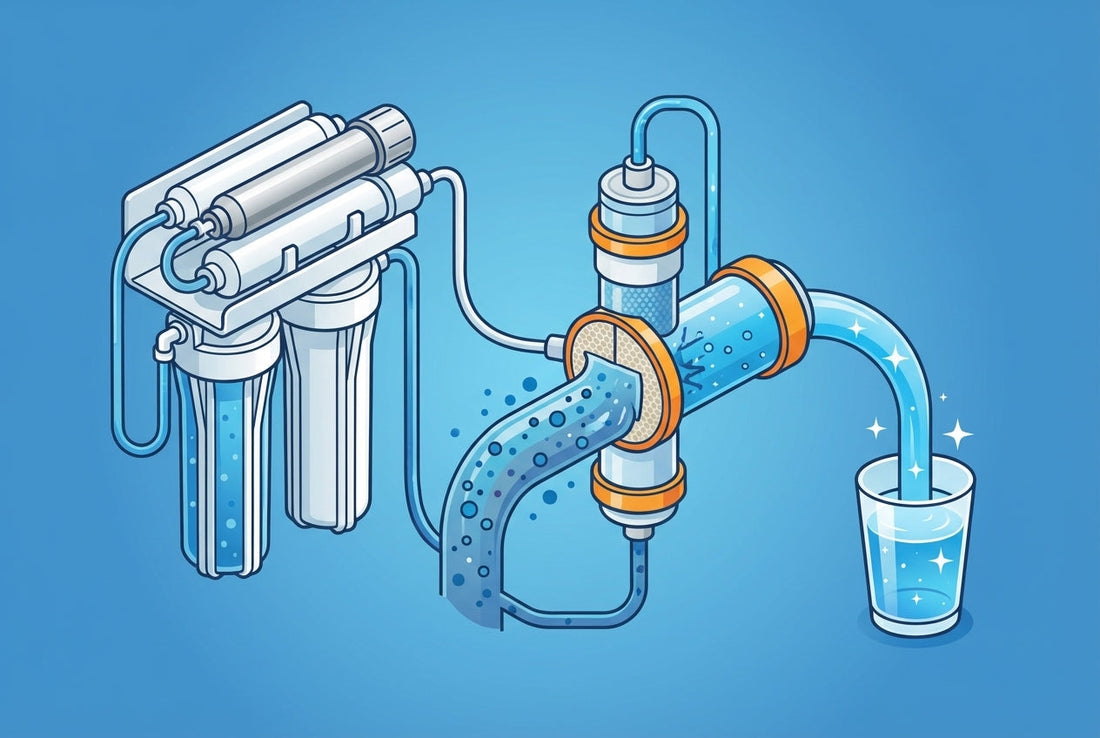
Imagine pushing sand through a coffee filter versus a window screen. Reverse osmosis forces water through a membrane with pores so small that only water molecules pass through easily, the membrane’s pores are about 0.0001 microns, which blocks dissolved minerals, most contaminants, and essentially all bacteria and viruses.
What RO removes (with typical percentages):
- Fluoride: 85-98%
- PFAS: 94%+ (including difficult short-chain variants)
- Lead: 95-99%
- Arsenic: 90-97%
- Nitrates: 90%+
- TDS (total dissolved solids): 85-99%
What activated carbon removes:
- Chlorine: 95-99%
- VOCs and many pesticides: 90%+
- Taste and odor: Excellent
- Long-chain PFAS: Variable (0-100%, averaging 73%)
- Fluoride: Less than 10%
A Duke/NC State study found that under-sink RO systems remove 94% or more of PFAS, while carbon filters averaged only 73%, with some removing nothing. For short-chain PFAS and GenX chemicals, RO is the only reliable option, while Brita filters can reduce some PFAS, they’re inconsistent for comprehensive removal.
The mineral removal concern is overblown, but not imaginary
RO strips out beneficial minerals like calcium and magnesium. A 2005 WHO report raised concerns about demineralized water, noting potential issues with electrolyte balance. However, their own 2009 follow-up acknowledged that humans get the “vast majority of minerals from food”, yes.. a ham sandwich contains more calcium than a day’s worth of mineral water!
Bottom line is that if you eat a varied diet, mineral removal is a non-issue. If you’re concerned, add a $30-50 remineralization filter or mineral drops. The benefits of removing PFAS far outweigh the minimal mineral loss.
When it comes to water waste, standard RO systems waste 3-4 gallons for every gallon produced. Countertop systems are generally more efficient (3:1 to 4:1 ratio), meaning about 1,500-2,000 gallons wasted annually for a typical family. That’s roughly equivalent to 80 showers, not trivial, but not catastrophic either. You can collect the wastewater for plants (check TDS first), mopping, or flushing toilets.
6 Top PFAS countertop filters, with honest analysis
I researched six popular PFAS countertop filter systems (which are also renter-friendly). Here’s what I found, including the stuff manufacturers don’t want you to know.
AquaTru Classic: The certification leader with customer service headaches
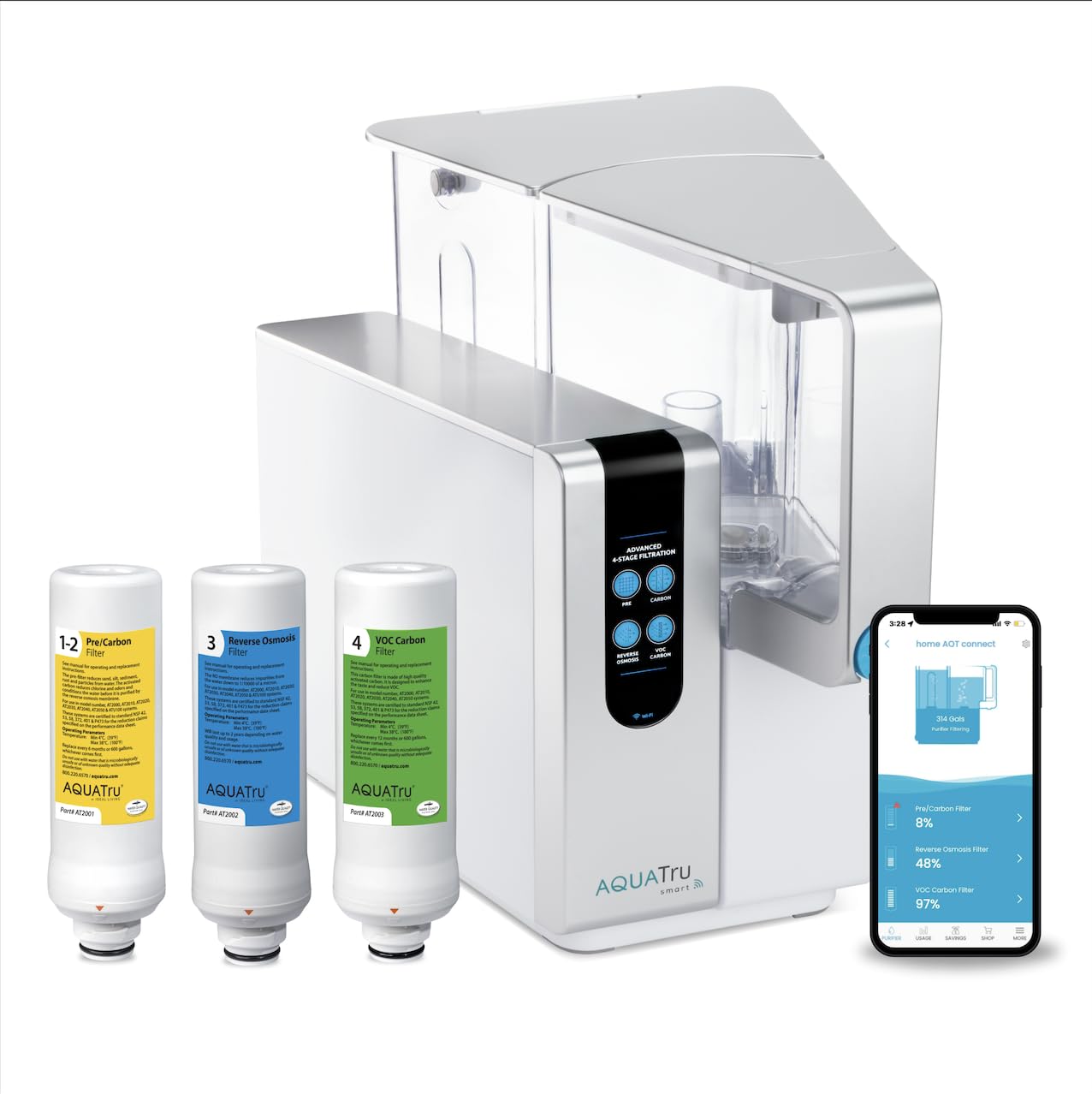
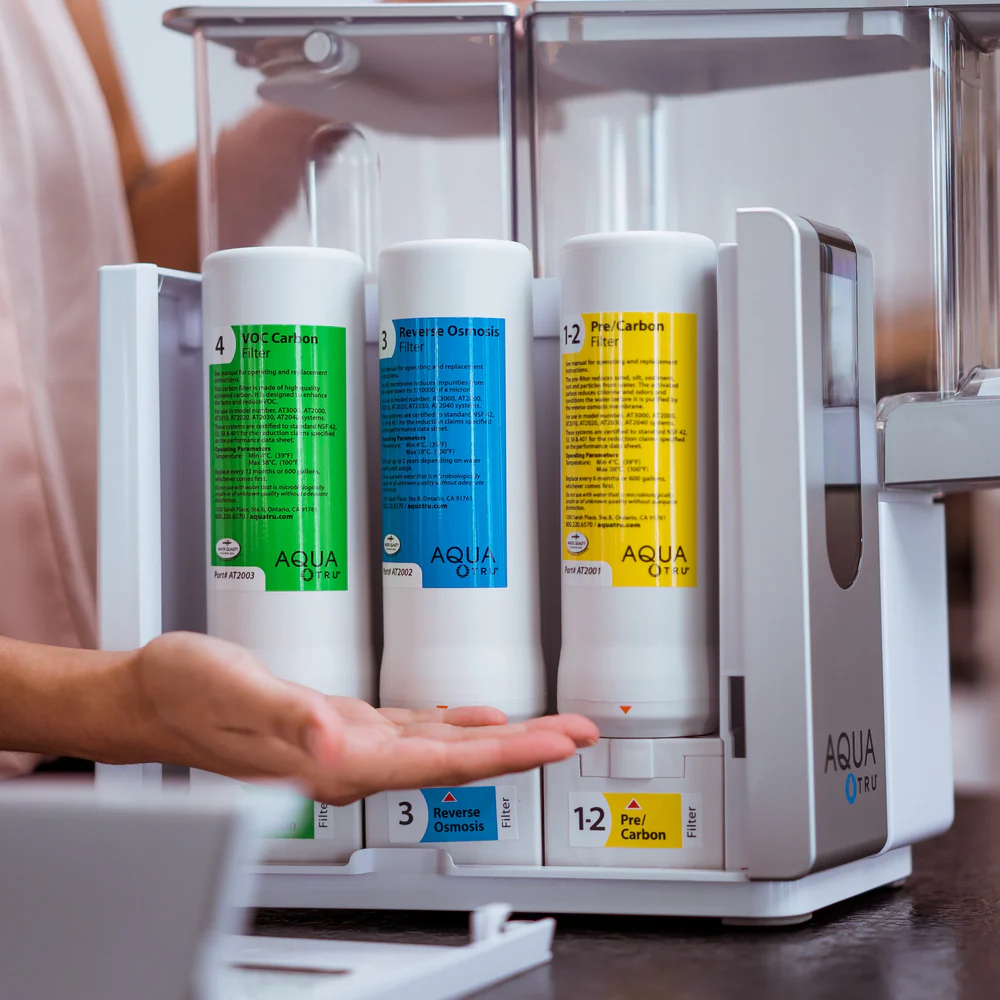
This is the best countertop reverse osmosis filter for PFAS removal for families who want verified removal and don’t mind occasional troubleshooting.
This renter-friendly RO system is the only countertop option with comprehensive IAPMO certification to NSF/ANSI standards 42, 53, 58, 401, and P473. That P473 certification specifically covers PFOA/PFOS removal, critical if PFAS is your concern. Independent Tap Score testing found 100% PFAS removal (non-detect) and 93.5-100% fluoride removal.
The good: Best-in-class certifications covering 83+ contaminants. Excellent 4:1 efficiency ratio (industry-leading). Glass carafe option available. Independent lab testing consistently matches manufacturer claims.
The bad: Customer service uses third-party call centers, generic unhelpful answers which frustrates many users. Common complaints about units stopping mid-cycle due to sensor issues. Hard water areas (>10 grains/gallon) report accelerated scale buildup and shorter filter life. The build quality isn’t the best either for the price tag.
| Cost Component | Amount |
|---|---|
| Initial price | $349-449 |
| Annual filters | ~$115 |
| Electricity (5 yr) | ~$10 |
| Water waste (5 yr) | ~$38 |
| 5-year total | ~$970-1,070 |
Who should buy: Anyone prioritizing verified certifications for PFAS and fluoride. Families of 2-4 who drink 2+ gallons daily.
Who should skip: Those with very hard water, anyone with low patience for customer service issues, or those needing hot/cold dispensing.
AquaTru Carafe: Best value with smallest footprint
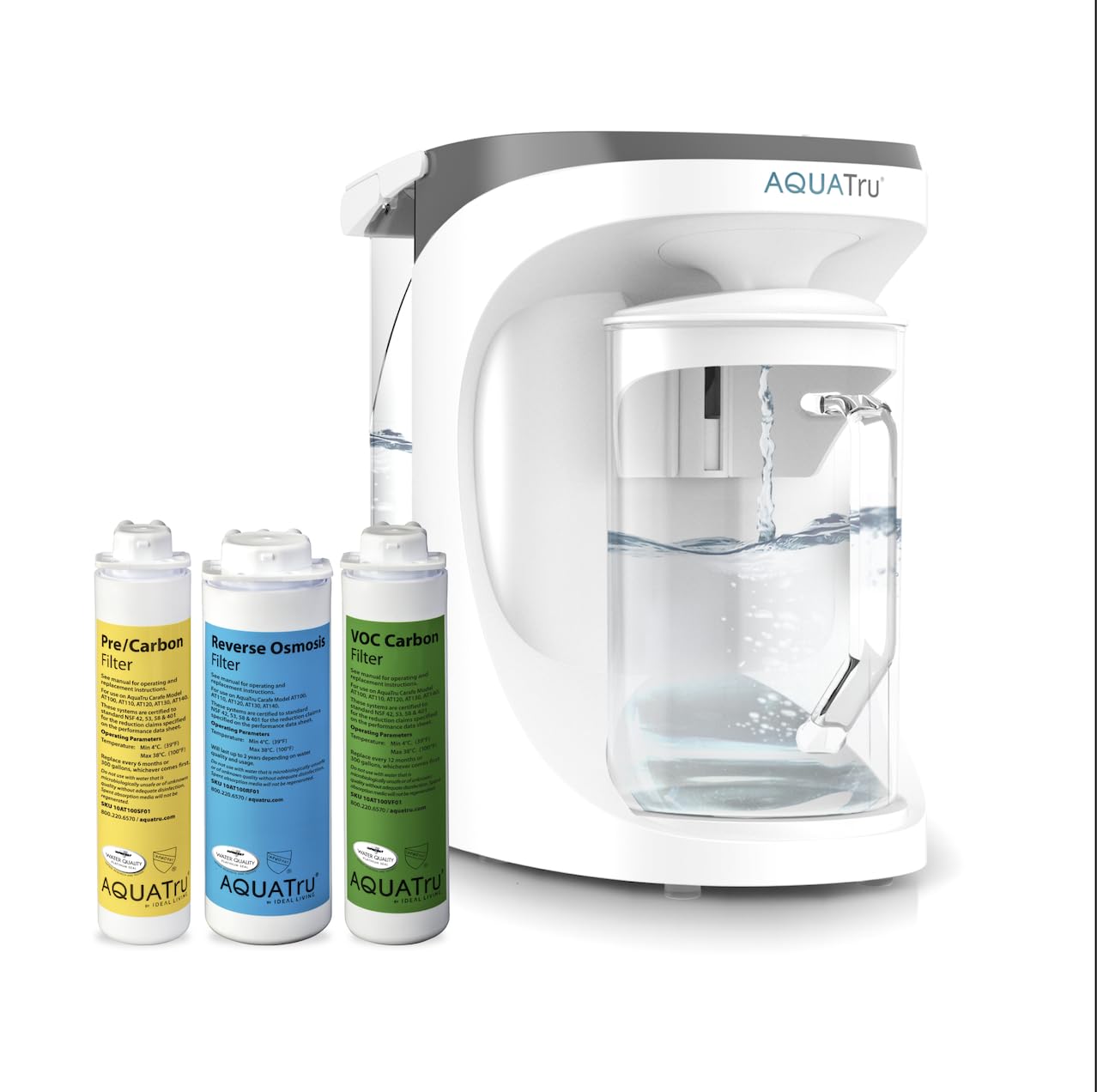
Best for: Singles, couples, renters, and anyone with limited counter space.
Same excellent certifications as the Classic, but with a 64 oz glass carafe instead of plastic dispenser. At 9 pounds and 13″×14″×7.5″, it’s genuinely portable for apartment dwellers who move frequently.
Independent testing confirms identical performance to the Classic. The glass carafe means zero plastic contact with your filtered water, a legitimate differentiator if you’re concerned about microplastics.
The catch: Smaller filter capacity means more frequent replacement for heavy users. Filter life is 300 gallons versus 600 gallons for Classic. Users report the carafe handle’s moisture sensor can trigger the same mid-cycle stopping issue as the Classic.
| Cost Component | Amount |
|---|---|
| Initial price | $349-395 |
| Annual filters | ~$90 |
| Electricity (5 yr) | ~$10 |
| Water waste (5 yr) | ~$38 |
| 5-year total | ~$870 |
Verdict: Lowest 5-year cost with full certifications. The clear budget winner if you don’t need large capacity.
RKIN U1: Premium features, premium price, certification concerns
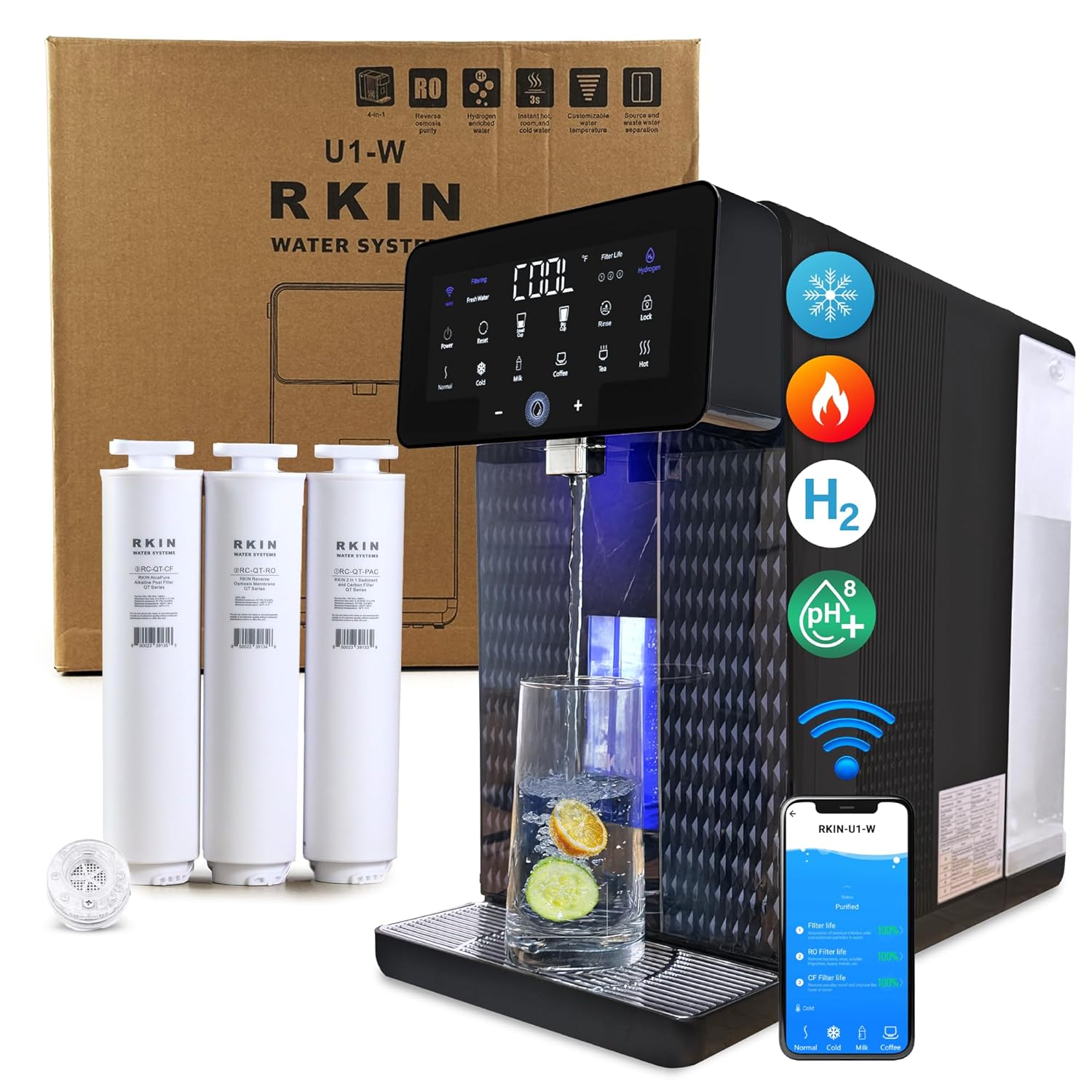
Best for: Those who want hot/cold water dispensing and don’t prioritize certification breadth.
The RKIN U1 is the most feature-rich option: hot and cold water on demand, hydrogen infusion, app connectivity, built-in TDS meter, and UV sterilization. It looks premium and feels premium.
However, The U1 is only certified to NSF/ANSI 58 for 6 contaminants (partial IAPMO verification), compared to AquaTru’s 83+. Water Filter Guru’s independent testing showed 100% fluoride and lead removal, but also noted one concerning anomaly: strontium increased 2,140% (from the remineralization filter, still below health guidelines, but notable).
The 1:1 waste ratio is significantly worse than competitors, so you’ll waste 50% of your water versus 25% with AquaTru.
| Cost Component | Amount |
|---|---|
| Initial price | $875-1,125 |
| Annual filters | ~$175 |
| Electricity (5 yr) | ~$88 (heating elements) |
| Water waste (5 yr) | ~$100 |
| 5-year total | ~$1,940 |
Who should buy: Those willing to pay double for hot/cold convenience and app features. Tea and coffee enthusiasts who want instant hot water.
Who should skip: Anyone who prioritizes comprehensive certification, budget-conscious buyers, or those wanting efficient water usage.
Waterdrop N1: Budget option with zero certifications
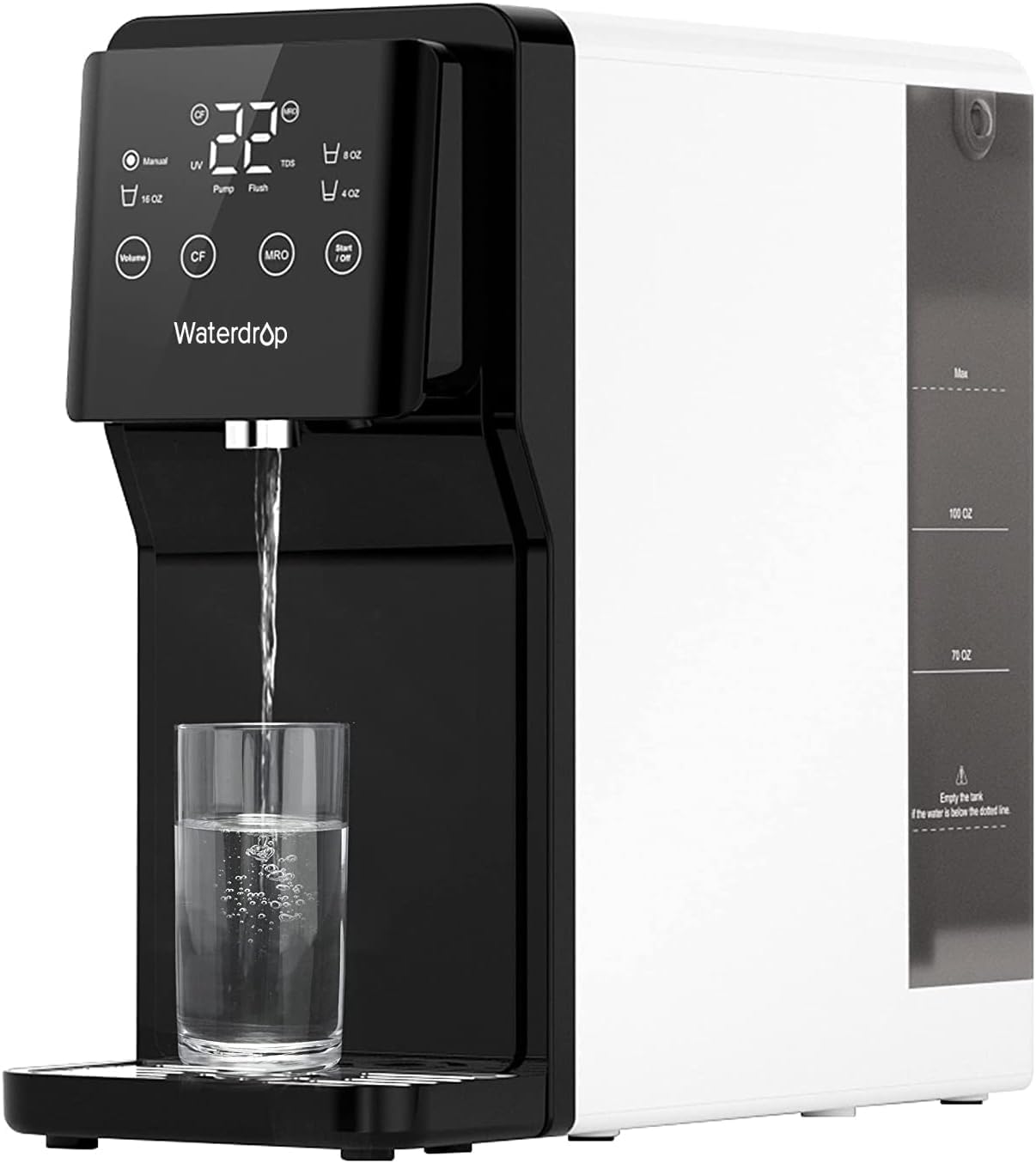
Best for: Renters who want basic RO without installation and don’t require verified claims.
Here’s the uncomfortable truth: the Waterdrop N1 has no performance certifications whatsoever (verified against NSF, IAPMO, WQA databases). Not NSF 42, not NSF 53, not NSF 58. Water Filter Guru couldn’t find “any evidence of certifications for materials safety or structural integrity.”
That said, independent Tap Score testing showed 93% fluoride removal and 100% lead removal, that’s genuinely effective filtration. The 3:1 waste ratio is decent, and the $200-300 price point is attractive.
Major drawback: No remineralization option means flat-tasting water that some users find unpleasant. Multiple forum complaints about filter life warnings appearing after just 3 days on new filters.
| Cost Component | Amount |
|---|---|
| Initial price | $200-300 |
| Annual filters | ~$115 |
| Electricity (5 yr) | ~$63 |
| Water waste (5 yr) | ~$125 |
| 5-year total | ~$1,060 |
Who should buy: Budget-conscious renters who accept manufacturer claims without independent verification.
Who should skip: Anyone wanting certified contaminant removal, those who care about water taste, or parents of young children.
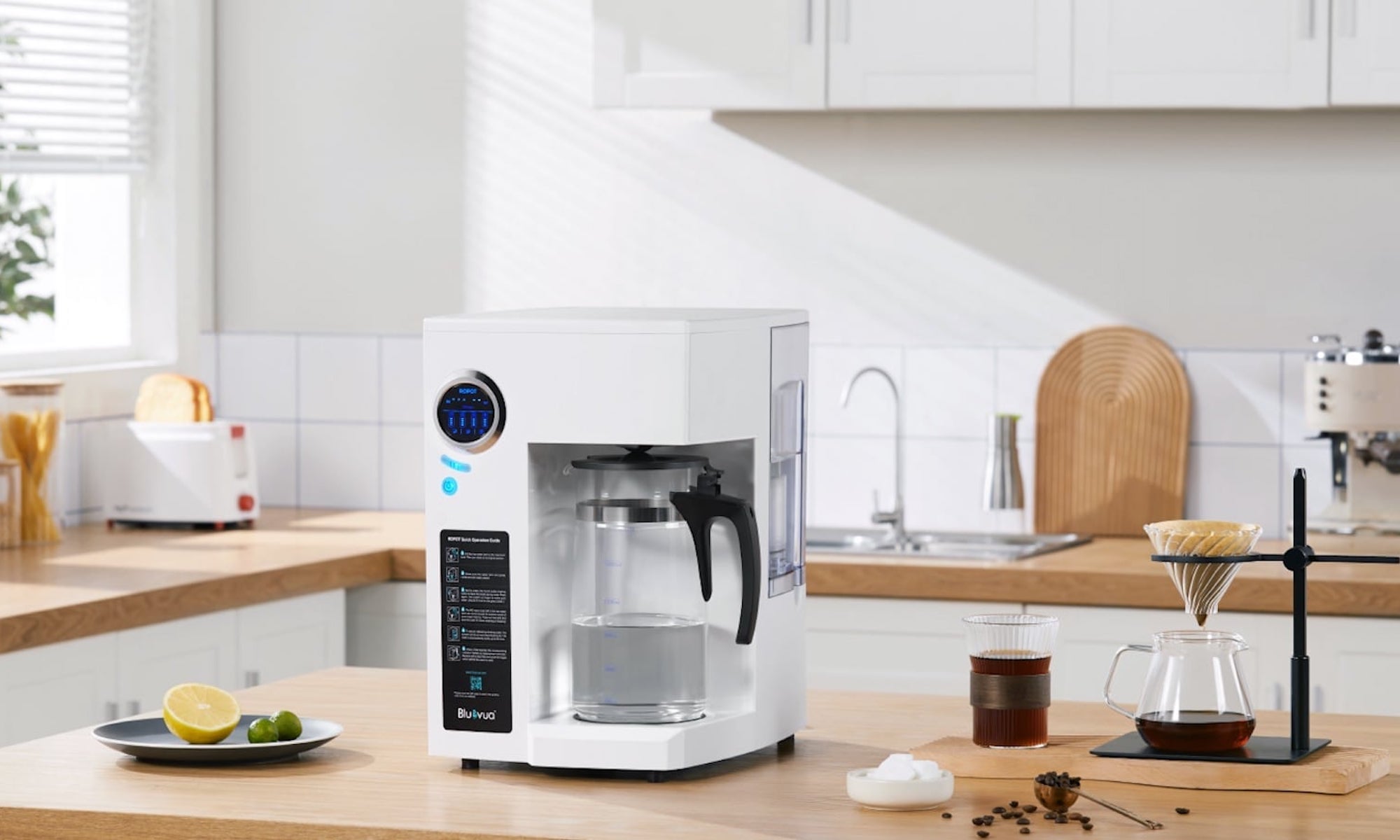
Bluevua ROPOT: Glass carafe marketing hides plastic problem
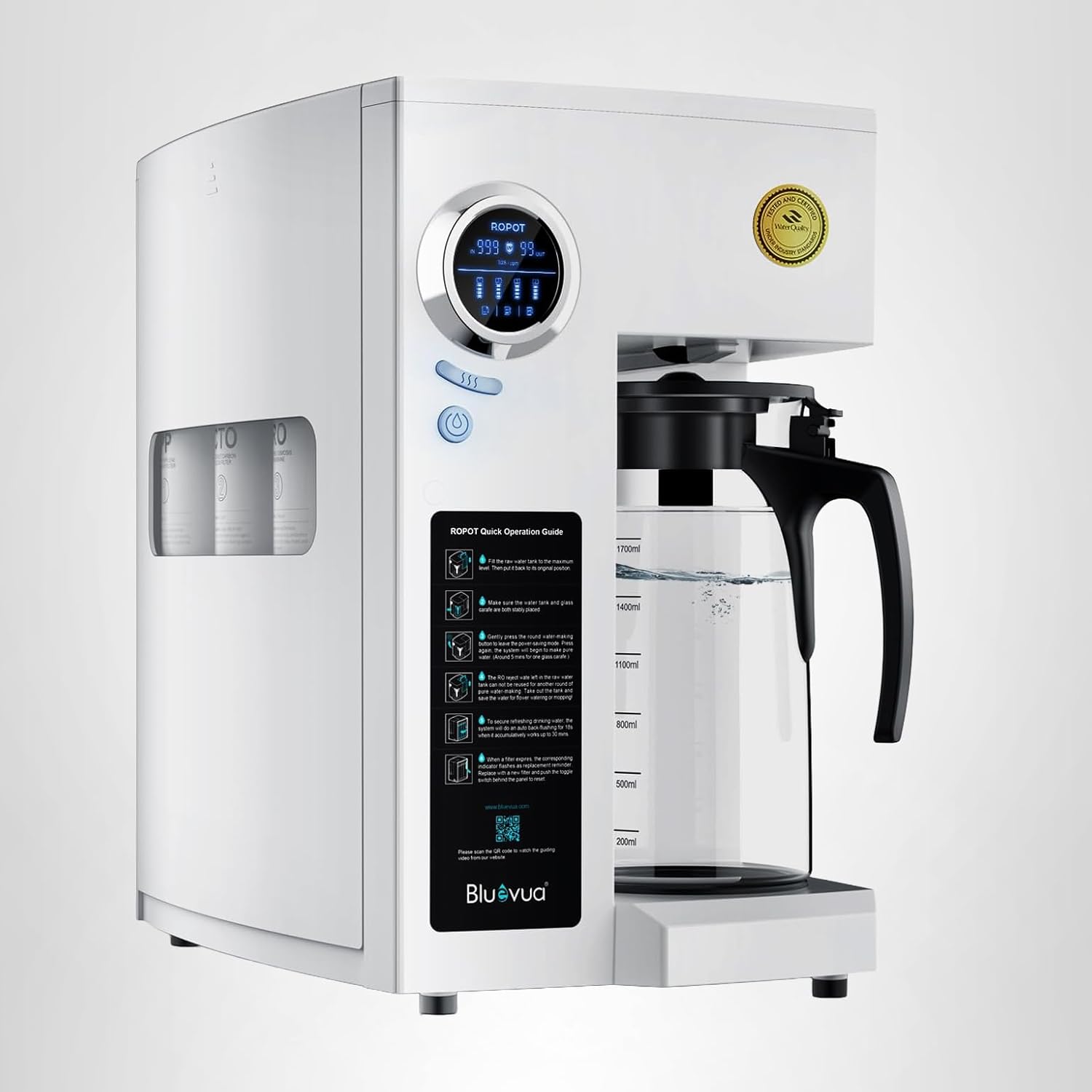
Best for: Those prioritizing glass serving containers who understand the internal storage limitation.
The Bluevua ROPOT markets heavily on its glass carafe design. What they don’t emphasize: your filtered water sits in an internal polypropylene plastic tank before reaching that glass carafe.
Certification reality: The system has only WQA Gold Seal certification for lead-free materials (NSF 372), not for contaminant removal performance (WQA database verified). Water Filter Guru noted “misleading marketing language” about certifications.
Independent testing showed only 83% fluoride removal versus the claimed 99.9%, a significant discrepancy.
| Cost Component | Amount |
|---|---|
| Initial price | $369-454 |
| Annual filters | ~$170 |
| Electricity (5 yr) | ~$68 |
| Water waste (5 yr) | ~$175 (2:1 ratio—worse) |
| 5-year total | ~$1,550 |
Who should buy: Those who value the glass serving carafe and understand the internal plastic tank limitation.
Who should skip: Anyone expecting full plastic-free water contact, those requiring verified fluoride removal, or budget-conscious buyers.
SimPure Y7: Certification claims don’t match reality
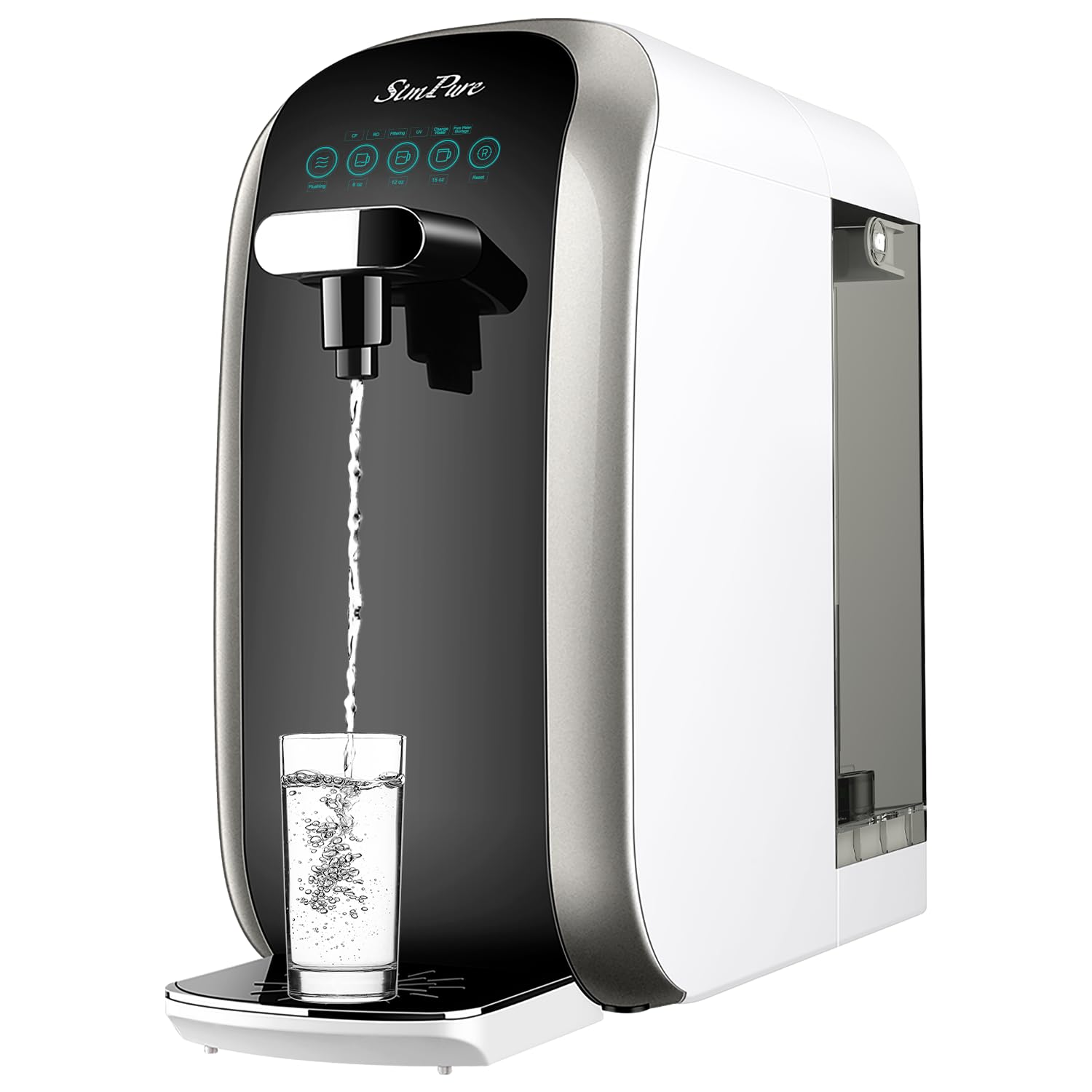
Best for: Budget buyers who accept SGS testing as sufficient verification.
SimPure claims “NSF/ANSI 58 Certified” on Amazon listings. The actual NSF database shows materials requirements certification only, not performance verification (NSF database checked). This is misleading advertising.
SGS laboratory testing (not certification) shows solid performance: >97% fluoride, >98.75% PFAS. The 4:1 efficiency ratio matches AquaTru as best-in-class. At ~$370, it’s mid-priced with the lowest 5-year total cost among systems I researched.
User experience concerns: Common complaints about excessive beeping (you know, beeps just to beep), initial 2-hour flushing requirement, and customer service language barriers. One Amazon reviewer noted: “What they fail to tell you is how much water is wasted and how much of a struggle it is to maintain.”
| Cost Component | Amount |
|---|---|
| Initial price | $369 |
| Annual filters | ~$116 |
| Electricity (5 yr) | ~$16 |
| Water waste (5 yr) | ~$5 |
| 5-year total | ~$970 |
Who should buy: Budget-conscious buyers comfortable with lab testing rather than formal certification.
Who should skip: Those requiring verified certifications, anyone sensitive to noise, or those wanting mineral-balanced water (no remineralization option).
Sans Countertop RO: Newest player with BBB concerns
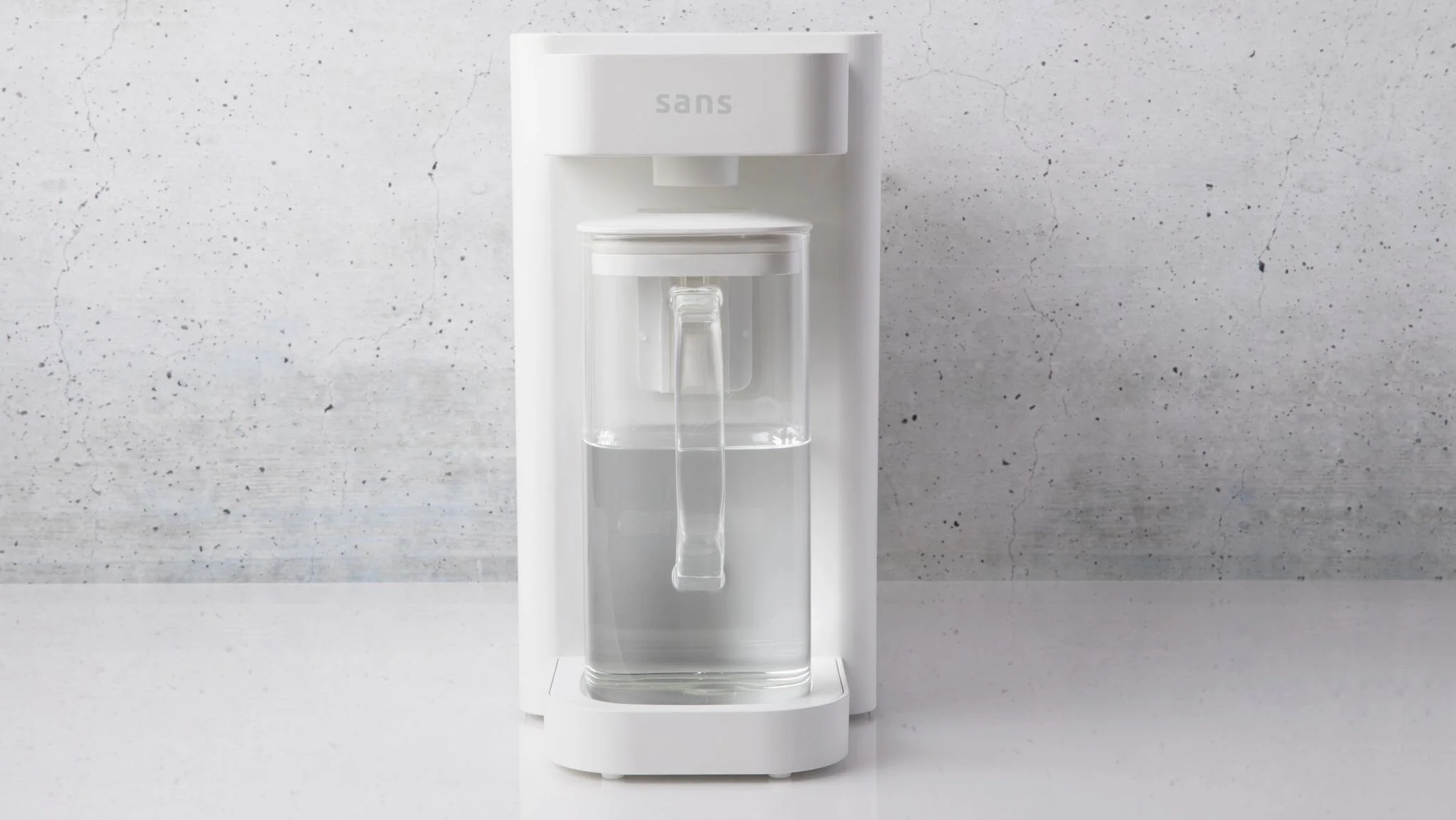
Best for: Those prioritizing warranty protection who accept lack of certifications
Sans offers the best warranty in this category (3 years) and a 30-day risk-free trial, significantly better than competitors’ standard 1-year warranties. They also include hot water dispensing and remineralization.
The problems: Sans has zero certifications, not even materials safety (verified against all major databases). More concerning, the BBB challenged Sans’s advertising claims in September 2025 regarding product efficacy testimonials. Water Filter Guru waited 63 days for delivery despite “ships within 1 business day” claims.
Independent testing showed good performance (100% fluoride per Water Filter Guru), but the glass pitcher marketing obscures that water sits in an internal plastic tank first.
| Cost Component | Amount |
|---|---|
| Initial price | $399-500 |
| Annual filters | ~$97 |
| Electricity (5 yr) | ~$16 |
| Water waste (5 yr) | ~$6 |
| 5-year total | ~$960-1,010 |
Who should buy: Those who value warranty protection above certification, hot water users willing to accept newer company risk.
Who should skip: Anyone requiring verified certifications, those concerned about BBB advertising challenges, or buyers wanting fast shipping.
PFAS countertop filters comparison
| Model | PFAS Cert | Fluoride % | Waste Ratio | Year 1 Cost | 5-Year Total | Best For |
|---|---|---|---|---|---|---|
| AquaTru Classic | P473 | 93-100% | 4:1 | $564 | $1,070 | Families wanting verified removal |
| AquaTru Carafe | P473 | 93-100% | 4:1 | $485 | $870 | Best overall value |
| RKIN U1 | Tested only | 100% | 1:1 | $1,050 | $1,940 | Hot/cold water enthusiasts |
| Waterdrop N1 | None | 93% | 3:1 | $415 | $1,060 | Budget renters |
| Bluevua ROPOT | None | 83% | 2:1 | $624 | $1,550 | Glass carafe preference |
| SimPure Y7 | Materials only | 97% | 4:1 | $485 | $970 | Lowest long-term cost |
| Sans | None | 99% | 3:1 | $597 | $1,010 | Best warranty |
Seven mistakes that waste your money

1. Buying before testing your water. I’ve seen people spend $500 on RO systems when their municipal water already meets all standards. A $189 Tap Score test could save you hundreds.
2. Trusting “tested to NSF standards” marketing. Testing to a standard is not the same as certification. SimPure, Bluevua, Sans, and Waterdrop all use this language while lacking actual performance certifications. Only AquaTru has comprehensive verification.
3. Assuming all PFAS countertop filters remove contaminants equally. Without proper certifications, you’re gambling. The Waterdrop N1 and Bluevua ROPOT have zero performance certifications despite marketing that suggests otherwise.
4. Ignoring waste ratios. The RKIN U1’s 1:1 ratio means you’ll waste double the water of an AquaTru. Over 5 years with average usage, that’s an extra 3,000+ gallons, not huge, but it ain’t nothing!
5. Forgetting filter costs. The $875 RKIN U1 has $175/year filter costs versus $90/year for AquaTru Carafe. That $785 initial savings gets eaten within 5 years.
6. Assuming glass carafe is plastic-free. Both Bluevua and Sans store filtered water in internal plastic tanks before the glass pitcher. The glass is for serving, not storage.
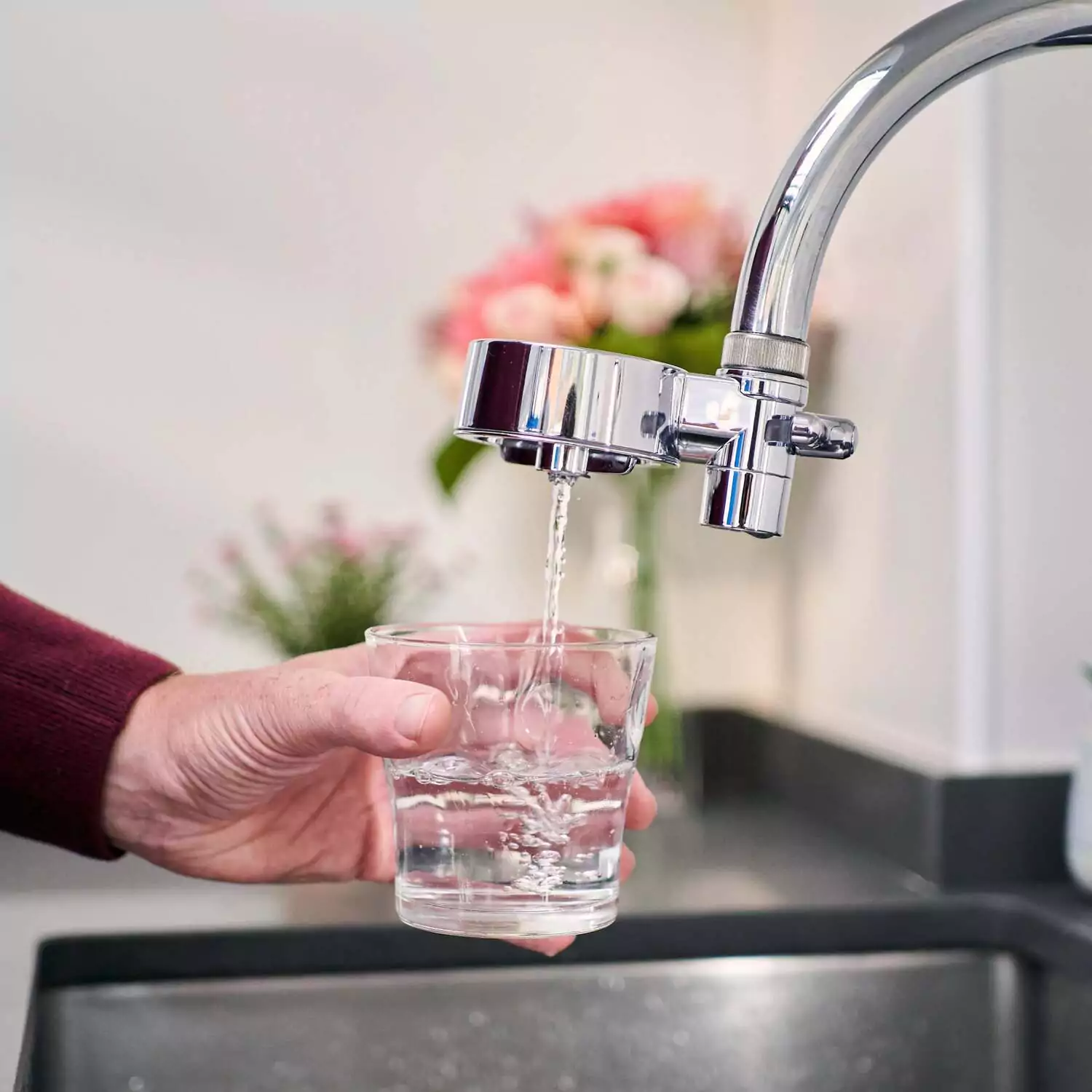
7. Buying RO when carbon would suffice. If your only issue is chlorine taste and your water tests clean otherwise, a $40 faucet filter removes 95%+ of chlorine at a fraction of the cost. Check out our buying guide for the best faucet mounted filters under $50.
What setup actually looks like
Time investment: Expect 20-45 minutes for initial setup, plus 30-90 minutes for the first flushing cycle. SimPure’s required 2-hour initial flush is the longest; AquaTru is typically done in 30 minutes.
Counter space required: Most units need 12″×14″ minimum footprint, plus clearance for pitcher removal. Measure first, the “countertop” category includes some surprisingly large units.
Electrical needs: All systems require a nearby outlet. No special circuits needed; standard 120V works fine.
Maintenance schedule:
- Pre-filters (sediment/carbon): Every 6 months.
- RO membrane: Every 18-24 months.
- Post-filters: Every 12 months.
- Tank sanitization: Annually recommended.
How to know when filters actually need replacing: Don’t rely solely on indicator lights (they’re estimates based on time, not actual filter condition). If your TDS meter shows output water creeping up, flow rate drops noticeably, or water taste changes, replace filters regardless of what the light says.
The cost math for your situation
Formula: 5-Year Cost = Initial Price + (Annual Filters × 5) + (Electricity × 5) + (Water Waste × 5)
Example for family of 4 using 3 gallons/day:
| System | Calculation | 5-Year Total | Cost/Gallon |
|---|---|---|---|
| AquaTru Classic | $449 + ($115×5) + ($10) + ($56) | $1,090 | $0.20 |
| Bottled water | 3 gal × 365 days × 5 years × $1.25/gal | $6,844 | $1.25 |
| Brita pitcher | $35 + (12 filters/yr × $7 × 5) | $455 | $0.08 |
The Brita looks cheapest until you remember it removes less than 10% of fluoride and provides inconsistent PFAS removal. For contaminant removal, RO costs roughly $0.15-0.25 per gallon, far cheaper than bottled water and far more effective than pitchers.
Break-even vs. bottled water: At 2 gallons/day, most countertop reverse osmosis systems pay for themselves within 6-12 months compared to buying bottled water.
Bare in mind that these are estimates and are subject to change.
What you should actually buy
If your water tests show PFAS above 4 ppt: Buy the AquaTru Classic. It’s the only countertop system with verified P473 certification for PFOA/PFOS removal, and independent testing consistently shows non-detect levels post-filtration. The customer service frustrations are real but worth tolerating for verified protection.
If you’re concerned about fluoride for kids under 6: The AquaTru Carafe offers the same certifications in a smaller package at the lowest 5-year cost. Pair it with fluoride-free toothpaste for children who can’t reliably spit.
If your water is generally safe but you want extra protection: Consider whether you actually need RO. A quality carbon filter like the Clearly Filtered pitcher ($100, NSF 53/401 certified) removes most chlorine, lead, and many PFAS while preserving minerals. It’s sufficient for water that already meets standards.
If you’re renting and need the most portable renter-friendly RO system: AquaTru Carafe (9 pounds, glass container) is the clear winner. The SimPure Y7 is cheaper but lacks certifications and has user experience issues.
If budget is the primary concern: The SimPure Y7 offers the lowest 5-year total cost (~$970) with decent lab-tested performance—but you’re accepting manufacturer claims without third-party verification. If that trade-off concerns you, save another $100 for the AquaTru Carafe.
When NOT to buy any countertop RO system:
- Your water tests show no concerning contaminants
- You have whole-house RO already installed
- Your only concern is chlorine taste (carbon filter sufficient)
- You’re not willing to maintain the system (ignored systems breed bacteria)
- You’d rather spend the money on a Tap Score test first (always a better first step)
The countertop RO market is full of misleading certification claims and marketing that obscures significant limitations, but if your water actually contains PFAS, fluoride above comfort levels, or other contaminants that carbon can’t address, a properly certified PFAS countertop filter system like AquaTru genuinely provides protection that matters, at roughly 16 cents per gallon over five years. That’s cheaper than any bottled water and more effective than any pitcher filter.
Test your water first. If the results warrant action, now you know exactly which system to buy.