
Do water filters remove microplastics? Some do, most don’t, and the box almost never tells you which category you’re dealing with. The problem isn’t the filters themselves, it’s that no federal law requires any filter to prove its microplastics claims before hitting a shelf. A filter can legally print “reduces microplastics” on the packaging with zero independent verification behind it. Understanding which water filters remove microplastics, and how, comes down to one specific certification number most buyers never look for.
The short answer: reverse osmosis removes them reliably, a handful of NSF/ANSI 401 certified carbon filters do it verifiably, and everything else is either unproven or actively misleading. The best water filters for removing microplastics are not the ones with the most marketing, they are the ones with a specific certification number you can verify in a public database. This article runs through every filter type, explains exactly how do water filters remove microplastics by mechanism, and identifies the four independently certified options worth buying.
What Microplastics Actually Are in Your Tap Water
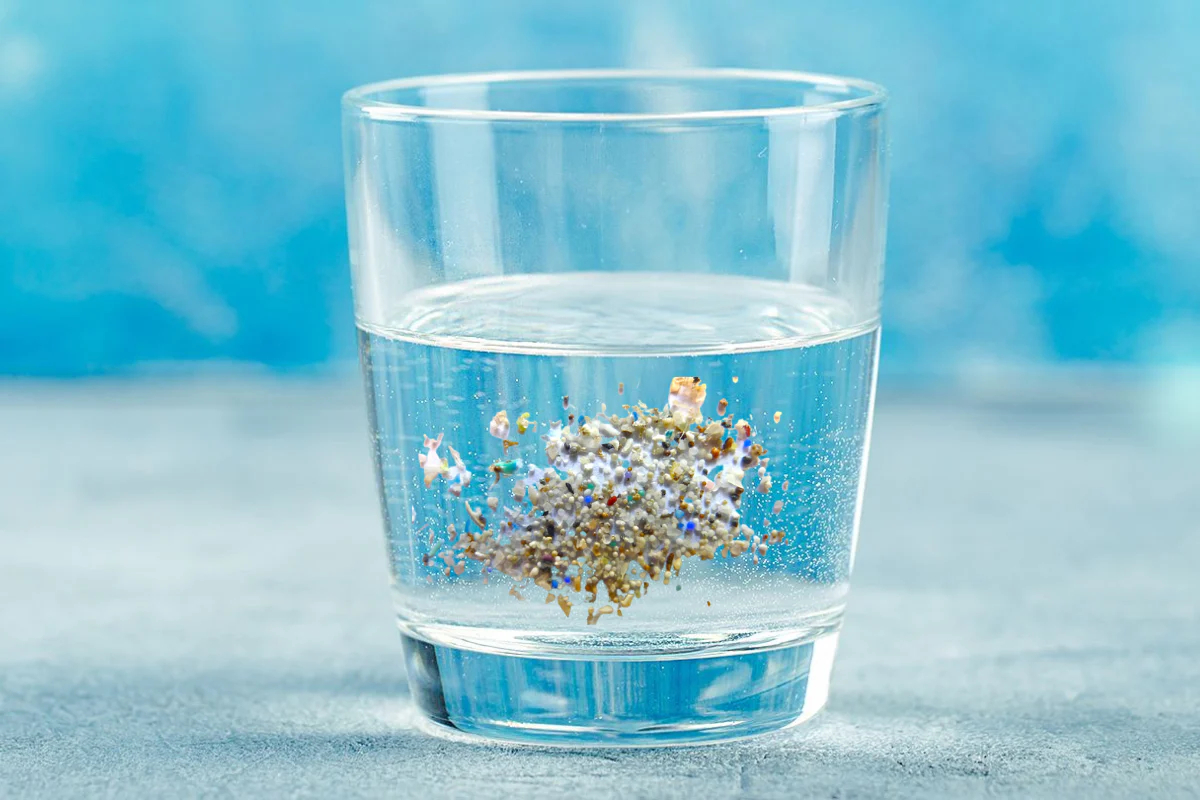
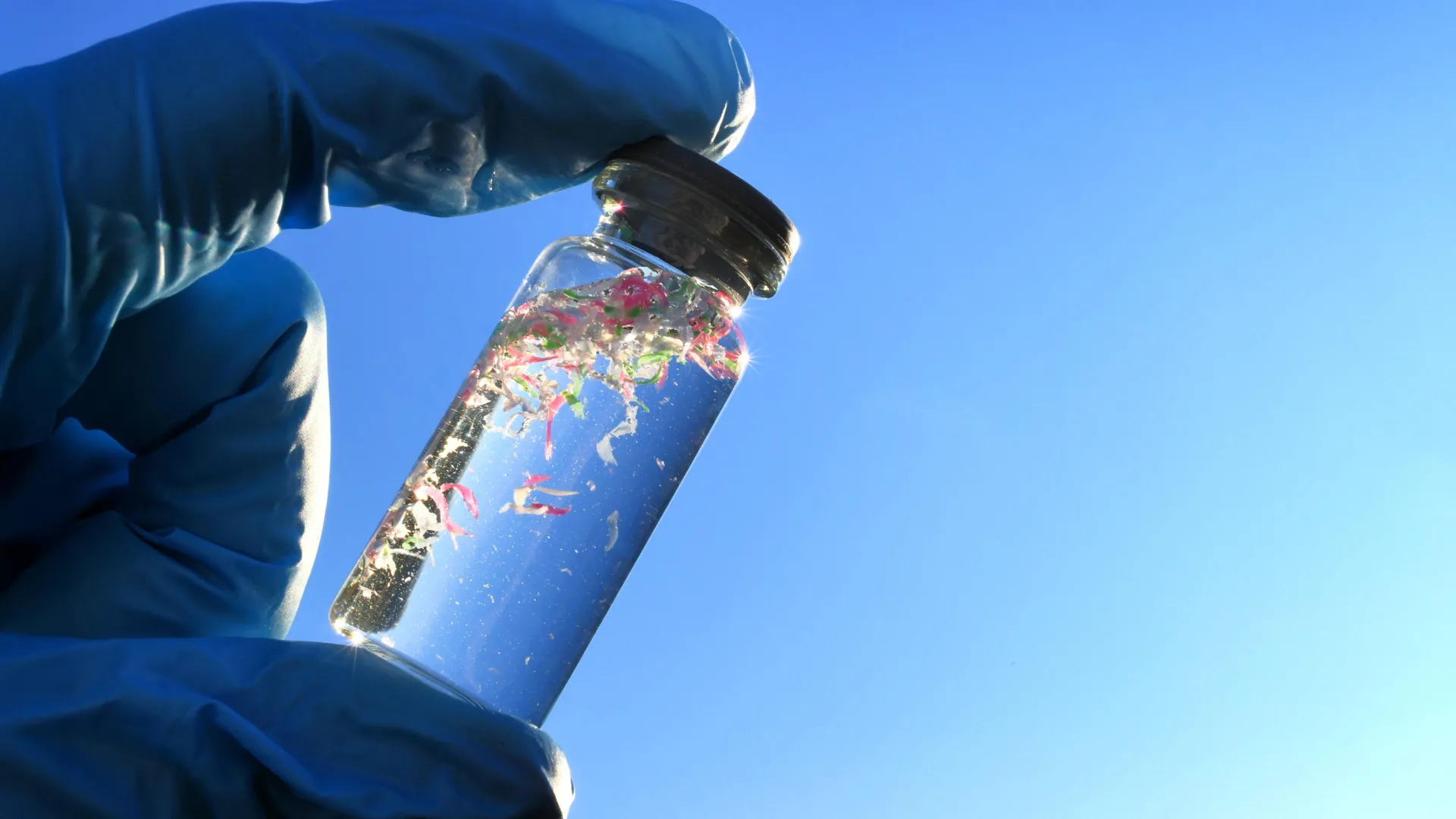
Microplastics are plastic fragments smaller than 5mm and larger than 1 micron, or one-thousandth of a millimeter. Nanoplastics are anything below 1 micron. Both are in US tap water right now, but current filter certification only covers the larger category. When people ask do water filters remove microplastics, they are usually asking about particles in this 1-micron-to-5mm window — and the answer depends almost entirely on which filter type, not whether filters work at all. The best water filters for removing microplastics target this window with a specific physical mechanism, not a marketing claim.
Researchers from Orb Media and the University of Minnesota School of Public Health tested 159 water samples from 14 countries. Of the 36 US samples collected from 18 cities, 94% contained microplastic fibers, with US samples averaging roughly 9 particles per liter — the highest of any country tested. If you are drinking unfiltered American tap water, you are almost certainly drinking plastic.
The particles mostly come from degrading plastic waste, synthetic textile fibers shed in laundry wastewater, and plastic packaging that breaks down over time. They are made primarily of polyethylene and polypropylene, the same materials in everyday bottles and bags.
The health picture is genuinely uncertain, and it is worth saying that clearly. A 2024 rapid systematic review in Environmental Science and Technology concluded microplastics are “suspected” to harm reproductive, digestive, and respiratory health, with a suggested link to colon and lung cancer — but rated the human evidence as limited and largely observational. A separate systematic review found that direct evidence linking biological mechanisms to adverse human outcomes “remains limited” because there is no standardized way to measure human exposure yet. Scientists are concerned but cannot tell you exactly how much harm drinking plastic particles causes. Reducing exposure is a reasonable precaution. It is not a proven emergency.
On April 2, 2026, the EPA published draft Contaminant Candidate List 6, listing microplastics as a priority contaminant group for the first time in the program’s history. The CCL is a watchlist of unregulated contaminants the EPA may study and eventually regulate. Being on it imposes no legal limit on microplastics in your water, and no utility is currently required to test for or remove them. Finalization is expected November 17, 2026.
What Filter Certification Actually Covers and What It Doesn’t
This is the section most articles skip entirely, and it is the most important one to understand before you buy anything.
The correct certification reference for microplastics is NSF/ANSI 401. To earn it, a filter must reduce particles in the 0.5 to 1 micron range by at least 85% under controlled laboratory conditions. NSF 401 says nothing about particles smaller than 0.5 microns, nothing about nanoplastics, and nothing about whether performance holds as the filter ages.
NSF/ANSI 244 is not a microplastics standard. Multiple competing articles cite it as if it were. NSF 244 sets minimum requirements for reducing bacteria, viruses, and protozoan cysts — it is a microbiological standard designed to protect against accidental contamination events. If you see a filter claiming microplastics coverage based on NSF 244, that claim is wrong.
The phrase “NSF certified” by itself is meaningless for microplastics. NSF/ANSI 42 covers taste and odor. NSF/ANSI 53 covers health-effect contaminants like lead and VOCs. Neither one addresses microplastics. A filter can carry multiple NSF certifications and still have zero microplastics coverage. You need to see the number 401 — or verify it in the NSF product listing database, the WQA directory, or the IAPMO database — before accepting any microplastics claim.
There is also no regulation requiring any of this. Because the EPA has not set a legal limit for microplastics in tap water, a manufacturer can print “removes microplastics” on a box without certification, independent testing, or any third-party verification at all. The standard is voluntary. That is the gap nearly every marketing claim in this category exploits.
For a deeper look at how NSF standards work across lead, PFAS, and other contaminants, see our guide on how to choose a water filter.
How Do Water Filters Remove Microplastics: By Filter Type
Understanding how water filters remove microplastics depends entirely on the physical mechanism the filter uses. Not all filters work the same way, and the method determines both what is captured and what slips through.
Reverse osmosis
RO membranes have pores of approximately 0.0001 microns — roughly 10,000 times smaller than the smallest microplastic particle. Microplastics are removed by pure physical exclusion; they are too large to pass through the membrane. In practice, well-maintained RO systems remove effectively all microplastics and most nanoplastics by the same mechanism, though no certification covers nanoplastics yet. RO is the most reliable answer to do water filters remove microplastics — physics handles what certification cannot.
The tradeoff is wastewater. Older RO systems waste 3 to 6 gallons for every gallon filtered; modern systems achieve a 2:1 or 1:1 ratio. That adds roughly $30 to $60 per year to a typical household water bill. Countertop RO systems like the AquaTru require no plumbing and run from a standard outlet, which makes them practical for renters. Under-sink RO installation by a plumber typically runs $150 to $400. For a full comparison of under-sink and countertop options, our countertop vs under-sink water filter guide walks through the installation tradeoffs in detail.
Activated carbon block (under-sink and countertop)
A dense carbon block filter certified to NSF/ANSI 401 can mechanically capture microplastic-sized particles. Performance varies significantly by media density and flow rate — a loosely packed carbon filter will miss particles that a certified sub-micron block catches. These filters do not remove nanoplastics. For under-sink comparisons, NSF 401 is the non-negotiable checkpoint.
Gravity filters
Gravity filters range from well-certified to completely unverified, and this gap matters enormously when evaluating which water filters remove microplastics in this category. The Culligan MaxClear is IAPMO certified to NSF/ANSI 401 for microplastics, along with NSF/ANSI 53 for lead and total PFAS — 13 named contaminants total. It is the only gravity filter with that combination.
Berkey occupies the opposite end of the spectrum. Berkey never held NSF certification for any filtration claim; its testing was self-funded rather than verified by an independent third party. The EPA issued a Stop Sale, Use, or Removal Order on standalone Black Berkey elements in 2023, classifying them as unregistered pesticides under FIFRA because of silver content in the filter media (EPA). As of May 2026, the case is pending before the Fifth Circuit Court of Appeals. No microplastics certification exists for Berkey regardless of the outcome.
Standard pitcher filters
The Brita Standard filter carries NSF/ANSI 42 for taste and odor only, no microplastics certification. PUR’s standard filter is in the same position. The physical pore structure of standard carbon pitcher media is too large to reliably capture microplastic-sized particles. The one exception is the Brita Elite filter (OB06), which carries WQA certification to NSF/ANSI 401 — the only pitcher filter with independently verified microplastics reduction.
Shower filters
No microplastics certification standard exists for shower filters. NSF/ANSI 177 covers free available chlorine reduction only. Any shower filter claiming to remove microplastics is making a claim no independent standard currently tests or verifies. The certification gap there looks nearly identical to what we cover in our breakdown of the best shower filter for chloramine.
What Most Get Wrong About Which Water Filters Remove Microplastics
The most common mistake across roundups is treating “NSF certified” as a blanket microplastics qualifier. A filter can be NSF certified to 42, 53, and 372 simultaneously and still have zero microplastics coverage. Which water filters remove microplastics with verified proof is a much narrower list than most roundups suggest, and the confusion almost always traces to one of three errors.
The second mistake is citing NSF/ANSI 244 as the microplastics standard. It covers bacteria and viruses, not plastic particles. This error has spread widely because writers copy the citation without checking the standard’s actual scope.
The third mistake is recommending Clearly Filtered as a certified option for microplastics. WaterFilterGuru’s independent testing found Clearly Filtered is WQA certified to NSF/ANSI 42 and 53 for three specific contaminants, not to NSF/ANSI 401 for microplastics. That certification does not exist for that product.
The practical consequence: if you bought a filter based on one of those roundups, you may be running water through something with no verified microplastics removal. Check your filter’s model number at Listings NSF, the WQA directory, or the IAPMO database before assuming coverage.
The Nanoplastics Gap No Certification Covers
Nanoplastics are plastic particles smaller than 1 micron. They are not a theoretical concern — they are in your tap water now, and they are the particles most likely to enter your body.
A 2022 study in Environmental Research separated nanoplastics in the 58 to 255 nanometer range from tap water at concentrations of 1.67 to 2.08 micrograms per liter, identifying polystyrene, PVC, polyamide, and plastic additives. A 2026 study from Ohio State University found that more than half the plastic particles detected in treated US tap water were nanoplastics, detected down to approximately 300 nanometers.
Nanoplastics matter more from a health standpoint because smaller particles are more bioavailable. They are small enough to pass through the lining of the intestines and lungs into the bloodstream, and may cross the blood-brain barrier and the placenta (NPR, 2024). Larger microplastics typically pass through the digestive system without being absorbed.
No consumer filter is certified to remove nanoplastics. NSF/ANSI 401’s test floor is 0.5 microns, and no commercially available testing method exists for nanoplastic removal efficacy, making certification impossible at this point. The popular claim that “RO removes 99.9% of nanoplastics” traces only to vendor sites citing an unnamed 2019 study — there is no peer-reviewed RO-nanoplastic rejection measurement behind it. RO removes nanoplastics by physics. Treat it as the best available option, not a certified guarantee.
A study in Membranes tested microfiltration and ultrafiltration membranes against polystyrene nanospheres. Microfiltration rejected only 26% of 120-nanometer particles. Ultrafiltration performed well. Pore size is decisive — loose membrane filters miss nanoplastics, tight RO membranes do not.
This is also relevant context for anyone comparing pitcher filters for PFAS and lead. The same certification logic applies: see our piece on whether water filter pitchers remove PFAS and fluoride for how manufacturer claims and certified performance diverge on those contaminants.
Bottled Water Is Not the Answer
The question of whether the best water filters for removing microplastics outperform simply buying bottled water has a clear answer: filtered tap water wins by a significant margin. And the question of do water filters remove microplastics better than bottled water sidesteps them becomes straightforward once you look at the particle data.
One liter of bottled water averaged approximately 240,000 plastic particles, roughly 90% of them nanoplastics. The 2026 Ohio State study found bottled water contained three times as many nanoplastic particles as treated tap water. Environmental Science and Technology calculated that people who meet their daily water intake entirely through bottled sources may ingest approximately 90,000 microplastics annually, compared to around 4,000 for those drinking only tap water.
The bottle itself sheds plastic. Filtered tap water run through a certified system is the lower-exposure option by a wide margin.
The 4 Certified Filters That Actually Prove the Claim
When the question is do water filters remove microplastics with verified, independent proof, the certified field is small. Most products that claim microplastics removal have not earned it. The four below carry NSF/ANSI 401 certification through NSF, WQA, or IAPMO — not manufacturer testing, not self-funded labs. These are the best water filters for removing microplastics that have actually proven the claim.
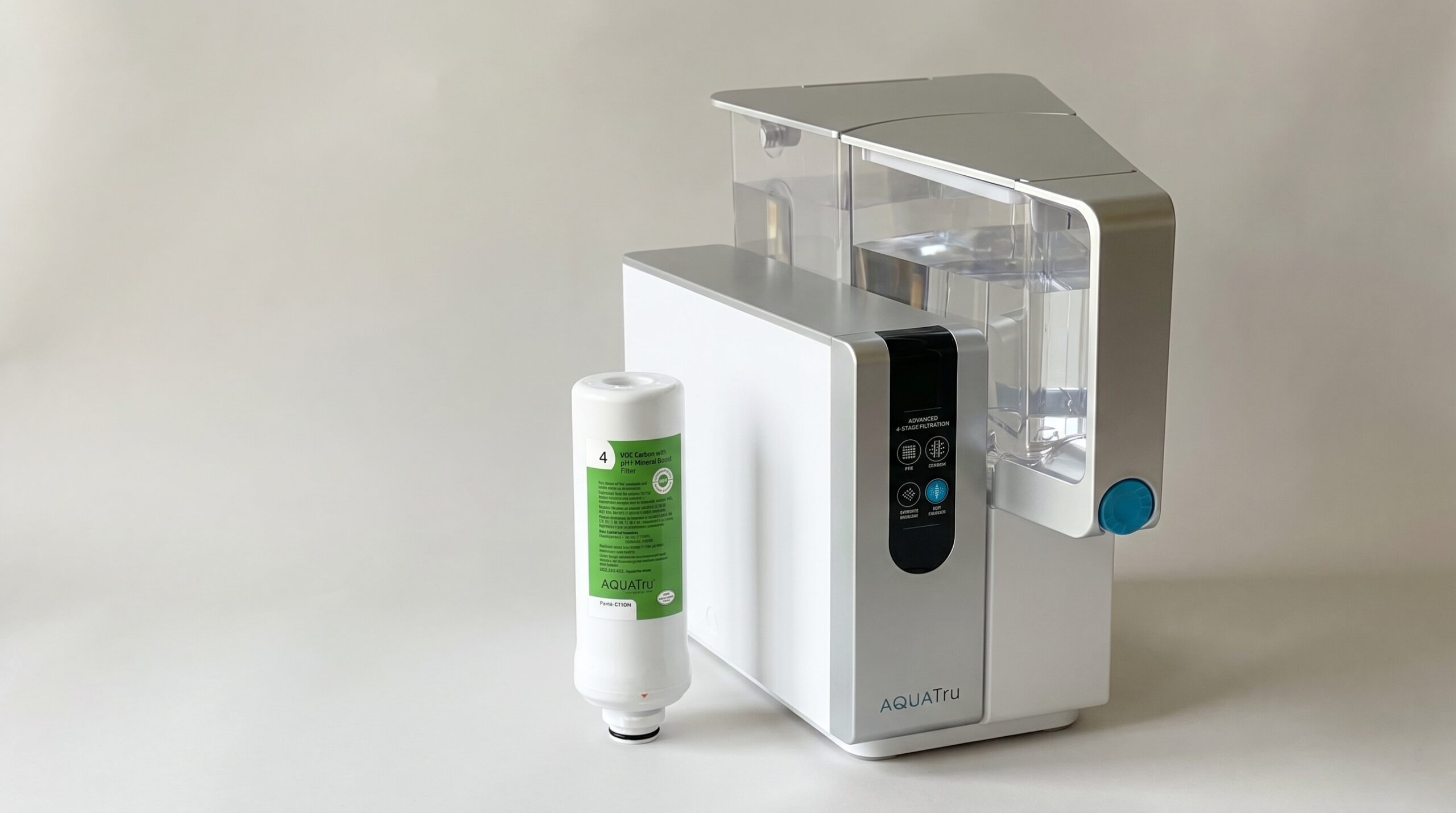
AquaTru Classic
4.4 rating on Amazon
Best for renters and anyone who cannot modify plumbing.
The AquaTru Classic is certified by IAPMO to NSF/ANSI 42, 53, 58, 401, and P473 — covering 84 named contaminants including microplastics, PFOA/PFOS, lead, fluoride, arsenic, chromium-6, and nitrates. No installation required; it sits on the counter and plugs into a standard outlet.
The RO membrane handles particles far smaller than any microplastic. For renters who cannot drill or connect to water lines, it is the single most comprehensive certified option available. See our AquaTru vs Clearly Filtered comparison for how it stacks up on PFAS and lead specifically.
Brita Elite Pitcher
4.3 rating on Amazon
The lowest-cost certified option if you are not ready for an RO system.
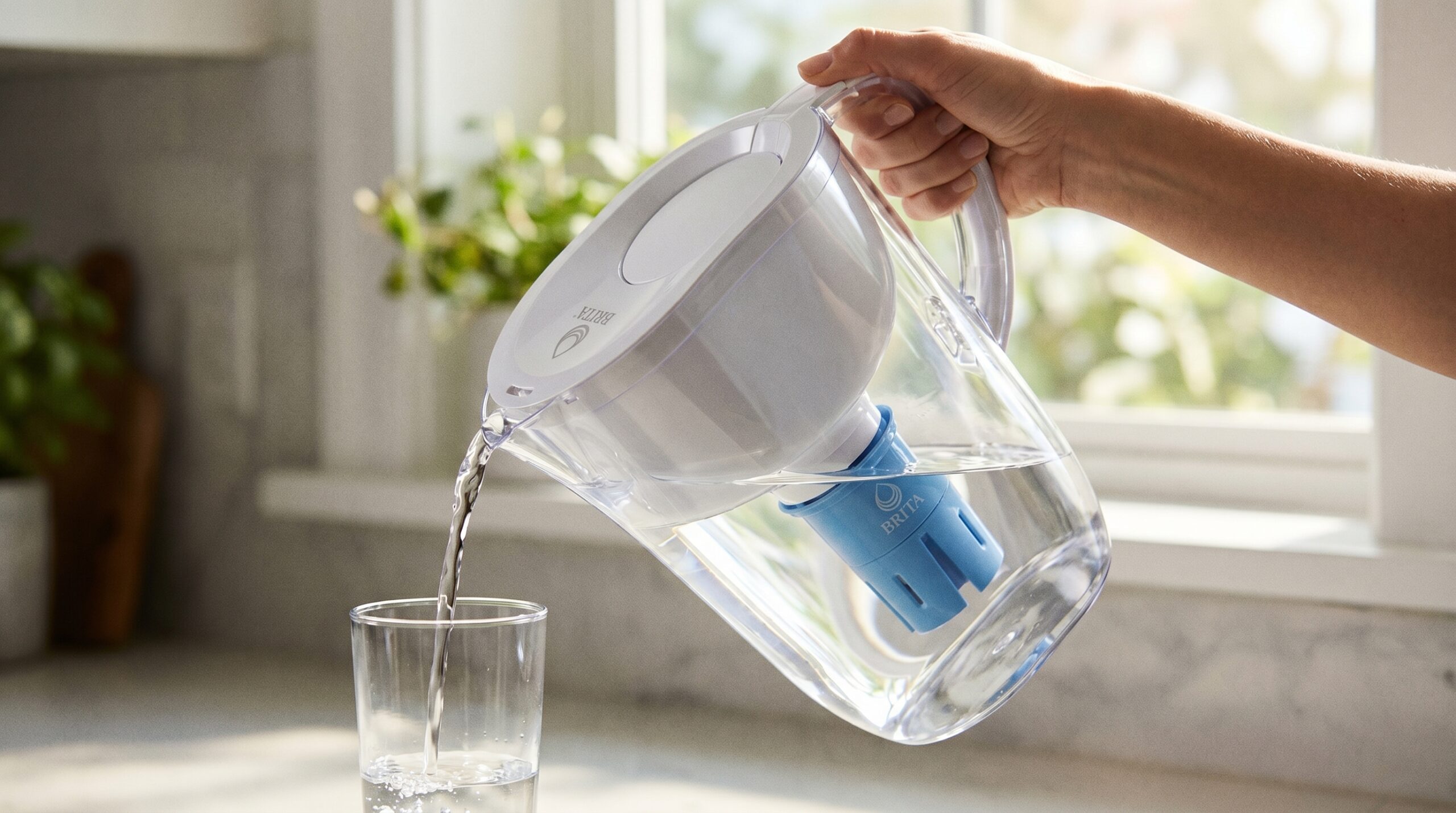
The Brita Elite filter (OB06) is the only pitcher filter with WQA certification to NSF/ANSI 401 for microplastics. It also carries NSF/ANSI 42 and 53 certifications covering lead reduction at 99%, chlorine, and select PFOA/PFOS. The standard Brita filter (OB03) does not carry NSF 401 — the certification is specific to the Elite model only.
One practical note: the pitcher itself is plastic. Transfer filtered water to glass or stainless steel storage to avoid reintroducing particles from the container.
Aquasana Claryum 3-Stage Under-Sink
4.2 rating on Amazon
For homeowners who want certified performance without reverse osmosis.
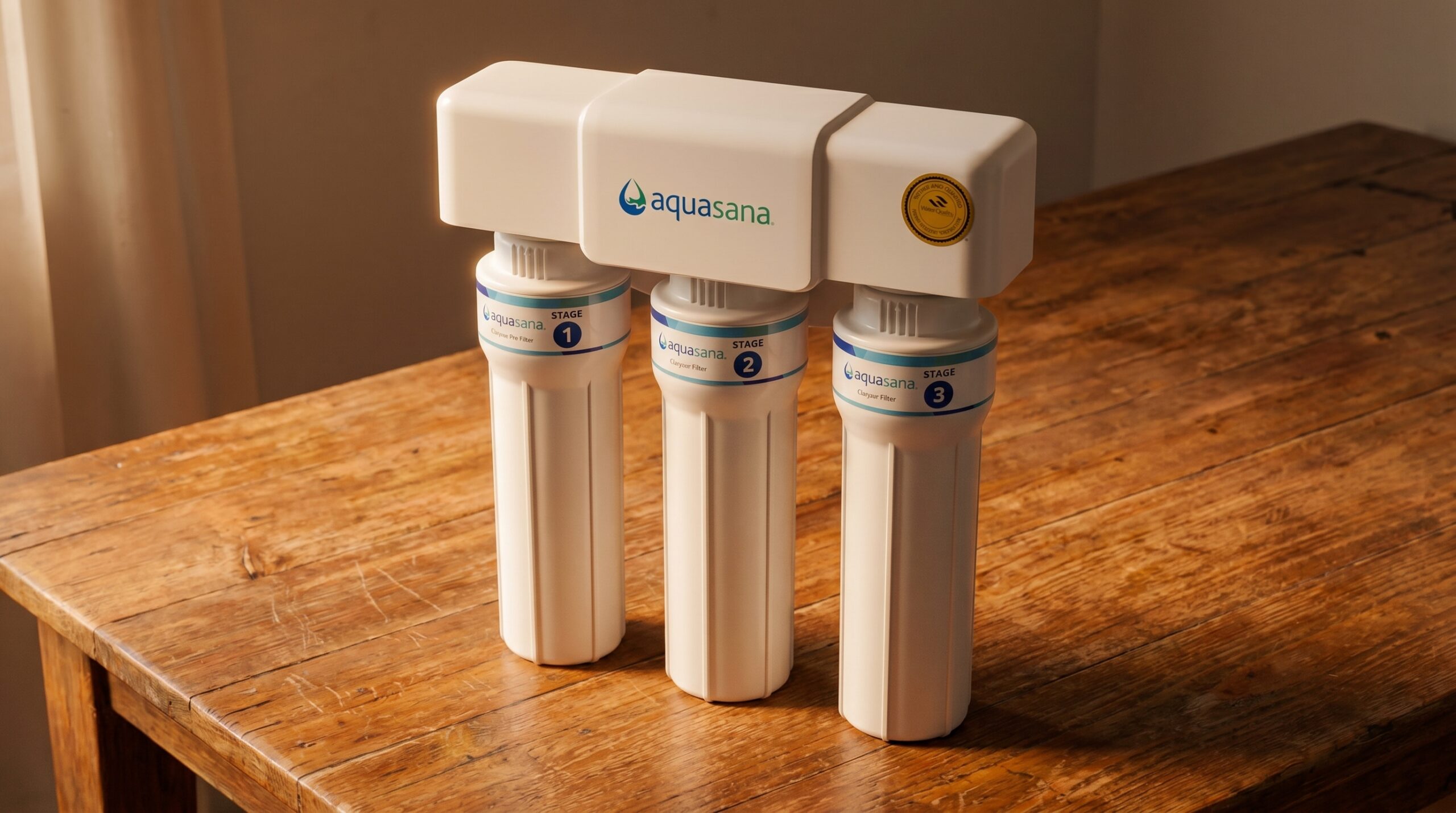
The Aquasana Claryum 3-Stage is IAPMO and WQA certified to NSF/ANSI 42, 53 (including P473), and 401, with stated 99.6% microplastics reduction. It covers 78 named contaminants including lead at 99%, PFOA/PFOS, mercury, cysts, VOCs, and pharmaceuticals, while retaining beneficial minerals.
Unlike RO, this system produces no wastewater and requires no electricity. Under-sink installation takes most homeowners under an hour.
Culligan MaxClear
3.9 rating on Amazon
For households that want no plumbing, no electricity, and certified proof.
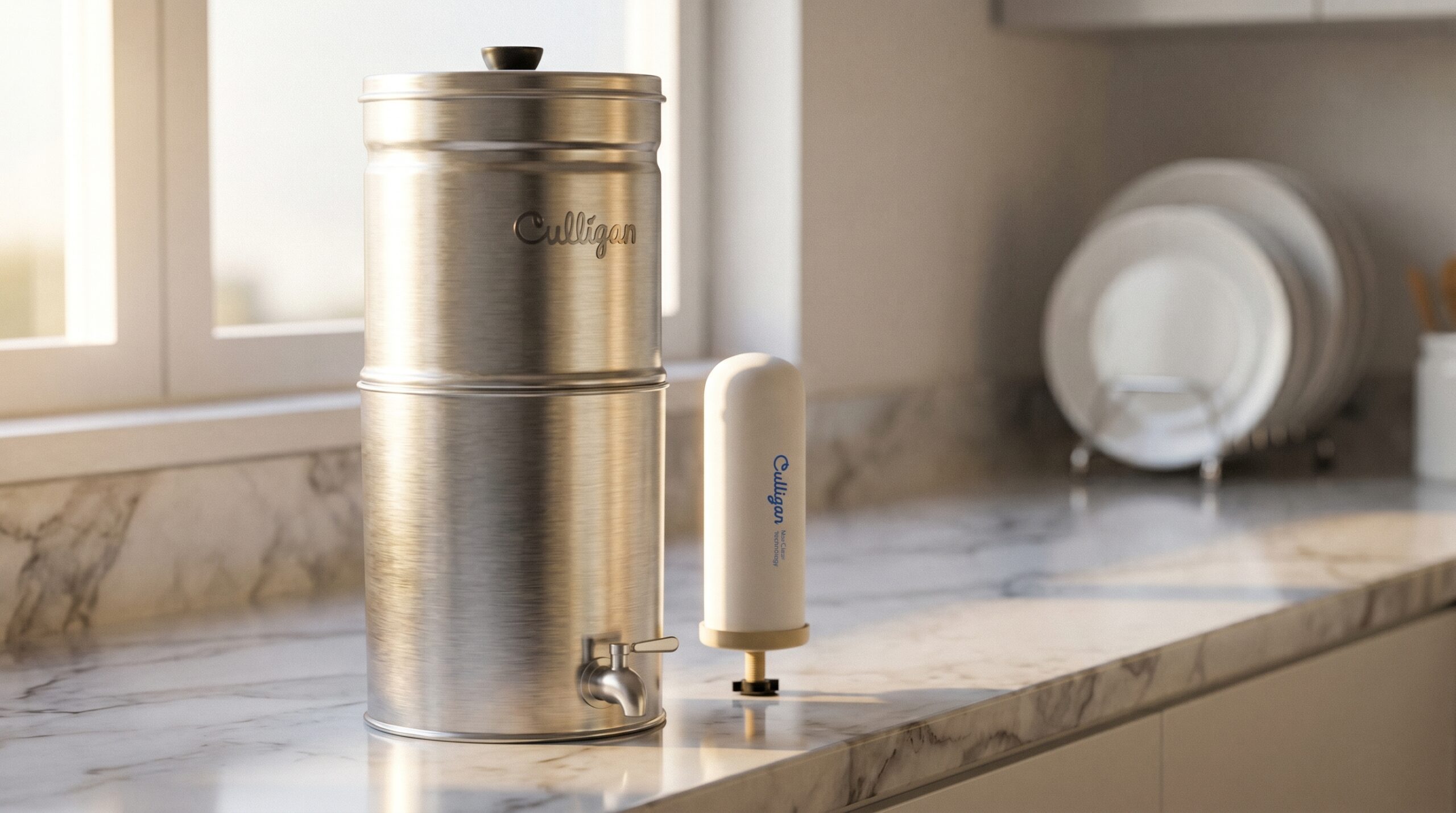
The Culligan MaxClear is IAPMO certified to NSF/ANSI 42, 53, and 401 for microplastics — along with total PFAS at 99% and lead removal. It is the only gravity filter certified for microplastics, lead, and total PFAS simultaneously.
The tradeoff is replacement cost. Per-gallon filter costs run $1.20 to $1.58, which is substantially higher than the AquaTru or Aquasana at scale. For households where countertop real estate or plumbing access is the limiting factor, it is the strongest certified gravity option. For how the MaxClear compares against ZeroWater on PFAS and fluoride, see our ZeroWater vs MaxClear breakdown.
Cost Comparison: Certified Microplastics Filters Year One
| Filter Type | Upfront Cost | Annual Filter Cost | Total Year 1 Cost |
|---|---|---|---|
| AquaTru Classic (countertop RO) | ~$449 | ~$100 | ~$549 |
| Brita Elite Pitcher (10-cup) | ~$35 | ~$35 | ~$70 |
| Aquasana Claryum 3-Stage (under-sink) | ~$175 | ~$80 | ~$255 |
| Culligan MaxClear (gravity, Scout 2.25-gal) | ~$175 | ~$140 | ~$315 |
RO systems produce wastewater that adds approximately $30 to $60 annually to your water bill depending on the system’s waste ratio. Under-sink installation, if not self-installed, typically runs $150 to $400 additional. Countertop RO like the AquaTru requires no installation costs.
Having More Questions?
Do water filters remove microplastics from tap water?
Reverse osmosis systems and filters certified to NSF/ANSI 401 remove microplastics from tap water. Standard pitcher filters, most faucet filters, and all shower filters do not have verified microplastics removal. The Brita Elite is the only pitcher with NSF 401 certification. Any filter without a specific NSF/ANSI 401 listing in a third-party database has not been independently tested for plastic particle removal. So do water filters remove microplastics? Yes — the right ones do, and the wrong ones make the same claim without proof.
Which water filters remove microplastics with third-party proof?
Four filter types carry independent certification: RO systems certified to NSF/ANSI 58 (like the AquaTru, which also holds NSF 401 via IAPMO), NSF/ANSI 401 certified under-sink systems like the Aquasana Claryum 3-Stage, the Brita Elite pitcher (WQA certified to NSF 401), and the Culligan MaxClear gravity filter (IAPMO certified to NSF 401). When asking which water filters remove microplastics, these four are the only ones with publicly verifiable certification. Verify any claim at listings.nsf.org or the IAPMO product directory — not on the box.
How do water filters remove microplastics physically?
The mechanism depends on the filter type. RO membranes remove microplastics through size exclusion — the pores are 0.0001 microns, roughly 10,000 times smaller than the smallest microplastic, so particles physically cannot pass through. Carbon block filters certified to NSF/ANSI 401 use dense media that traps particles mechanically, similar to a very fine strainer. Gravity filters like the Culligan MaxClear use a similar carbon-based block approach. Standard pitcher carbon media has gaps too large to capture microplastic-sized particles reliably. How do water filters remove microplastics from nanoplastic-range particles is a separate question — only RO applies, and no certification covers that range yet.
NSF/ANSI 401 is the microplastics reduction standard — it requires at least 85% reduction of particles in the 0.5 to 1 micron range under controlled lab conditions. NSF/ANSI 244 is a microbiological standard that covers bacteria, viruses, and cysts, and has nothing to do with plastic particle removal. Articles that cite 244 as the microplastics standard are incorrect. NSF 401 is the only correct reference.
Does a standard Brita filter remove microplastics?
The Brita Standard filter (OB03) is certified to NSF/ANSI 42 only — taste and odor. No microplastics certification. The Brita Elite filter (OB06) is a different product and holds WQA certification to NSF 401 for microplastics along with NSF 42 and 53 for lead. The filter model number printed on the cartridge determines whether microplastics are covered, not the pitcher brand.
Do water filters remove microplastics better than bottled water avoids them?
Certified filtered tap water has significantly lower plastic particle levels than bottled water. Bottled water averaged approximately 240,000 plastic particles per liter in one published analysis, roughly 90% of them nanoplastics (Qian et al., PNAS). A 2026 Ohio State study found bottled water contained three times as many nanoplastic particles as treated tap water. Do water filters remove microplastics more effectively than bottled water avoids them? Yes — switching to bottled water to avoid microplastics exposure increases it.
What about nanoplastics — can any filter remove them?
No filter is certified to remove nanoplastics because no certification standard for nanoplastic removal currently exists. RO removes them in practice through size exclusion — membrane pores are smaller than even the smallest nanoplastic — but no peer-reviewed rejection percentage exists for consumer systems against nanoplastics specifically. RO is the best available option. Treat it as physics-based evidence, not a certified claim.
How do I know if my current filter covers microplastics?
Find your filter’s exact model number, then search it in the NSF product listing database at listings.nsf.org, the WQA consumer directory, or the IAPMO product listing database. Look specifically for NSF/ANSI 401 listed as a covered standard for that exact model. If 401 is not listed, the microplastics claim is not independently verified regardless of what the packaging says.
Are the best water filters for removing microplastics also effective against PFAS and lead?
The best water filters for removing microplastics in this article cover more than just plastic. The AquaTru Classic is certified for 84 contaminants including PFOA/PFOS and lead. The Aquasana Claryum 3-Stage covers 78 contaminants including lead at 99% and PFOA/PFOS. The Culligan MaxClear is certified for total PFAS at 99% and lead alongside its microplastics certification. The Brita Elite covers lead at 99% and select PFAS. Microplastics certification and PFAS/lead certification come from overlapping standards under NSF 401 and NSF 53 respectively, so a filter that clears both bars is achievable at most price points.