

Is PFAS in tap water regulated in the United States? Yes, since 2024, though only for six specific chemicals out of the thousands that fall under that name. If you’ve noticed headlines about the EPA pushing back deadlines or rolling back limits, you’re not imagining it. Federal PFAS regulation has been a work in progress since the day it started, and understanding exactly what it covers, and what it leaves out, matters far more than knowing which version of the rule happens to be active this year.
Here’s a summary before we get into how any of this actually works:
- PFAS in tap water has been regulated by the EPA since April 2024, but only for six compounds out of the thousands that fall under the PFAS umbrella.
- The EPA’s PFAS drinking water standard sets PFOA and PFOS at 4 parts per trillion each, among the strictest contaminant limits the agency has ever set.
- Whether the EPA regulates PFAS in drinking water depends entirely on which compound you’re asking about. Three other PFAS chemicals currently under federal limits could lose that protection under a 2026 proposal still working through public comment.
- Well water is not regulated for PFAS at any level. Roughly 15 million US households on private wells sit completely outside the EPA’s authority.
- A water utility can be fully compliant with the federal standard while still testing above it from time to time, since compliance is measured as a running yearly average, not a single sample.
- Most filters certified to reduce PFAS are tested against a 20 parts per trillion threshold, not the 4 ppt federal limit, a gap that almost nobody mentions.
How a Chemical Becomes Regulated in the First Place
PFAS chemicals have been showing up in blood samples, firefighting foam, and groundwater since the 1940s. The EPA didn’t set its first enforceable drinking water limit for any of them until 2024. That gap isn’t an accident or an oversight. It’s how the Safe Drinking Water Act is built to work.

Before the EPA can regulate anything, the law requires the agency to study a chemical, formally decide that regulation is warranted, propose a rule, take public comment for up to two years, then finalize that rule within another year and a half. PFOA and PFOS went through that entire sequence before the EPA finalized limits for them in April 2024.
The number you’ll usually see attached to a regulation is called a Maximum Contaminant Level, or MCL. It’s the legally enforceable ceiling a public water system must stay under. Before setting that number, the EPA also sets a separate, non enforceable health goal called an MCLG, often zero for chemicals with no known safe level of exposure, then sets the actual MCL “as close to that goal as feasible” once treatment cost and available technology are factored in.
That single sentence explains a lot of PFAS confusion. The EPA agrees there’s no truly safe level of PFOA or PFOS, which is why the health goal for both is zero. The enforceable limit, 4 parts per trillion, is what the agency judged water utilities could realistically test for and treat down to, not the level the science considers fully safe.
What the EPA’s PFAS Drinking Water Standard Actually Requires
In April 2024, the EPA finalized the first PFAS drinking water standard in the country’s history. It set enforceable limits for six compounds: PFOA and PFOS at 4 parts per trillion each, PFHxS, PFNA, and GenX at 10 parts per trillion each, plus a combined limit for mixtures of those chemicals. The EPA projected the rule would reduce PFAS exposure for roughly 100 million Americans served by public water systems.
What that standard does not mean is that your specific glass of water is currently below those numbers. Public water systems were given until 2027 to finish initial testing and until 2029 to actually bring levels into compliance. Compliance itself is measured as a running yearly average across quarterly samples, so a utility can record a high result one quarter and still be in full legal standing if the year as a whole averages out below the limit.
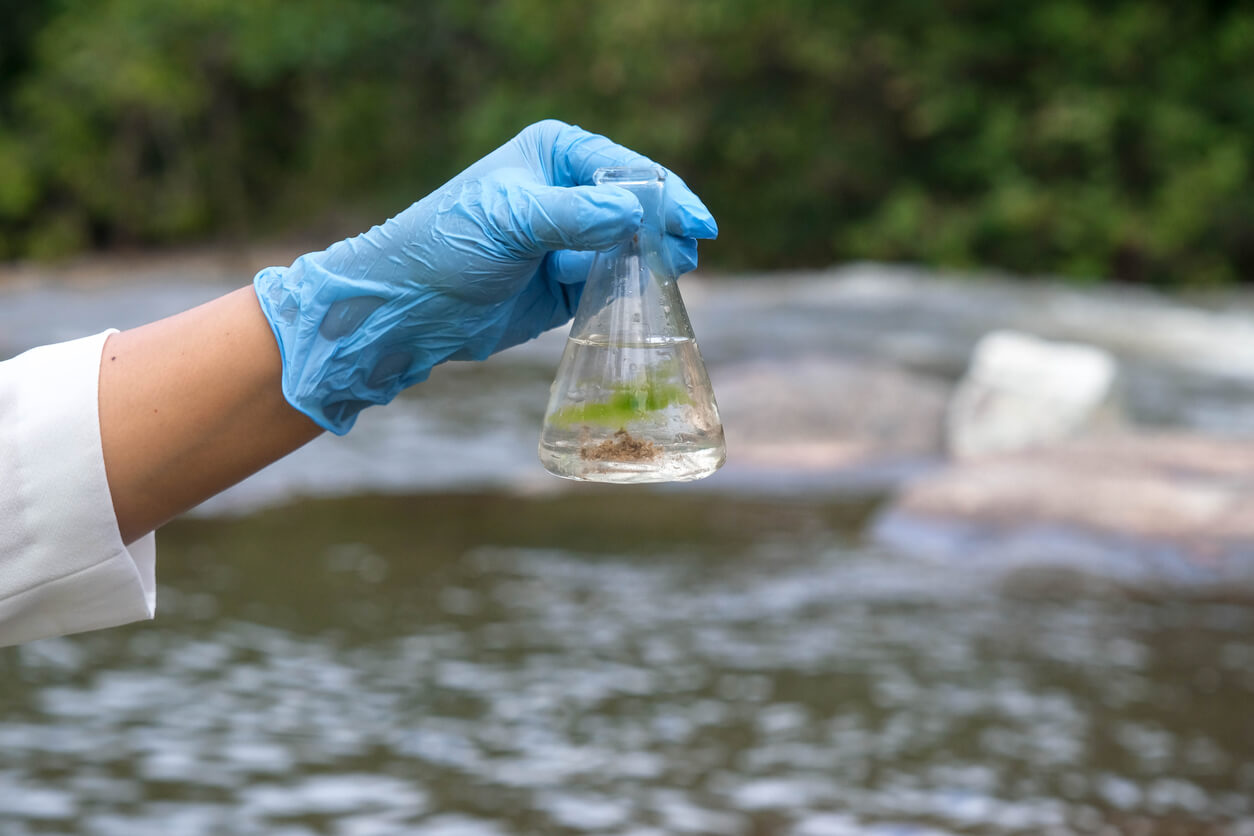
The EPA estimated that somewhere between 4,100 and 6,700 water systems, serving 83 to 105 million people, would actually need to install new treatment to meet the standard. That’s a meaningful share of the roughly 66,000 systems the rule covers, but it also means most utilities were already testing below the limit before the rule even took effect.
If you want to see where your own utility stands, the annual Consumer Confidence Report your water provider mails out (or posts online) will show current PFAS test results. It’s the closest thing to a real time answer the regulation gives you.
Does the EPA Regulate PFAS in Drinking Water as Strictly as It Used To?
As of mid 2026, not entirely, and the situation is actively in motion. On May 18, 2026, the EPA proposed two separate rules. One would extend the compliance deadline for PFOA and PFOS from 2029 to 2031, giving utilities two more years before they’re required to meet the existing 4 ppt limit. The other would rescind the federal limits entirely for PFHxS, PFNA, GenX, and the combined mixture limit covering those compounds plus a fourth, PFBS.
The EPA’s stated reason is procedural. Officials argue the prior administration finalized the 2024 rule in a way that skipped required steps under the Safe Drinking Water Act, leaving it legally vulnerable, and that the agency is correcting course rather than reopening the underlying health science. Public health groups including the Environmental Working Group and NRDC see it differently, arguing the move conflicts with a section of the same law that bars the agency from weakening a drinking water standard once it has been set, and that it leaves millions of people drinking water with fewer protections for years longer than planned.
Both sides are arguing about the same eight word legal sentence, and a court will likely have the final say. The underlying 2024 rule is also still being challenged separately by a coalition of water utilities and industry groups, in a case the DC Circuit declined to fast track in January 2026, finding the dispute too unsettled for a quick ruling.
Public comment on both 2026 proposals closes July 20, with a virtual hearing scheduled for July 7. Until either rule is finalized, the original 2024 limits, all six of them, remain legally in effect. None of this changes the broader pattern: federal PFAS regulation has been proposed, contested, delayed, and revised continuously since 2023, and there’s no reason to expect that to stop once this particular round of rulemaking wraps up.
Is Well Water Regulated for PFAS? No, and Here’s the Catch
If you’re on a private well, none of the above applies to you. The Safe Drinking Water Act only governs public water systems. The EPA has been explicit on this point: the agency does not regulate the quality of water from private domestic wells, and neither do most states. There is no federal PFAS limit for well water, no required testing, and no enforcement mechanism, regardless of what’s happening with the public system rules described above.
That puts the entire burden of testing and treatment on the well owner. If you live near a military base, an airport, a landfill, or any site with a history of firefighting foam use, that risk is worth taking seriously rather than assuming it doesn’t apply to you. PFAS isn’t the only contaminant well owners need to stay ahead of either; arsenic shows up in a similar pattern, tied to geography rather than anything you can see, taste, or smell, which is exactly why testing your well for it directly matters more than guessing based on how the water looks.
The practical fix is the same either way: get your water tested through an accredited lab rather than relying on a basic home kit, which usually can’t detect PFAS at the trace levels the federal standard is built around. If you haven’t tested at all yet, start with understanding what a proper testing kit actually checks for before you spend money on a filter you may not even need, or one that doesn’t target what’s actually in your water.
What Most Articles Get Wrong About PFAS Filter Certification
Here’s the part almost every other guide on this topic skips entirely, and it’s arguably more useful than anything about Washington. The third party certification that tells you whether a filter actually removes PFAS, NSF/ANSI 53 for carbon and ion exchange filters, NSF/ANSI 58 for reverse osmosis, does not test against the EPA’s 4 ppt limit. It tests against a combined PFAS threshold of 20 parts per trillion, five times higher than the federal standard.
That’s not a flaw hiding in fine print. The EPA says so directly: current certification standards don’t yet confirm that a filter reduces PFAS down to the level the agency now requires for drinking water, and the agency is working with certifying bodies to close that gap, though that alignment hadn’t happened as of this writing. Until it does, a “certified for PFAS reduction” label is a meaningful signal, but it isn’t the same promise as the EPA limit itself.
It also helps to know certification is granted compound by compound, not as a blanket stamp of approval. A pitcher can be certified for lead and still make zero PFAS claim at all. If PFAS removal is what you actually care about, you need to see PFOA, PFOS, or “Total PFAS” named specifically in that product’s certification listing, not just a general NSF number on the box. The same applies to countertop systems, where marketing language and verified performance often part ways more than most buyers expect.
The standard itself has shifted over time too. NSF originally tested PFAS reduction under a separate protocol created in 2016, folded that into the main standards by 2019, then expanded the list of covered compounds and tightened the limit from 70 ppt down to the current 20 ppt in 2022. Expect another revision eventually, the same way the EPA’s own limit has already changed twice in two years.
What You Can Actually Control, No Matter What Happens in Washington
Regulation, in either direction, isn’t something you control. What you can control is independent of any of it.
Test your water through an accredited lab rather than guessing based on a news cycle. Match whatever you find to a filter certified for that specific compound, not a generic “purifies water” claim. Confirm that certification yourself in the certifying body’s public database, NSF, IAPMO, or WQA all publish free, searchable listings, rather than trusting a logo printed on a box. And once you’ve installed something that actually works, keep it on schedule; a certified filter running well past its rated capacity stops behaving like a certified filter at all.
So, is PFAS in tap water regulated? Yes, for now, for six compounds, for public systems only, with a limit that keeps moving and a compliance window measured in years rather than days. That’s the honest answer, and it’s also exactly why testing your own water and verifying your own filter matters more than tracking whatever the EPA decides to do next.