
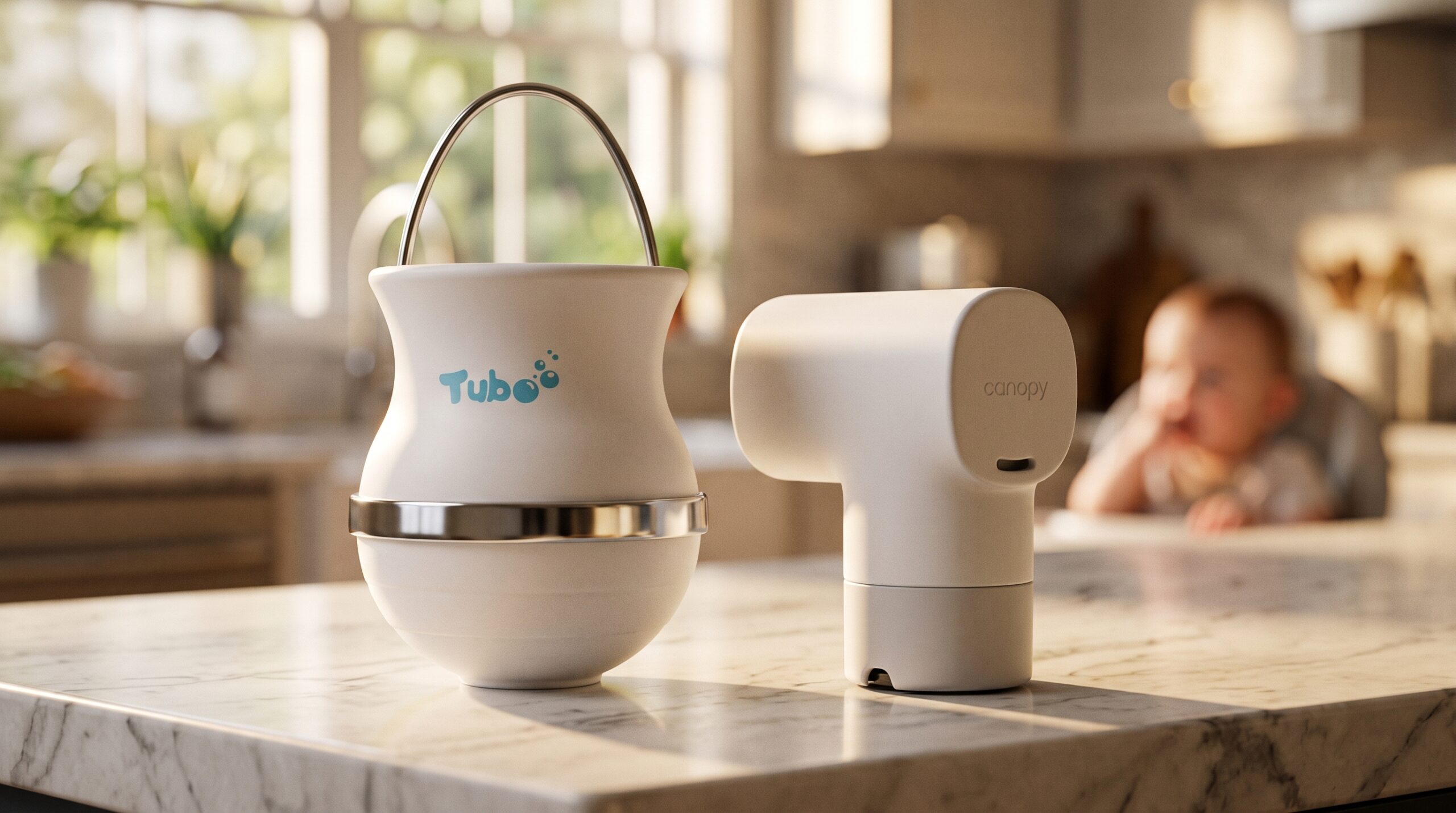
If you’re looking for the best bath water filter for babies right now, you’ve probably landed on the same two names everyone else does. Tubo and Canopy both show up at the top of Amazon searches, both talk about sensitive skin and gentler bathtime, and both cost roughly the same as a week of diapers. Only one of them is telling you the truth about what it actually does in the tub.
Quick Decision
Choose Canopy if you want a bath water filter for babies that won’t add anything harmful to the water, don’t mind a slower fill, and like the built in spout cover for bump protection. Choose neither if a fast, normal speed bath fill with full chlorine removal is your main goal, because independent testing shows that’s not realistic with either product at a normal flow rate. Skip Tubo entirely if you’re specifically trying to avoid adding contaminants to your baby’s bathwater, since it was the one filter that made the water measurably worse in one respect.
Why Bath Water Matters More for Babies Than You’d Think
Most tap water in the United States is treated with chlorine or chloramine, and while the amounts are considered safe to drink under EPA rules, bathing is a different kind of exposure. Skin absorbs disinfection byproducts like chloroform during a soak, and research published in the Journal of Exposure Science and Environmental Epidemiology found measurable dermal uptake of these compounds during bathing, not just from breathing them in. A baby’s skin isn’t a smaller version of adult skin either. In vivo studies of infant skin structure found the outer barrier layer is noticeably thinner than an adult’s, which is one reason pediatric dermatologists pay closer attention to what touches a baby’s skin for longer stretches, like a bath.
That said, it’s worth being honest about where the strongest evidence actually points. A large population study of over 1,300 infants found a real connection between eczema risk and water hardness, meaning calcium and magnesium content, more than chlorine itself. Neither Tubo nor Canopy reduces hardness. If your baby’s skin issues are tied to hard water, a bathtub water filter for baby use won’t solve that on its own, and we’ll come back to that later.
Tubo Bath Filter 2.0: The Popular Pick With a Problem
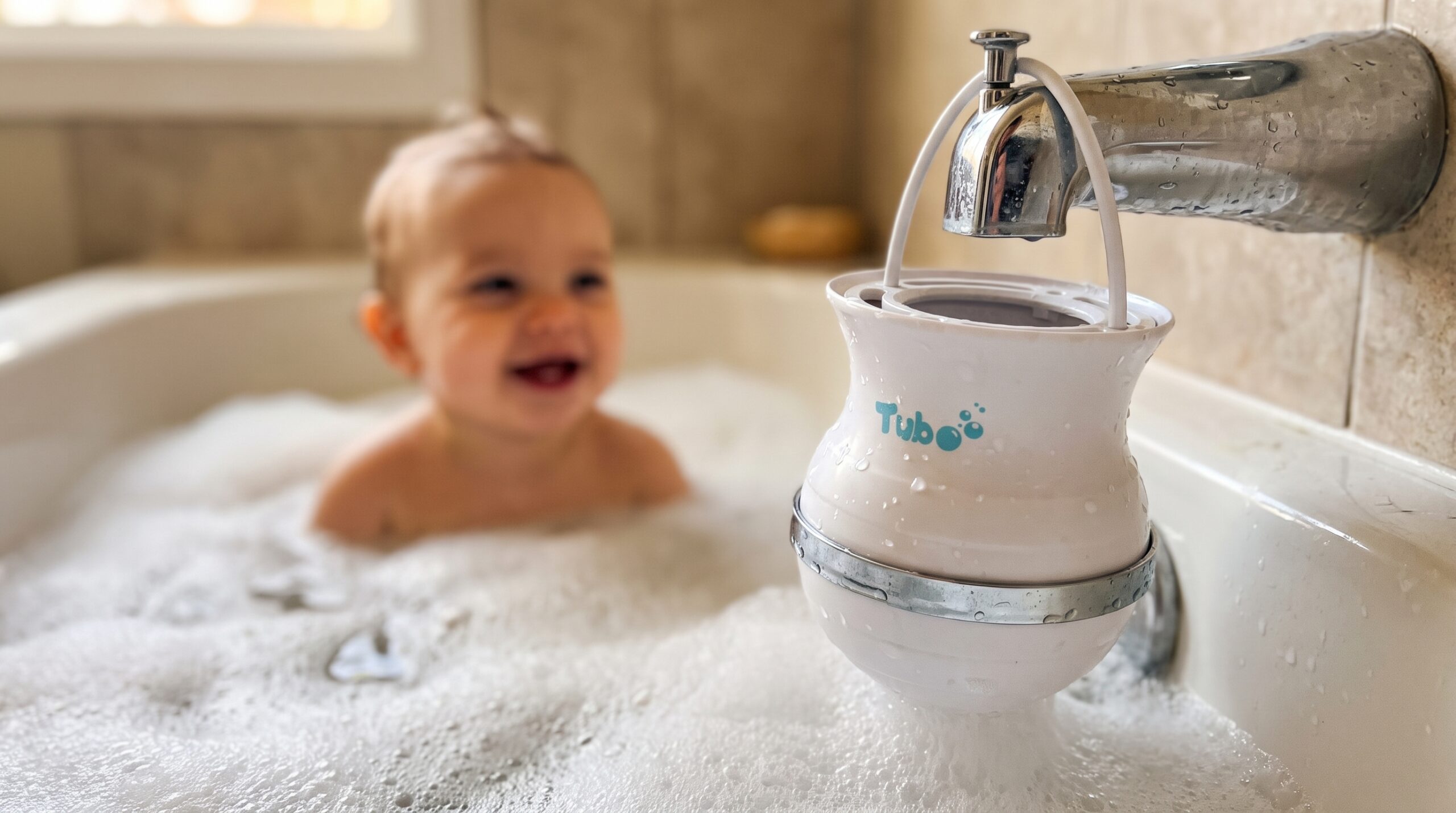
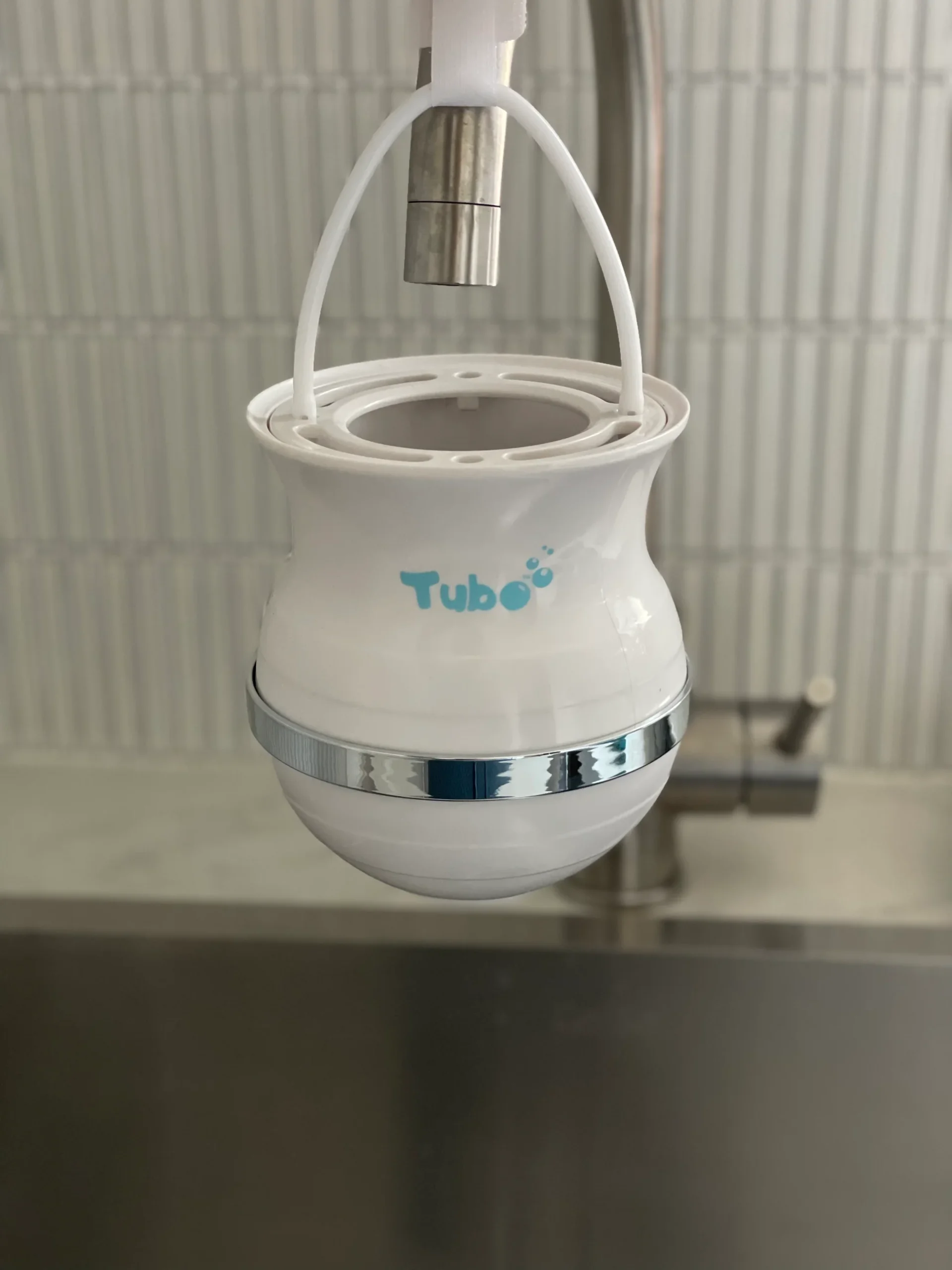
If you’ve searched for a bathtub water filter for baby use, Tubo is probably the first result you saw. It’s one of the best selling bath water filters for babies on Amazon, and its marketing is confident. The brand’s own site says the filter purifies bathwater and removes up to 99.9 percent of bacteria and viruses. Independent lab testing tells a very different story.
WaterFilterGuru, which tests water filters using SimpleLab’s Tap Score lab analysis alongside on site measurements, ran Tubo through two real world flow rates. At a normal, fast fill, the filter removed zero percent of chlorine. It only reached full chlorine removal at a flow so slow it would take about 34 minutes to fill an average tub, which isn’t how most parents actually run bathwater on a weeknight.
More concerning for a product marketed to sensitive baby skin: copper levels in the filtered water increased by 405 percent, the largest contaminant increase recorded across every bath filter in that round of testing. The level stayed within the EPA’s health guideline, so it isn’t a red flag on its own, but it directly contradicts a product that’s supposed to make bathwater purer, not add something new to it.
As for that purifies claim and the 99.9 percent bacteria and virus number, no independent lab has verified either one. WaterFilterGuru notes that even the filter media Tubo likely uses can inhibit some bacterial growth but can’t actually kill bacteria or viruses, which means the marketing language is doing more work than the filter can back up.
Tubo Bath Filter 2.0
4.2 rating on Amazon
Canopy Baby Bath Tub Filter: More Honest, Still Not Perfect
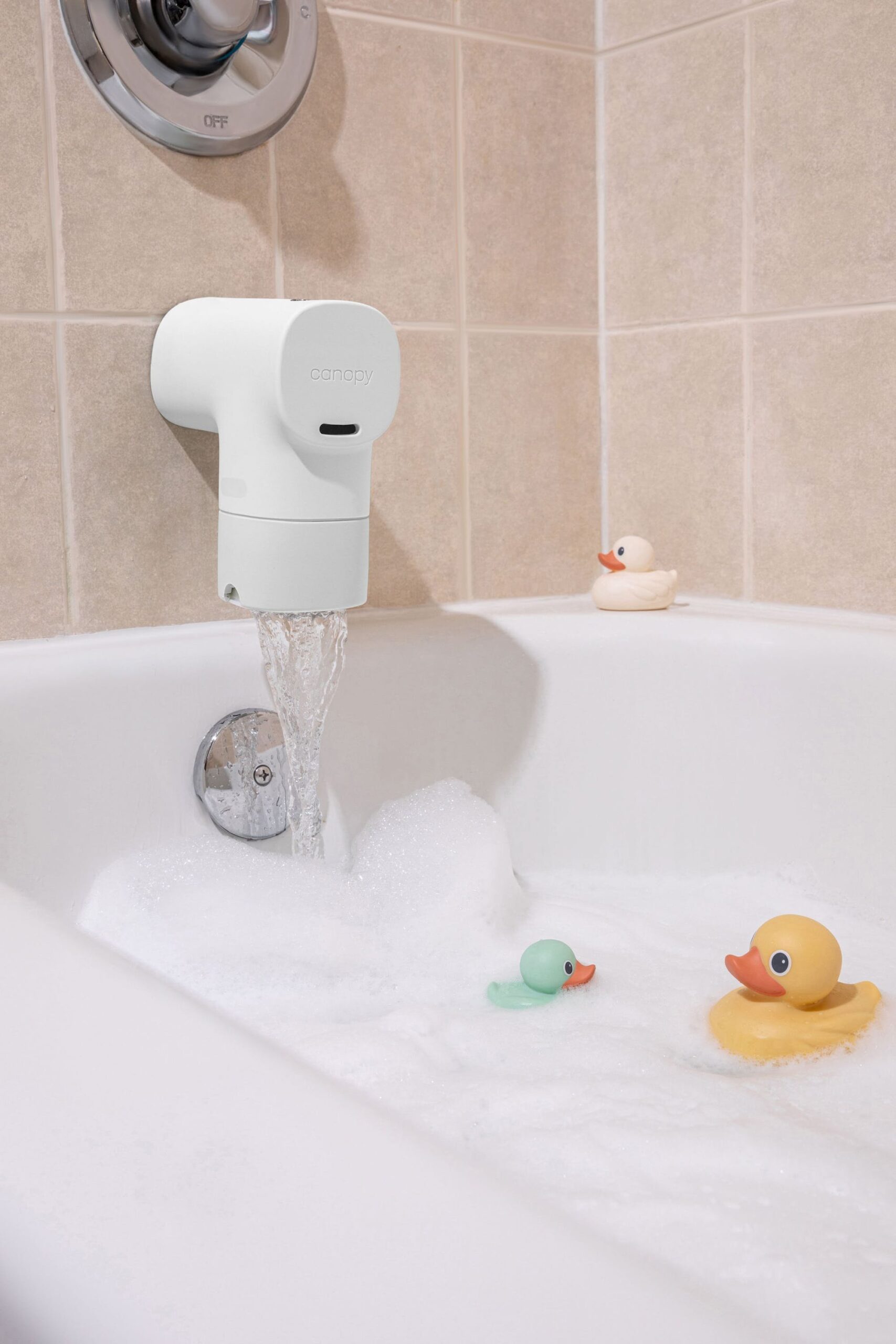
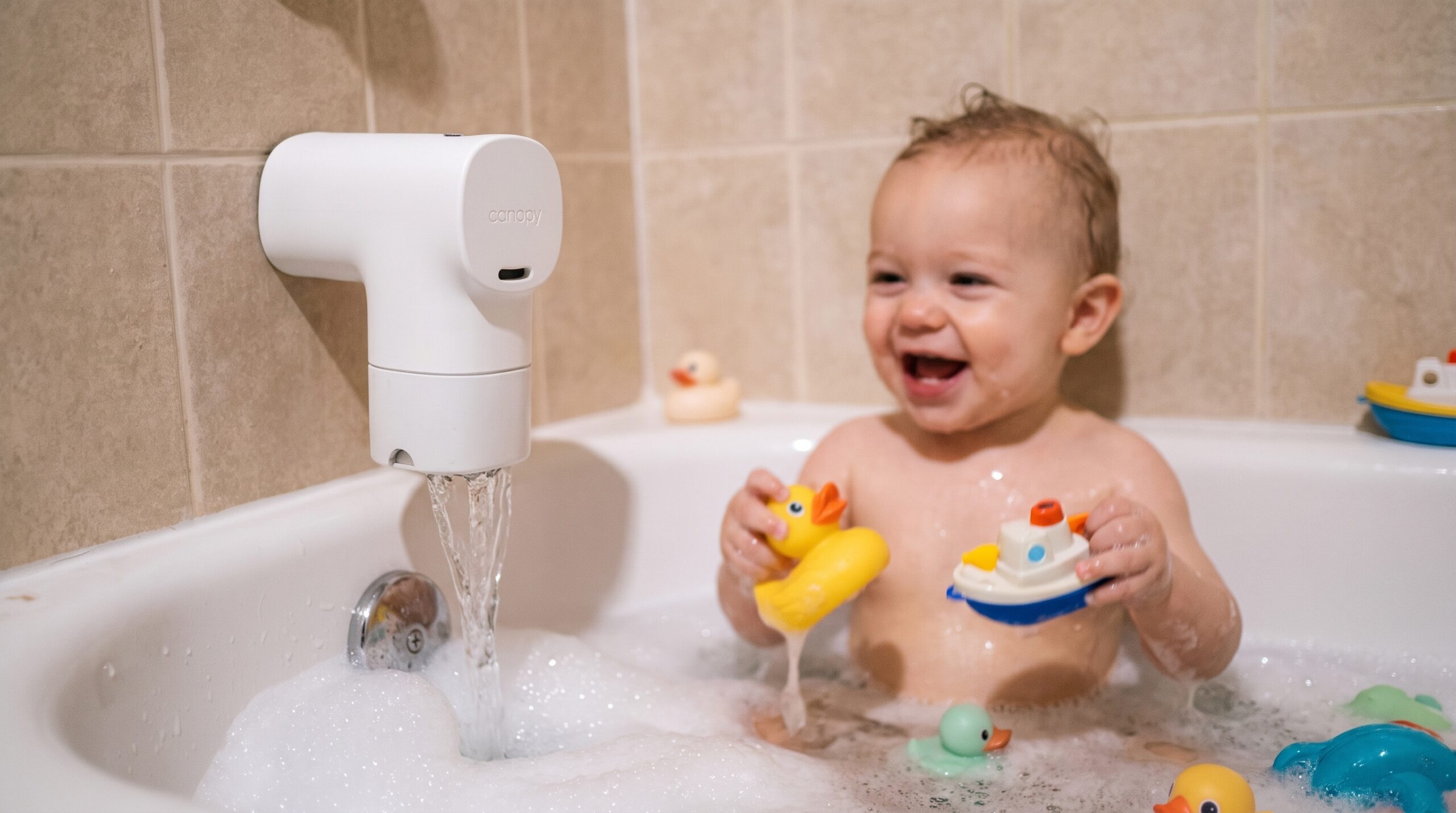
As far as a water filter for baby bath use goes, Canopy costs more, but it earns some of that price difference. In the same independent testing, Canopy reduced chlorine by 50 percent at a normal fast flow rate, and reached full removal only at a slower fill, similar to Tubo’s tradeoff but without the contaminant spike. No dangerous increases were recorded in the filtered water.
Canopy’s own site states the filter is tested to ANSI and NSF 177 standards. Here’s where things get honest for a moment. NSF 177 is a real certification standard for shower filters, and it does require verified chlorine reduction. But being tested to a standard and being certified to it are two different things, and a direct search of the NSF certified product database turns up exactly four certified companies for this standard, and Canopy isn’t one of them. That doesn’t mean Canopy is lying, but it does mean the claim can’t be independently confirmed the way a true certification could be. We went deeper on exactly this certification gap, brand by brand, in our full breakdown of which shower filters are actually NSF certified — worth a read if you’re filtering more than just bathtime.
What Canopy does have going for it beyond the water itself is a design that actually functions like a safety product. The silicone spout cover cushions the hard metal edge most tubs have at exactly baby head height, and the color changing temperature strip gives you a visual check before you ever put your baby in. Neither of those things filters water, but they solve a real bathtime worry.
Canopy Bath Bath Tub Filter
4.2 rating on Amazon
What Most Bath Water Filter for Babies Guides Get Wrong
Almost every roundup of the best water filter for baby bath use treats these products like they’re interchangeable, ranking them by price or design alone. What actually separates them is what happens at your real bathtub flow rate, not the marketing copy on the box. A bath water filter for babies that only works at a snail’s pace isn’t dishonest by definition, but a filter that claims purification and bacteria elimination while independent testing can’t confirm either one is a different category of problem entirely.
It’s also worth saying plainly that neither product carries an official NSF, WQA, or IAPMO certification for chlorine reduction. If certification matters to you specifically, a shower filter line like Weddell Duo does hold a genuine NSF/ANSI 177 certification, though that’s a showerhead attachment, not a tub spout filter, so it solves a different bathing setup than what Tubo and Canopy are built for.
Chlorine Isn’t the Whole Story: Hardness and Eczema
If your reason for shopping for a water filter for baby bath comfort is a specific skin concern like eczema, it’s worth knowing that chlorine reduction alone may not move the needle much. The strongest infant skin research available points to water hardness as the bigger factor, and neither of these filters touches that. If hardness is a suspected cause in your home, that’s a different filtration category altogether, closer to a softener than a bath attachment. We cover that distinction in our guide to how to choose a water filter, which walks through matching the filter type to the actual contaminant you’re trying to solve for.
Cost Comparison
Here’s what a bathtub water filter for baby use actually costs once you factor in a full year of replacement cartridges, not just the sticker price.
| Filter Type | Upfront Cost | Annual Filter Cost | Total Year 1 Cost |
|---|---|---|---|
| Tubo Bath Filter 2.0 | $64.99 | About $70 | About $135 |
| Canopy Baby Bath Tub Filter | $79 to $89 | About $74 to $100 | About $153 to $189 |
Both are tool free faucet attachments, so there’s no installation cost or plumber needed for either. Tubo’s warranty is 60 days unless you pay an extra fee for a lifetime guarantee. Canopy includes a full year warranty at no added cost, which is worth factoring in if something arrives damaged or stops working early. Either way, a water filter for baby bath use should be budgeted as an ongoing cartridge expense, not a one time purchase.
Where This Fits With Chlorine and Chloramine in General
Choosing a bathtub water filter for baby use gets a little more complicated if chloramine, not chlorine, is what your utility actually uses. That changes the filtration math a bit, since chloramine is harder for most carbon based media to remove. We go deeper on that distinction in our piece on the best shower filter for chloramine, which is useful context if you’re also filtering your own shower and want the two choices to make sense together. For a broader look at how NSF and IAPMO certifications work across filter types, our certification explainer breaks down what those numbers actually mean before you buy anything.
Questions You Might Have
Does a bath water filter for babies actually remove chlorine? Yes, but only at a slow fill rate. Independent testing found both Tubo and Canopy reach full chlorine removal only when the tub fills slowly, closer to 30 to 50 minutes rather than a normal fast fill.
Is the Tubo bath filter safe for babies? It stayed within EPA safety guidelines even with its copper increase, but its marketing claims around purification and bacteria removal are not independently verified, so treat those specific claims with skepticism.
Which is better, Tubo or Canopy? Canopy performed more consistently in independent lab testing, didn’t add measurable contaminants, and includes a spout cover and temperature indicator that solve real bathtime safety concerns. Tubo is cheaper but comes with an unverified purification claim and a contaminant increase.
Do these filters remove chloramine as well as chlorine? Neither product has been independently tested specifically for chloramine removal. The available lab data covers chlorine only.
Are either of these filters NSF certified? No. Neither Tubo nor Canopy appears in the official NSF certified product database for shower or bath filtration standards, despite Canopy’s own site referencing NSF 177 testing.
Will a bathtub water filter for baby skin help with eczema? It depends on the cause. If chlorine sensitivity is the trigger, a working filter may help a little at slow fill rates. If water hardness is the underlying issue, which the strongest available research points to, a bath filter alone won’t address it.
Is a water filter for baby bath use worth the cost if I already have a whole house filter? If your whole house system already handles chlorine at the point where water enters your home, a separate bath attachment is mostly redundant. It’s more useful for renters or anyone without an existing whole house setup.